Ink of the Heart, Tune of Eternity: “44th Prabháta Samgiita Divas – The Dawn That Never Ends”

edited and complied by Ácárya Gatimayánanda Avadhúta (CTS, Sweden)

“The feeling of the heart… written with the ink of the heart.”
— Shrii Prabhát Rainjan SarkárÁnanda Vánií Samgraha

“All the beings of this universe are the kith and kin of one another. No one is despicable. All are equally respectable and entitled to equal love and affection. No problem is to be ignored as an individual or group affair. Every problem is to be considered as the collective problem of universal humanity and is to be resolved collectively, and resolved it must be.
Let it be the vocal panorama of the newer world of today – the continuous musical notes behind the movement of Neo-Humanism.”
— Ánanda Púrnimá, 1982

On September 14, 1982, in Deogarh, the first rays of a new musical dawn broke. On that day, Shrii Prabhát Rainjan Sarkár, lovingly called Bábá, composed the first song of Prabháta Samgiita, subtitled “Rays of Crimson Dawn in Musical Symphony.”

What began as a single composition blossomed into a universe of 5,018 songs created over 8 years, 1 month and 7 days (2,957 days), concluding with Song No. 5018 on October 20, 1990, in Tiljala, Kolkata.

This September 14, 2026, we celebrate not just the 44th Prabháta Samgiita Jayantii (birth anniversary), but a phenomenon that is globally unique in the history of music.

No composer in known history has created such a vast original body of work — both lyrics and tune — with such speed and precision.

The journey started in Deogarh and travelled through Ranchi, Anandanagar, and even hospitals, cars, field walks and trains. The vast majority were given in Kolkata — 3,749 songs at Madhu Málainca and 602 at Madhu Koraka.

On November 20, 1984, Bábá created world history by composing 15 songs in a single day (No. 2101–2115).

Each song was dictated to a three-person “Ga’n Party”. Bábá would first hum the melody twice and seek approval, then sing the lyrics and tune together at lightning speed while attendants transcribed them.

Bábá made them sing it back until it was rendered perfectly accurate, and often explained profound philosophical details connected to the song.

Having already established the philosophical framework of His mission, Bábá now gave it in musical form so that everyone could internalize it easily.

Formally spelled Prabhát Samgiita, it signifies the dawn of a new era that dispels static sensory pleasure and ushers in transcendental devotion.

Bábá defined true Samgiita as a synthesis of Giita-Vádya-Nrtya (song, instrumental play and dance), built on four pillars: Bháva (idea), Chanda (rhythm), Sura (melody) and Bhásá (lyrics).

“Phonetics depends on the science of breath, on inhalation and exhalation. Also on the basis of the science of breath, Shiva invested the world of rhythm with mudrá.”

It moves from Nandan Vijiinána (aesthetic science) to Mohan Vijiinána (supra-aesthetic science) — enabling the practitioner to merge into Divine Enchantment (Mohana).

Its purpose was clear: to establish a brand-new Gharáná — a new musical school with its own identity, and to serve as a spiritual tool for Sádhaná, vibrating with devotion and deepening love for the Supreme Loving Father.

The Science of Uniqueness: What Makes It Globally Different

Its linguistic mastery and lyrical craft are unparalleled. While predominantly in Bengali — chosen for its high proportion of Samskrta root words allowing subtle expression — the collection spans eight languages: Bengali, Samskrta (9 songs), English (3 songs: No. 68, 5008, 5009), Hindi/Urdu (∼20 songs), Maithili, Angika and Magahi. Its sweetness lies in the science of blending Komala-svara (soft consonants) with Kathor Dhvani (hard sounds). Bábá even introduced Pluta-svara (extra-long vowels) for Kheyal-style rendering.

Yet, Bábá assured that learning Bengali is not mandatory to reap its spiritual and therapeutic benefits.

This musical diversity is an ocean of all genres in one. Prabháta Samgiita is an ocean containing all rivers of musical Rágas. It incorporates 6 primary Rágas and 36 Ráginiis, including the revival of ancient modes like Diipak Rága from Lord Shiva’s era, plus many unnamed new Rágas created by Bábá Himself. Bábá gave genres for most songs, such as Dhrupadi, Kheyal, Tappa, Thumri, Ghazal, Hava-Ghazal, Qawwali, Baul, Jhumur, Bhatiyali and even international melodies — Scandinavian, Israeli, Chinese, Swedish and Persian.

Bábá explained the evolution of instruments while rendering this lyrical symphony. The Flute (Banshii) from hollow bamboo was the first natural instrument; Ektárá was the oldest stringed instrument, which Lord Shiva perfected into the Viiná (Shivakona) to align with the Sura-Saptaka (seven notes).Bábá traced the Tabla to Mrdanga in India, Sitar to Persia, and Violin to Italy. He taught that tuning strings teaches Majjhimá Márga — the Middle Path — neither too slack nor too strained to breaking point. Bábá distinguished a Samgiitajinána (vocal virtuoso) from a Shilpii (instrumental artist displaying hand dexterity).

Over half a century later, on 6th October 1985, during a discourse on linguistics in Calcutta, Shrii P. R. Sarkár recounted an experience which gave an insight into the pastimes of His early days in Jamalpur: “At that time I used to walk in the hills to the east of Jamalpur nearly every day. After dark, these terrifying places became young Shrii Prabhát Rainjan Sarkár’s private refuge — a vast expanse of desolation far from the hustle and bustle of the world where no one would disturb Him. Often when people returned home around dusk, they saw Him walking towards the hill. At times He would carry a flute and spend hours experimenting with different tunes or playing the Sindhu-Bhairavii Rága composed by Lord Shiva 7,000 years ago, which had since become defunct.”

At other times, He played Meghamallár (a Rága capable of attracting clouds and bringing rain) or Multánii Vasanta. He spent several evenings alone there experimenting with various Rágas and blending them on His flute.Sometimes His friend, Prasenjit, would accompany Him, bringing his Esraj. Nobody had ever seen Shrii Prabhát Rainjan Sarkár learning the flute or any other musical instrument. So it was generally believed that, like everything else, He acquired vast knowledge of music from a mystical source.

In His home, an academic atmosphere prevailed. Music was also encouraged, along with reading, discussions and studies. Mother Abharani was a good singer. Shrii Prabhát Rainjan Sarkár’s elder sister, Hiiraprabhá, also learned the songs of Rabindranath, Nazrul, Atul Prasad, Dijendra Lal and Rajani Kanta. Pandit Hiyalal Jha gave her Sitar and Violin lessons. Shrii Prabhát Rainjan Sarkár used to sit beside His elder sister listening intently. During the summer holidays, Shrii Lakshmi Narayan would take the family to Bamunpara for about a month.

Some sources have told us that Bábá used to teach dance at that time.

Beloved Bábá knew each culture has its unique traditions, styles and techniques, shaped by history, geography and social context. From the intricate footwork of Indian classical dance to the energetic rhythms of African drumming, each tradition has its own beauty and significance — like Ajay Valley, Italy, Spain, Portugal, Bengal, Malraki Valley, Albania, Belgium, China, Kangasvati, Damodar, 1,500-year-old Buddhist Tantra, Giiti Roy, Suvarnarekha Valley, Scandinavia, Middle East, Europe, Ganga Valley, Aosta Valley, 2,000-year-old Punjabi, Kashmir, Persian, Karnataka and South India, with the melodic Gharanas of Ghazal, Qawwali, from Rága Diipaka from the time of Shiva, Shivaranjani, Jaunpuri, Tappa, Tintal and Bageshrii Gharana, etc., which can be played in Prabháta Samgiita melodies.

The Impact of Song, Dance and Instrumental Percussion

All this, Prabháta Samgiita has a profound impact on our lives, influencing our characteristic bearing of sentiments, both devotional and emotional, thoughts and behaviours. It has the power to:

Evoke strong emotions and create a sense of connection

Preserve cultural heritage and traditions

Provide a means of self-expression and creativity

Bring people together and foster community

Influence our mood, energy and well-being in the all-round development of physical, mental and spiritual spheres.

The spiritual and healing essence of these songs expresses every shade of the devotee’s heart — from intense Viraha (separation) to Madhur Bháva (divine union), along with universalism, social awareness and Neohumanist love for nature. Bábá introduced the concept of Ajána Pathik — the Unknown Traveller, representing Táraka Brahma playing hide-and-seek with creation.

This is more than devotion; it is therapy. Rágas stimulate nerve fibres and vital energy, offering help for conditions like hysteria, melancholia, gout, epilepsy and nervous exhaustion.

Gandharva Microvita assist in recovering lost melodies and awakening subtle devotion. Five songs (No. 154, 158, 159, 162, 163) were designated as compulsory for collective spiritual functions.

Scholarly musicians like Prof. Ramaranjan Mukherji and Dr. Subhas Sarkar, to whom the work is dedicated along with maestros Ramnidhi Gupta (Nidhi Babu) and Ustad Alauddin Khan, have highlighted its role in rescuing the spiritual supra-sensuous from material degradation.

For every moment of life, Prabháta Samgiita is not only for meditation. It contains specific songs for every social function and various uncountable themes — from Brahma to a blade of grass — such as weddings (No. 58), baby naming (No. 59), house entry (No. 137), tree planting (No. 136), birthdays and seasonal festivals. Kiirtan itself functions as Lalita Dance — a fine art (Lalitakalá/Cárukalá) that expands the mind.

To popularize it, Bábá structured cultural forums such as RAWA, Spandanik, Chándosik, Nándosik and Surasaptak.

Official Release Note:

44th Prabháta Samgiita Divas — Inauguration of the Prabháta Samgiita Gharáná AI Platform

On the spectrum of this new era, our Central Administration is proud to unveil a new vista in the form of an Artificial Intelligence App, released on the auspicious 44th Anniversary of the Inauguration of the Prabháta Samgiita Gharáná.

This intelligent platform is designed to offer website visitors a vast array of foresight and deeper insight into the songs. It provides extensive resources — including audio recordings, translated lyrics and musical notations — to help seekers engage deeply with the collection’s devotional themes. By categorising the songs according to language and varied themes, the site ensures easy navigation through these expressions of spiritual bliss.

In addition, the Ánanda Márga archive provides educational materials on linguistics and musicology, along with unique live recordings that capture the historical performances of these pieces in Bábá’s presence. Ultimately, this resource aims to help individuals transcend mundane existence through the emotional and aesthetic power of sacred song.

Today, its preservation and presentation are spearheaded by Prabháta Samgiita AI, under the Ánanda Márga Web Team led by Dewasheesh Rana, along with the Deepeshvara PR team. This team is releasing the new website and App with the complete archive of lyrics, translations, notations (Svaralipi), and almost all 5,018 MP3s plus historical live recordings.

The Prabháta Samgiita AI App features:

Daily Inspiration for spiritual reflection

Discovery of Ánanda Márga activities along with daily news

Mood Synchronisation, to explore your inner thoughts and emotional states

Interactive Learning, to thoroughly explore each Prabháta Samgiita through quizzes, melody analysis and other musical dimensions.

This entire endeavour has been subjectively synchronized through the selfless efforts of various devotees who have dedicatedly provided transliteration and profoundly rendered the lyrics into English. This legacy is now cloned and elevated through AI on our official portal: www.prabhatasamgiita.net

On this Prabháta Samgiita Divas, 2026, we do not just listen to music. Shrii Prabhat Ranjan Sarkar (Bábá) manifested Prabháta Samgiita to establish a brand-new Gharáná with its own distinct musical identity.

It was Bábá’s direct instruction and guidance, because it was an entirely new musical school rather than an existing tradition. Singers could not simply rely on conventional training. Complex classical compositions frequently required Bábá’s direct guidance, personal demonstration and repeated corrections to ensure the songs captured the authentic refinement and rendering of this new Gharáná.

Today, we are crossing the threshold to enter a new Gharana, a new dawn, where Oriental mudrá musicology meets Occidental rhythmology, where a song is Sádhaná, and where 5,018 flowers bloom from one heart to guide humanity from Nandan (Aesthetic) to Mohan (Supra-aesthetic).

Bábá Nám Kevalam.
Prabháta Samgiita Kii Jai!
Parama Pitá Bábá Kii Jai!

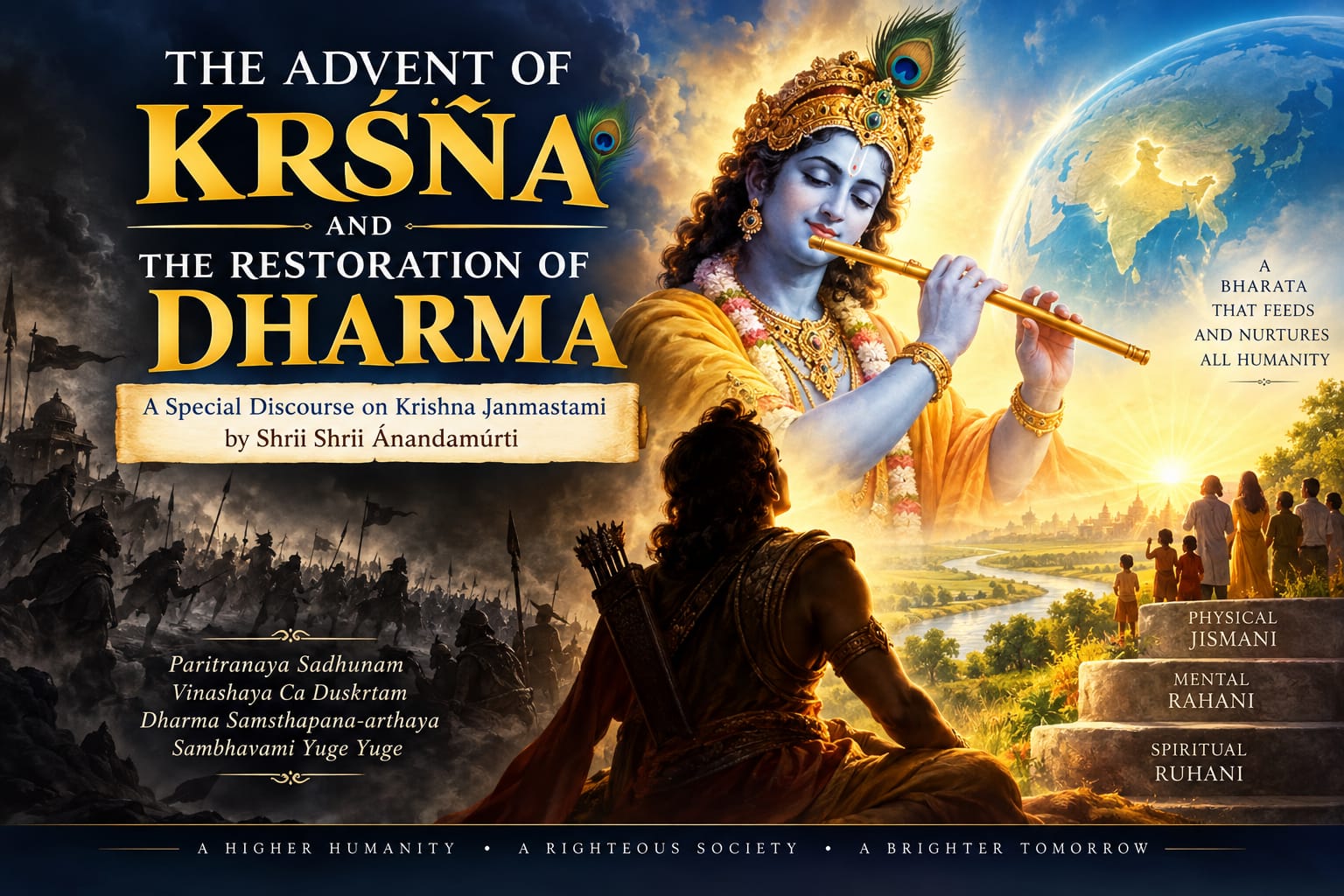
THE ADVENT OF KRŚŃA AND THE RESTORATION OF DHARMA

A Special Discourse on Krśńa Janmastami by Shrii Shrii Ánandamúrti

Today, we celebrate Krśńa Janmastami, a day that marks a monumental turning point in human history. On this sacred occasion, we explore the profound role that Bhagavan Krśńa played in the development and upliftment of human civilization.

While much has been spoken and written about Mahásambhúti Krśńa’s divine play, including the extensive stories of the Mahabharata, today we focus on His cosmic nucleus, eternal message: the absolute assurance of the restoration of Dharma and the elevation of human society.

To understand, we must look back 3,500 years ago, when Bhagavan Krśńa took His Avirbhava, or divine advent, on this earth. He did not arrive during a peaceful golden age. Krśńa came at an exceptionally crucial and extraordinary stage when humanity was in a deep state of discontentment. His advent was specifically designed for humanity’s upliftment — to guide a struggling society out of its despair and redirect the course of human history toward righteousness.

Abhayavanii, during this dark period, Krśńa delivered what is regarded as the greatest and highest assurance to human society. This is known as Abhayavanii — the message of absolute fearlessness and hope.

His promise is eternal: Whenever there is a dreadful degradation of Dharma, Mahásambhúti will take another advent to save the downtrodden from downfall. This assurance reminds us that humanity is never left permanently abandoned in times of moral decay.

Paritranaya Sadhunam Vinashaya Ca Duskrtam
Dharma Samsthapana-arthaya Sambhavami Yuge Yuge

Who is Bharata? In the verse of the Bhagavad Gita, Krśńa addresses Arjuna as ‘Bharata’.

But what does this word actually mean?

It is far more than just the name of a country.

Linguistically, it is derived from two Sanskrit root words:

Root verb ‘Bhr’ — which means ‘to feed’ or to supply food.

Root verb ‘tan’ — which means ‘to expand’ or to grow.

Combined with grammatical suffixes, ‘Bhara’ refers to a feeder or supplier of food, while ‘ta’ refers to helping in all-round expansion and development.

Thus, a true ‘Bharata’ is one who feeds others and nurtures their complete, multi-dimensional growth.

Krśńa expected all living persons — and especially important personalities and leaders — to shoulder the responsibility of feeding the suffering and hungry.

However, our duty does not stop at physical nourishment. We must assist others in their all-round development across three distinct realms:

1. Jismani – The Physical Body
2. Rahani – The Mental Way of Life
3. Ruhani – The Spiritual Realm

This holistic nourishment is the true essence of Bharatavarsha — a country that feeds its people and fosters their complete physical, mental, and spiritual elevation.

By Krśńa it has been said:

“Yadá yadá hi dharmasya glánirbhavati Bhárata;

Cábhyutthánamadharmasya tadátmánaḿ srjámyáham”

To understand this, we must distinguish between a battle and a war. A war is divided into multiple phases, each called a battle. In a single battle, Adharma may temporarily triumph, and Dharma may seem defeated. But we must not lose heart; while individual battles may fluctuate, Dharma is destined to win the final fight of the war.

Glani means ‘to go beyond its recognized position or stratum’ in a downward direction. When righteousness degrades and falls below its proper level, there is Glani.

Abhyutthana means ‘going above’ or rising beyond the recognized stratum. When Adharma undergoes Cabhyutthana — rising and elevating itself above its proper limits — it threatens to overwhelm the natural balance of society.

The Role of Taraka Brahma that what happens when Adharma reaches its peak?

When the degradation of society goes completely beyond the jurisdiction and physical strength of human beings, humanity is left helpless and cries out. It is at this critical juncture that the Supreme appears as Taraka Brahma.

Taraka Brahma’s role is to polarise the forces of Dharma and Adharma, separating righteousness from degradation. By drawing this clear line, Mahásambhúti intervenes to save humanity and places Dharma back into its proper, recognized position.

This is the ultimate, comforting message of Krśńa Janmastami.

48TH KAOŚIKII COMMEMORATIVE DAY – THE DIVINE DANCE GIFTED BY SHRII SHRII ÁNANDAMÚRTI 

48TH KAOŚIKII COMMEMORATIVE DAY – THE DIVINE DANCE GIFTED BY SHRII SHRII ÁNANDAMÚRTI 

The Unspeakable Trio of Spiritual Dance and Music – Kaośikii: History, Postures, and Scientific discipline 

The spiritual heritage of humanity is deeply intertwined with rhythm, movement, and sound. In the spiritual tradition, music and dance are not merely forms of entertainment or aesthetic expression; they are precise psycho-physical tools designed to elevate human consciousness, purify the mind, and vitalize the physical body. 

This unutterable trio explores the historical origins, exact physiological performance, and profound spiritual significance of the three inviolable dances: Táńd́avaLalita Mármika, and Kaośikii

The Birth of Saḿgiita and Tála – A Holistic Path for Modern Wellness 

  • A brief summary of how these ancient practices integrate body, mind, and spirit to offer profound, holistic balance for modern practitioners. 
  • The Foundation of Music: Lord Sadáshiva explained how integrated the three worldly elements that are immensely helpful to spiritual life, collectively known as SaḿgiitaGiita (song), Vadya (instrumental music), and Nrtya (dance). 
  • The Birth of Tála: The historical adjustment between the cosmic masculinity of Táńd́ava and the deep devotion of Lalita Mármika laid the foundation for Indo-Aryan music, creating the first Indian rhythm, Tála—taking “Ta” from Táńd́ava and “La” from Lalita. 
  • The Musical Schools: Introduce how this synthesis split into the Áryávarta (Hindustani Saḿgiita) and Dákśinátya (Karnataka Saḿgiita) traditions. 

Táńd́ava: The Dynamic Dance of Survival and Brain Purity 

  • Origins and Meaning: Sadáshiva invented this heroic dance roughly 7,000 years ago. The etymology of Tańd́u (“of jumping habit”), using the traditional metaphor of jumping rice (Tańd́ulam). 
  • The Only Physical Brain Exercise: Clarify its role as a powerful, all-corporal exercise and uniquely explain how it acts as a physical exercise for the brain to maintain physical and psychic purity. Note that it is strictly forbidden for ladies due to its intensity. 
  • The Heroic Battle & Symbols: The intense life-or-death battle represented by the dance. We will cover the strict rules of its symbolic gear: holding a knife or trident (trishula) representing life and stamina in one hand, and a skull representing death in the other. 
  • Day and Night Environmental Rules: Detail the variations allowed (using a living snake by day, or a fire torch/damaru at night) and point out that absolutely no mudras or ornaments are permitted. 

Lalita Mármika: The Surrendered Voice of the Inner Spirit 

  • Devotional Roots: Parvati (spouse of Shiva) invented this purely spiritual dance to represent the “Voice of the Inner Spirit” or the “Inner Voice of a Spiritual Aspirant,” used universally during Kiirtan
  • The Psycho-Spiritual Arm Angle: Break down the posture science. A normal relaxed arm is physical; a 90-degree arm utilizes psychic/mental power. Lalita Mármika requires arms raised above 90 degrees, symbolizing that the hands are completely surrendered “at the mercy of Parama Puruśa” rather than controlled by ego. 
  • The Carrying out of “Dhae, Dhin, Ta”: The three touchpoints of the feet: 
  • Dhae (toe-tip) representing the Spiritual touch
  • Dhin (ball of the foot) representing the Psychic touch
  • Ta (heel) representing the Physical touch (stamped with maximum weight). 
  • The Philosophy of Minimum Pressure: The profound lesson of touching the earth primarily with the toe-tip (Dhae) to exert minimum pressure on the Earth. This represents performing all worldly duties while remaining an asset—not a heavy liability—to the planet. Note that flower ornaments are fully permitted. 

Kaośikii: The Psycho-Spiritual Medicine and Panacea 

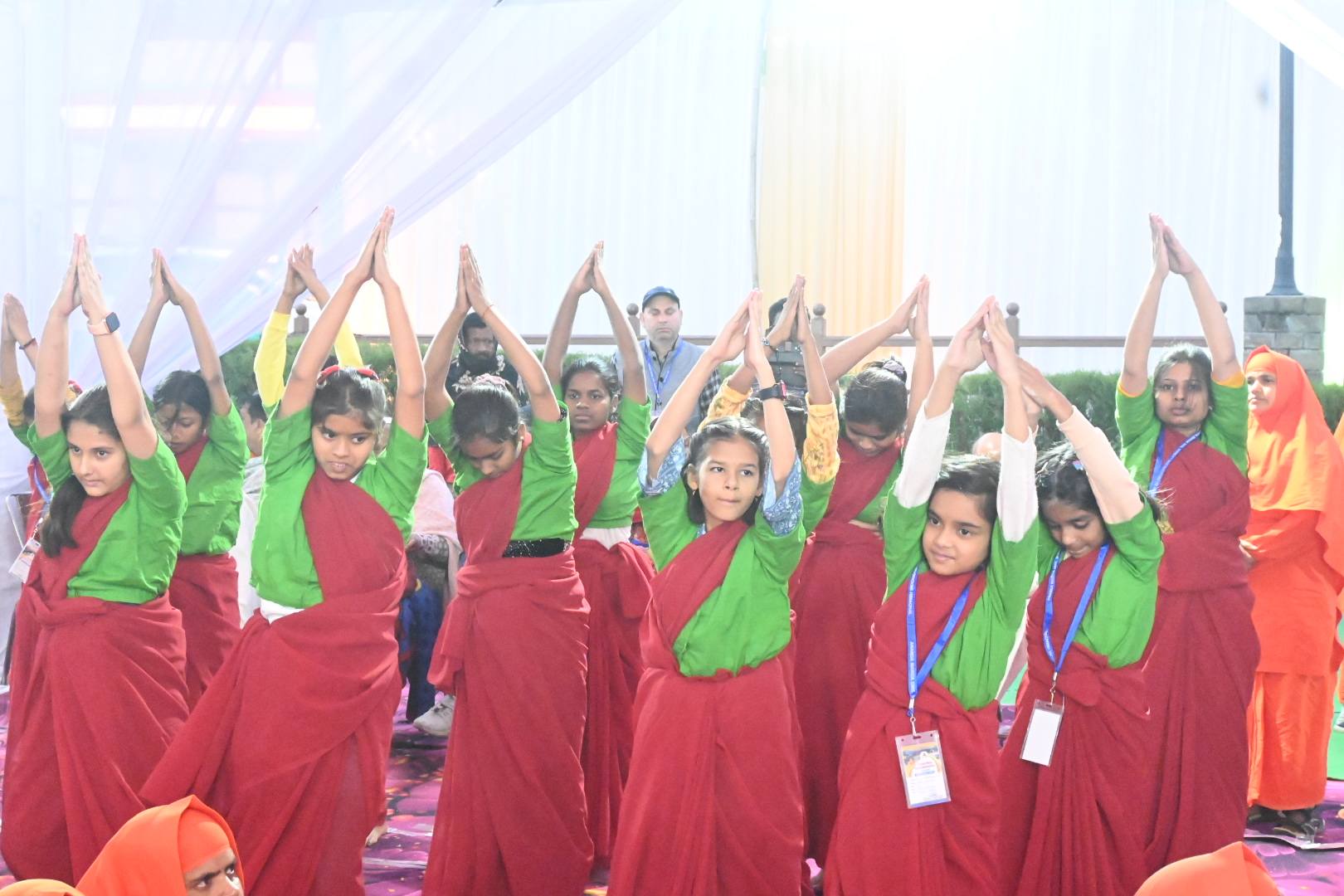
  • The Invention: Shrii Shrii Ánandamúrti invented this heavy, all-body exercise on 6th September 1978 as a direct physiological alternative for ladies and younger boys. 
  • An All-Body Panacea: The extensive health benefits, explaining how practising it for 1 to 1.5 months can cure 22 distinct diseases. It serves as a brain exercise that boosts memory, ensures safe delivery for ladies, checks the onset of old age, and directly cures diseases of the heart, lungs, liver, spleen, and kidneys. 
  • The Quivering Mind: The etymology of the name from kaosikii illustrating Bábá’s observation of the “quivering” or palpitation (palpitation) of the mind during the dance’s physical postures. 
  • Design & Aesthetics: Highlight the required, eye-pleasing clothing colors of green and chocolate brown and the permission to wear flower ornaments. 

These three dances represent a complete and scientific system of movement. By understanding the deep history, physical angles, and biological impacts behind these sacred practices, modern spiritual aspirants can fully unlock their physical, psychic, and spiritual potential. 

The Divine Blending: Saḿgiita, Tála, and Indian Musical Heritage                                                                

The foundation of Indian classical music and dance was laid by Lord Sadáshiva (Lord Shiva) approximately 7,000 years ago. Sadáshiva selected and integrated three elements of the objective world that are immensely helpful to spiritual life, collectively known as Saḿgiita

  1. Giita (Song) 
  1. Vádya (The playing of instruments) 
  1. Nrtya (Dance) 

As a master of cosmic rhythm, Sadáshiva is also revered as Nat́arája (Nádatanu Nát́eshaḿ). The integration and historical adjustment between the dynamic, masculine energy of Táńd́ava (invented by Sadáshiva) and the gentle, devotional flow of Lalita Mármika (invented by his spouse, Parvati) gave birth to Indian rhythm or Tála. The word Tála itself is a synthesis of these two dances: taking the first letter “Ta” from Táńd́ava and the first letter “La” from Lalita. 

This divine adjustment established the foundation of Indo-Aryan music. Over time, this musical heritage split into two major classical schools: 

  • The Áryávarta School, commonly known as Hindustani Saḿgiita
  • The Dákśinátya School, commonly known as Karnataka Saḿgiita

Táńd́ava: The Heroic Dance of Brain Purity and Survival 

Revered as the king of dances, Táńd́ava is a heroic, vigorous dance invented by Lord Sadáshiva about 7,000 years ago. 

In the ancient Saḿskrta language, Tańd́u means “of jumping habit”. The traditional etymological metaphor compares this to the preparation of rice from paddy in the country style: during the husking process, the paddy and rice jump up and down. Because of this jumping habit, rice is called Tańd́ulam in Saḿskrta. By adding the suffix Sna to Tańd́u, we get the word Táńd́ava—denoting a dance where jumping is the central, defining feature

While there are many intellectual exercises for the human brain, Táńd́ava is celebrated as the only physical exercise for the brain. It is an “all-corporal” exercise that impacts the entire body, including the brain tissues. This high-intensity, vigorous dance is designed to maintain the physical and psychic purity of a spiritual practitioner (sádhaka), directly accelerating their spiritual progress. Because of the extreme physiological strain it puts on the system, Táńd́ava is strictly forbidden for ladies. 

Táńd́ava represents an eternal, heroic fight for survival—a dynamic battle between life and death. Dancers must not wear any ornaments, and there are absolutely no Mudrás (symbolic hand gestures) performed during this dance. Instead, the dancer dynamically leaps while holding specific symbolic weapons: 

  • In one hand, a knife or trishula (trident): Symbolises life and fighting stamina. 
  • In the other hand, a human skull: Symbolises death, which constantly seeks to destroy existence. 

Through this posture, the dancer represents a warrior fighting against death and struggle to establish themselves in the world. 

The ancient scriptures lay down strict rules regarding the physical items held by the dancer depending on the time of practice: 

  • During the daytime: A dancer may use a living snake (Sarpa) in place of a skull. 
  • During the nighttime: The dancer may use a fire mashála (torch) or a damaru (small drum)

Lalita Mármika: The Surrendered Devotion of the Inner Spirit 

In stark contrast to the vigorous energy of Táńd́ava, Lalita Mármika is a purely spiritual, deeply devotional dance invented by Parvati, the spouse of Shiva. The name itself translates to the “Voice of the Inner Spirit” or the “Inner Voice of a Spiritual Aspirant”. Universally accepted as the best and only dance to be used during Kiirtan (devotional chanting), its core essence is expressed through precise Mudrás and sacred angles. 

The hand positions in Lalita Mármika are governed by precise psychological and spiritual laws: 

  1. The Physical Position (Down): The hands hanging naturally down is the physical position, used for hard physical labor (such as using a hammer). 
  1. The Psychic Position (90 Degrees): Raising the arms straight out at a 90-degree angle utilizes mental or psychic strength [14, 15]. You hold them here because your mind desires it. 
  1. The Purely Spiritual Position (>90 Degrees): Lalita Mármika is a purely spiritual dance. Therefore, the arms must be raised overhead at an angle greater than 90 degrees. This posture denotes that the hands are completely surrendered—held “at the mercy of Parama Puruśa” rather than controlled by personal ego or psychic willpower. 

The Foot Execution: “Dhae, Dhin, Ta” 

The leg movements in Lalita Mármika require the dancer to tap their feet in a rhythmic cycle divided into three distinct touchpoints: 

  • “Dhae” (Toe-tip): Represents the Spiritual touch
  • “Dhin” (Ball of the foot): Represents the Psychic touch
  • “Ta” (Heel): Represents the Physical touch

When executing the physical touch (“Ta”), the heel is stamped down with maximum strength and the maximum weight of the body. However, the spiritual rule of the dance requires the dancer to primarily transition through and touch the earth with the toe-tip (“Dhae”). 

This physical mechanic carries a profound philosophical lesson: as spiritual beings, humans must perform all physical, psychic, and spiritual duties on this Earth, but our pressure on the planet should remain minimum. By touching with the toe-tip, we exert minimum pressure on the Earth, ensuring we act as a light asset to the planet rather than a heavy liability. 

Unlike Táńd́ava, dancers of Lalita Mármika are fully permitted to wear beautiful flower ornaments

Kaośikii: The Psycho-Spiritual Medicine and Panacea 

Invented by the Sadguru Parama Brahma Shrii Shrii Ánandamúrti on 6th September 1978 in Patna, India, Kaośikii was conceptualized as a holistic, heavy, all-body dance exercise.                                                            

The History of its Invention 

Observing that the vigorous Táńd́ava dance is strictly forbidden for ladies, Shrii Shrii Ánandamúrti felt a deep spiritual necessity to design a proper dance exercise that could serve as a physiological alternative for ladies and younger boys. At 11:00 PM on 6th September 1978, Beloved Bábá called four young devotees and guided them to perform specific movements. As they danced, Bábá scientifically examined how their glands, sub-glands, and muscle tissues (kis peaschi) reacted to the postures. 

Bábá observed that the unique physical movements of this dance caused a distinct quivering or palpitation in the mind. Because of this mental quivering, Parama Brahma  Sadguru named the dance Kaośikii. Within three days, this beautiful, scientific dance was propagated all over the world, becoming immensely popular among both boys and girls. 

Kaośikii is a heavy, psycho-spiritual exercise spanning from the brain to the feet. It begins at the psychic level and culminates at the spiritual level. When practised consistently for 1 to 1.5 months, it significantly improves overall health and acts as a direct curative medicine for 22 distinct diseases

The human eye is naturally attracted to specific colors in the universe. To align with this psychological science, green and chocolate brown were explicitly selected as the designated clothing colors for those dancing Kaośikii, as they are highly pleasing to the human eye. Dancers are also fully permitted to wear beautiful flower ornaments

Kaośikii and the Use of Mantra: 

The rhythmic steps of Kaośikii are accompanied by the verbal incantation of the BÁBÁ NAM KEVALAM mantra. The below sketch correlates the dance step with the mantra: 
 

Meaning of the Mudrá in Kaośikii: 

Each movement of the arms in Kaośikii conveys a specific meaning, that is why it is considered a Mudráic dance. 
1. The two hands when upraised and folded together represent: “Now I am trying to establish a link with the Supreme” 
2. Both hands bending to the right indicate: “I know the right way to request you”. 
3. The leftward movement represents:” I know how to fulfil your demands”. 
4. The movement of bending in front suggests complete surrender. 
5. The backward bending represents:” I am ready to face all troubles that may come”. 
6. The last two stamping of the feet represents, ” O Supreme, I repeat your rhythm”. 

22 Benefits of Kaośikii if you need please contact near by Local Ácárya’s or Unit Secretaries from your socio economic units: 

Kaośikii when done regularly is an antidote to twenty-two types of diseases. It is especially helpful for small diseases like liver trouble. It is a panacea for almost all female diseases and for many male diseases in young boys. 

How Long Should One Perform Kaośikii? 
Kaośikii should be practised for as long as possible. There is no restriction of time, rather the longer the better. However like all exercise, it is advised to gradually increase the practice so as not to overexert oneself. For example, one may set a target of one minute for the first month. Thereafter according to one’s time availability one may increase the duration of Kaośikii by one minute each month up to say, 15 minutes (by the 15th month). 

🧘 Food, Mind & Meditation: The Ananda Marga Way of Living

🧘 Food, Mind & Meditation: The Ananda Marga Way of Living

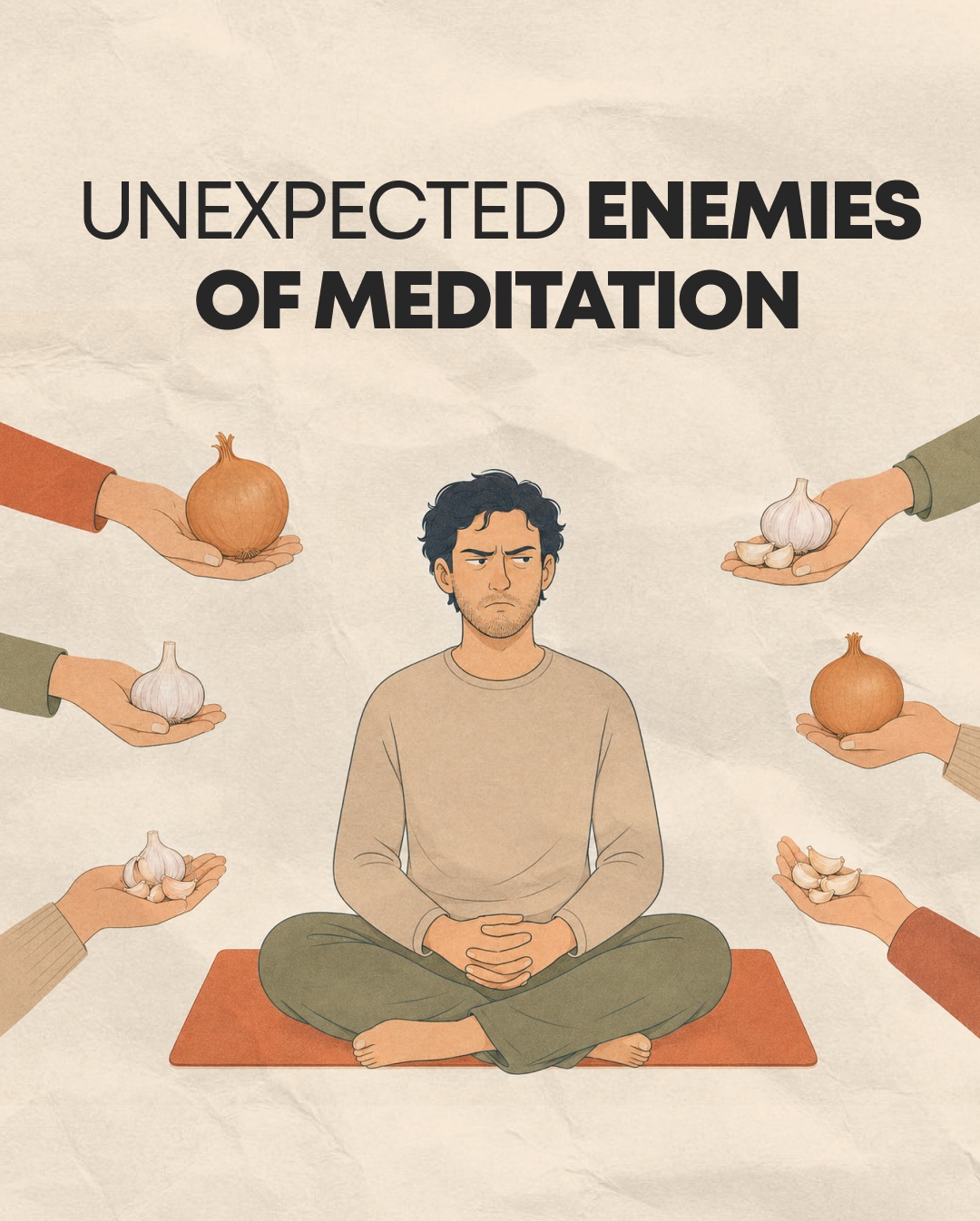
According to Ananda Marga’s yogic way of life, food is not merely a source of physical nourishment. What we eat can also influence our mind, emotions, energy and meditation. For this reason, a sentient (sáttvika) diet is encouraged for those seeking physical well-being, mental clarity and spiritual development.

🌱 Why avoid onion and garlic?

In the yogic classification of food, onion and garlic are generally regarded as static (támasika). Although they are widely used as food and have various nutritional properties, the yogic dietary approach considers their overall effect on the mind unsuitable for deeper spiritual practices.

For a meditation practitioner, the aim is not only to maintain a healthy body but also to cultivate a calm, subtle and concentrated mind. Foods that create excessive stimulation, heaviness or restlessness are therefore avoided as part of this discipline.

🌿 Flavour without onion and garlic

A sentient diet does not have to be bland. Many natural spices and herbs can create rich flavours while supporting a balanced way of eating:

  • Turmeric – widely valued in traditional diets and adds warmth and colour.
  • Cumin & coriander – aromatic spices commonly used to enhance flavour and digestion.
  • Fennel & cardamom – provide freshness and a naturally pleasant aroma.
  • Asafoetida (hing) – used in small quantities to give dishes a deep savoury flavour and is a popular alternative in onion- and garlic-free cooking.

🥗 Food as part of Sádhaná

Ananda Marga encourages us to become conscious not only of what we think and do, but also of what we eat. A sentient diet, together with meditation, ethical living, adequate rest and disciplined habits, forms part of a holistic way of life.

The purpose is not simply dietary restriction. It is to create conditions that support a healthy body, balanced mind and progressive spiritual life.

Eat consciously. Live consciously. Meditate deeply. 🌿🧘

#AnandaMarga #WayOfLiving #SentientDiet #SattvikaFood #Meditation #Sadhana #YogicLifestyle #HealthyLiving #Spirituality

VICTORY OF DHARMA: HONOURING 48 YEARS SINCE BÁBÁ’S RELEASE – 2nd August, 1978

VICTORY OF DHARMA: HONOURING 48 YEARS SINCE BÁBÁ’S RELEASE – 2nd August, 1978

SHRII PRABHÁT RAIṊJAN SARKÁR A.K.A. SHRII SHRII ÁNANDAMÚRTI
SUPREME GURU OF ÁNANDA MÁRGA

Compiled by Ácárya Gatimayánanda Avadhúta, CTS, Sweden

A Historical Record of Persecution, Sacrifice, and the Crucible of Itihása

The Paradox of Eternal Glorification is this: those whom Itihása — benevolent history — places on the pinnacle of eternal glorification are invariably subjected to the ultimate ordeal of endurance in their lifetime.

Defying physical law, the Supreme Guru’s fast lasted 1,946 to 1,950 days, while His incarceration, as per official records, was 2,407 days. Considering His physical condition, BÁBÁ was bedridden from 11th December 1974. His condition was extremely grave, with no one to attend to Him. The jail authorities, actively provoked by a violently hostile C.B.I., created an environment where anything could have happened to BÁBÁ at any moment.

SPIRITUAL RESOLVE TO ESTABLISH “YATO DHARMAH TATO IŚT́AH, YATO IŚT́AH TATO JAYAH” WAS ESSENTIAL FOR SURVIVING IN SUCH A HOSTILE JAIL ENVIRONMENT.

Those at the highest positions in the country showed the least respect for constitutional human rights and made public statements designed to influence the court.

All charges against the Mahásádvipra were concocted. He was kept in jail for 3 years without trial. Letters from the ailing Mahásádvipra regarding the torture meted out to Him remained unanswered.

The Government of India required no facts to issue false statements against a moralist propagating an ideology like ÁNANDA MÁRGA. 


The facts are in black and white; at this stage, they cannot be erased.

During this captivity of our Mahásádvipra, innumerable mysterious and wondrous incidents relating to BÁBÁ took place while HE was in jail.


One such amazing incident is recorded here so that readers may draw their own valuable lessons.

Persecution in Jail:

Throughout His long incarceration, BÁBÁ was continuously subjected to horrid atrocities perpetrated by crude and beastly government officers.
BÁBÁ’s personality inspired dread and fear among the jail staff, and it became increasingly difficult for the government to implement its wicked schemes.

In fact, BÁBÁ became an eyesore for the rulers. They tried every cunning trick to get rid of Him. Finally, under the pretext of medical treatment, BÁBÁ was poisoned.

“Niilakantha” BÁBÁ transformed this gruesome incident into a historical milestone in His life. Bábá accepted the poison and willingly underwent the dire suffering that followed.

When the government refused BÁBÁ’s demand for a proper judicial inquiry into the incident, HE began an indefinite fast and remained without food for as long as HE was in jail. HE was able to maintain His physical body through His knowledge of the special yogic practice of Kayakalpa.

However, to maintain an appearance of worldliness and normalcy, Bábá adopted the illusory garb of illness. As a result, BÁBÁ’s deteriorating health required special attention and medical care, and HE became critically ill.
The jail doctor was instructed to monitor BÁBÁ’s medical condition on a daily basis. For most jail officers, BÁBÁ remained an enigma — an entity regarded with fear and suspicion.

A Singular Demand for Truth

The Mahásádvipra’s singular demand was for a judicial inquiry into the poisoning incident of 12th February, 1973.

Shrii Shrii Ánandamúrti accepted the poison and survived. It was an auspicious day, yet a most foul crime was attempted on that day.
This crime did not originate in Patna, but in Delhi. Instructions to carry out the assassination attempt had come down a long chain of command from the highest political seat in the land.
The fate of the originator of this evil conspiracy — her horrific doom — is also a matter of historical record.

Despite BÁBÁ’s fast of five years, four months, and two days in support of this demand, a judicial inquest into His poisoning was never granted.
Quite obviously, those in power were convinced that any impartial inquiry would inevitably reveal their involvement.
There can be no other explanation, for under normal circumstances judicial inquests are generally granted without hesitation.

Many devotees feel that the long-term deleterious effects of this poisoning ultimately destroyed BÁBÁ’s health.
While the immediate effects were most harmful — indeed BÁBÁ entered a deep coma from which an ordinary person could not have regained consciousness — it is opinion that BÁBÁ compensated for the damage through the Tantric sádhaná performed in conjunction with His prolonged fast.

Mahásádvipra Shrii Shrii Ánandamúrti was poisoned on a scale that should have taken His life. Perhaps this was part of the reason for undertaking such a fast.
In popular opinion, for all intents and purposes, Beloved Bábá had recovered fully by the time, HE left prison.
Poison administered in any quantity from outside could never kill Shrii Shrii Ánandamúrti.

The Anatomy of State Persecution

The State’s actions demonstrated zero respect for law, courts, and basic constitutional human rights. Nasty public statements were made to influence the court.

Naked lies were fabricated to pacify the people and retain slipping power.

Government servants were banned from ÁNANDA MÁRGA activities without any material evidence.

As per the facts, the Supreme Court intervened to protect Márgiis by staying the Government’s baseless ban order.
ÁNANDA MÁRGA was used as a scapegoat to deflect public anger over government misdeeds. The awakening of moralists created fear among the immoral who wielded power.

An Untold Incident:

The Jail Doctor

This account concerns one such fortunate person — the jail doctor who attended to BÁBÁ’s medical needs.  Toward those prisoners and a few officers who cared for Him with sincerity and devotion, His love and grace flowed like the swiftly flowing Ganges through its Himalayan gorge.
The doctor was very diligent in his duties. He would regularly visit BÁBÁ, examine Him carefully, and personally supervise His medical condition.
The doctor had a very pleasant disposition and was well-mannered, courteous, and refined in his conduct.

In his own words:  “On the one hand, I have the determination and resolve not to drink anymore; on the other hand, I helplessly give in. This continuous battle of conflicting emotions rages day and night within me. I am now tired of this beastly state.

Tossed between these two mental states — one of lofty desires, the other of low and abject feelings — I have grown weary.

My condition is like the proverbial washerman’s donkey, shuttling between home and the loading dock, belonging nowhere. It is as though I am caught in a grindstone. Please save me, BÁBÁ! Grace this weak and helpless mind of mine.

“WHAT IS KÁYAKALPA YOGA?

There is a particular system of yoga called Káyakalpa Yoga in which the practitioner can suspend the activities of different parts of the body from within, and yet survive for five to ten years by drawing vital energy from the air.

Of course, in that state one cannot perform physical work, because the motor organs of the body remain temporarily inactive — their activities remain suspended.
Previously, this system of Káyakalpa Yoga was a recognized form of medical treatment within the scope of Hatha Yoga.

BÁBÁ’S RELEASE PROCESSION: A GLIMPSE

The Indian Nation – 3rd August 1978, Patna, India

A tumultuous welcome was accorded by enthusiastic devotees to the ANANDA MARGA SUPREME GURU when BÁBÁ was released from Bankipur Central Jail on 2nd August, after remaining inside for 2406 days.

The Hindustan Times – Wednesday, 5th July 1978, New Delhi

Court Frees

ANANDA MARGA Supreme President Shrii Prabhát Raiṋjan Sarkár
Patna, July 4 (UNI)

The Patna High Court today acquitted Shrii Prabhát Raiṋjan Sarkár, head of ÁNANDA MÁRGA, and four of his followers. All were honourably acquitted of the charges against them.

Mr. Justice Siveshwar Prasad Sinha and Mr. Justice Choudhary Sen Saran Sinha, while allowing the criminal appeals against the orders of the Sessions Court convicting Shrii Prabhát Raiṋjan Sarkár and four others — Ácárya Sarveshvaránanda Avadhúta, Ácárya Satyánanda Avadhúta, Barun Kumar, and Pavitra Kumar — ordered that:  “the appellants be set at liberty forthwith, unless they are required to be detained in any other case.”

In separate judgments, the Court observed that the prosecution had failed to substantiate the charges beyond reasonable doubt.

Mr. Justice Choudhary held that the appellants were entitled to the “benefit of the doubt”. 
The judgment was delivered by Mr. Justice Siveshwar Sinha.

Several MÁRGIIs, including foreigners, were present in the packed courtroom when the judgment was delivered.

Shortly afterward, the MÁRGIIs took out a procession hailing the verdict.

The Court noted that the approver had admitted to speaking falsely and to practising deception and hypocrisy, and that he had done so on the instructions of Shrii Prabhát Raiṋjan Sarkár. 

The judges stated that the approver was a totally unreliable witness, and therefore it was unsafe to accept the story narrated by him in his evidence.

The Court further observed that the investigating authorities appeared to have taken great pains to solve the mystery. They travelled from place to place, collecting photographs and documents in an effort to bring the culprits to book.  “If only it could be known with reasonable certainty who the real culprits were, one would not hesitate to award the maximum punishment provided under the law,” the Court remarked.
It felt that the investigating authorities must have been guided by the same sentiment.
However, their only mistake was that they became satisfied after securing an approver.
The Court pointed out that the approver had, in fact, outwitted the investigating officers.

The approver was granted pardon, but the mystery remained unresolved.

Fundamental Observations:

All cases decided in courts of law so far have gone in favor of ÁNANDA MÁRGA.

All attempts by vested interests to undermine ÁNANDA MÁRGA have been successfully countered.

The vilifications against ÁNANDA MÁRGA have been proven to be motivated and false.

The philanthropic and missionary activities of ÁNANDA MÁRGA have had such a great impact that the enemies’ endeavour to isolate ÁNANDA MÁRGA from the people has ended in fiasco.

The cohesive force of seemingly redoubtable enemies has failed to check the lightning pace of ÁNANDA MÁRGA in its onward march to conquer the hearts of all.

A close observation of events to date leads to the following conclusions:
The charges against ÁNANDA MÁRGA have been varied and serious.
They have ranged from child abduction, land-grabbing, and illegal possession of weapons, to conspiracy to murder the Prime Minister of India, and involvement in political activities, among others.  Yet, not a single charge has been substantiated.

What is most striking is that the followers of ÁNANDA MÁRGA have never been disheartened in the face of fierce antagonism.

Blessed with the love of Lord Shrii Shrii Ánandamúrti and inspired and armoured with the unique ideology, ÁNANDA MÁRGA has moved forward with determination to establish itself on the ruins of the immoral forces of society. 

The instructions emphasized by Shrii Shrii Ánandamúrti have kept, and will continue to keep, the morale of Ánanda Márgiis high.  It is therefore quite obvious that to live an ideal-based life filled with imputations and threats is not an easy task.
There are few who can withstand a long life of struggle and sacrifice without any prospect of enjoying creature comforts.  The followers, especially the whole-time workers of ÁNANDA MÁRGA, are trained to live for others and not for themselves. They do not concern themselves with physical needs, let alone comforts, and they would prefer death to entering into any understanding, alliance, or truce with vested interests. 

The highest ideal of human life is to march toward Cosmic Consciousness, and the workers of ÁNANDA MÁRGA will not rest until this ideal is inculcated in one and all, and human society — worthy of the name, and not a mere conglomeration of divergent and bellicose sects, communities, and races — is consolidated.

The extent and magnitude of the mission of ÁNANDA MÁRGA call for strict discipline and strong morality, which are regarded as the sine qua non of a worker. 

Defectors’ Psychology

Generally speaking, a person does not want to focus on his weaknesses, especially when he is afraid of losing his status and prestige.
The defectors know that they will be pitied if they cannot justify their defection.
Thus, they concoct numerous charges which they later use as arguments to justify leaving the organization.
They are ready to do whatever is required to keep their images resplendent — not with the brightness of glorious deeds, but with the sparks of verbalism.
They make a show of what they do not have, and the more they practice this, the more they debase themselves.

Scenes from the Release can be sighted below.

The frail and weakened Shrii Shrii Ánandamúrti was carried by his PA from the jail entrance and placed in a decorated car.  ÁNANDA MÁRGIIs had begun pouring into Patna from the previous day. They thronged the jail gate from early morning and lined up along one side of Fraser Road, awaiting the emergence of the Beloved Supreme Guru.

Several trucks and private vehicles were requisitioned by the MÁRGIIs to travel to the jail.
Trucks and vehicles carrying men, women, and children followed the procession.

Later, ÁNANDA MÁRGIIs held a congregation at the Patliputra headquarters to celebrate the Victory of Dharma.

On Supreme President release from jail, Shrii Shrii Ánandamúrti received a grand ovation.

Eight welcome arches had been erected, each named after the ÁCÁRYAs/AVADHÚTAs who had self-immolated to press the demand for the unconditional release of their Guru.

In an official statement, the followers of Shrii Shrii Ánandamúrti Ji described the victory of ÁNANDA MÁRGA as the Victory of Dharma. 

The bail order was brought here today by special courier on a plane from Ranchi.

Amidst unprecedented scenes of jubilation, and with joyful cries of “BÁBÁ Nám Kevalam”, the founding father and Supreme President of the 23-year-old socio-spiritual organization ÁNANDA MÁRGA, Shrii Prabhát Raiṋjan Sarkár, also known as Shrii Shrii Ánandamúrti, became a free man today after being released from seven years of detention in the local Bankipur Central Jail — UNI Report.

Cries of “ÁNANDA MÁRGA Amar Rahe” and “BÁBÁ Amar Rahe” rent the sky as many thousands of saffron-clad ÁVADHÚTAS AND FOLLOWERS became euphoric when the flower-bedecked vehicle carrying Mahásadvipra Shrii Prabhát Raiṋjan Sarkár emerged from the jail compound onto Fraser Road in central Patna.

In a rare gesture, the jail authorities allowed the flower-bedecked car to be driven right up to the cell to bring out Shrii Shrii Ánandamúrti.

Rays of a gentle smile spread across the radiant face of Shrii Shrii Ánandamúrti as Ávadhutas, accompanied by jail authorities, approached His cell with garlands.

After being garlanded profusely by five Ávadhutas, Shrii Prabhát Raiṋjan Sarkár was carried to the car in the arms of his Personal Assistant, Ácárya Ramánanda Avadhúta, who gently placed Beloved BÁBÁ on the car seat. He was then given a flag salute by a contingent of 58 volunteers dressed in para-VSS uniform.

I heard this account from Italian Margii devotee Sukhadeva. He was present at the event and witnessed it live while seated on an elephant. When he had come to India, he was imprisoned along with a few Dadas for some reason. He was also placed in the same cell and mentioned their names. Interestingly, after they were released, he got the opportunity to go to Patna, to Bankipur Jail for BÁBÁ’s release.

He said that Ácárya Ramánanda Avadhúta, BÁBÁ’s PA, carried Beloved BÁBÁ in his two arms, walked to the car, and gently placed BÁBÁ in His seat. As the car started to move, all the devotees witnessing the incident were overwhelmed, yearning for just one glimpse of the Beloved as He was escorted by His volunteers. There was an elephant in the procession, and thousands of devotees had come from all over the globe.
“Two elephants were ridden by overseas Margiis and other foreign devotees. One camel and a number of horses followed, moving to the tune of a band as the procession passed through seven decorated welcome arches.”As the car moved out, the main gate was opened by the security staff, and BÁBÁ travelled through what seemed like a virtual sea of saffron-clad, placard-bearing, ecstatic followers, all vying with each other for a glimpse of their “SUPREME GURU”.As the royal caravan proceeded towards the Pataliputra headquarters, thousands of ANANDA MÁRGIIs — men and women who had gathered from far-off places — ran behind the car, showering rose petals along the five-kilometre-long route.

They burst crackers as a mark of their joy.The caravan was led by pilot escorts on motorbikes, followed by BÁBÁ’s car.

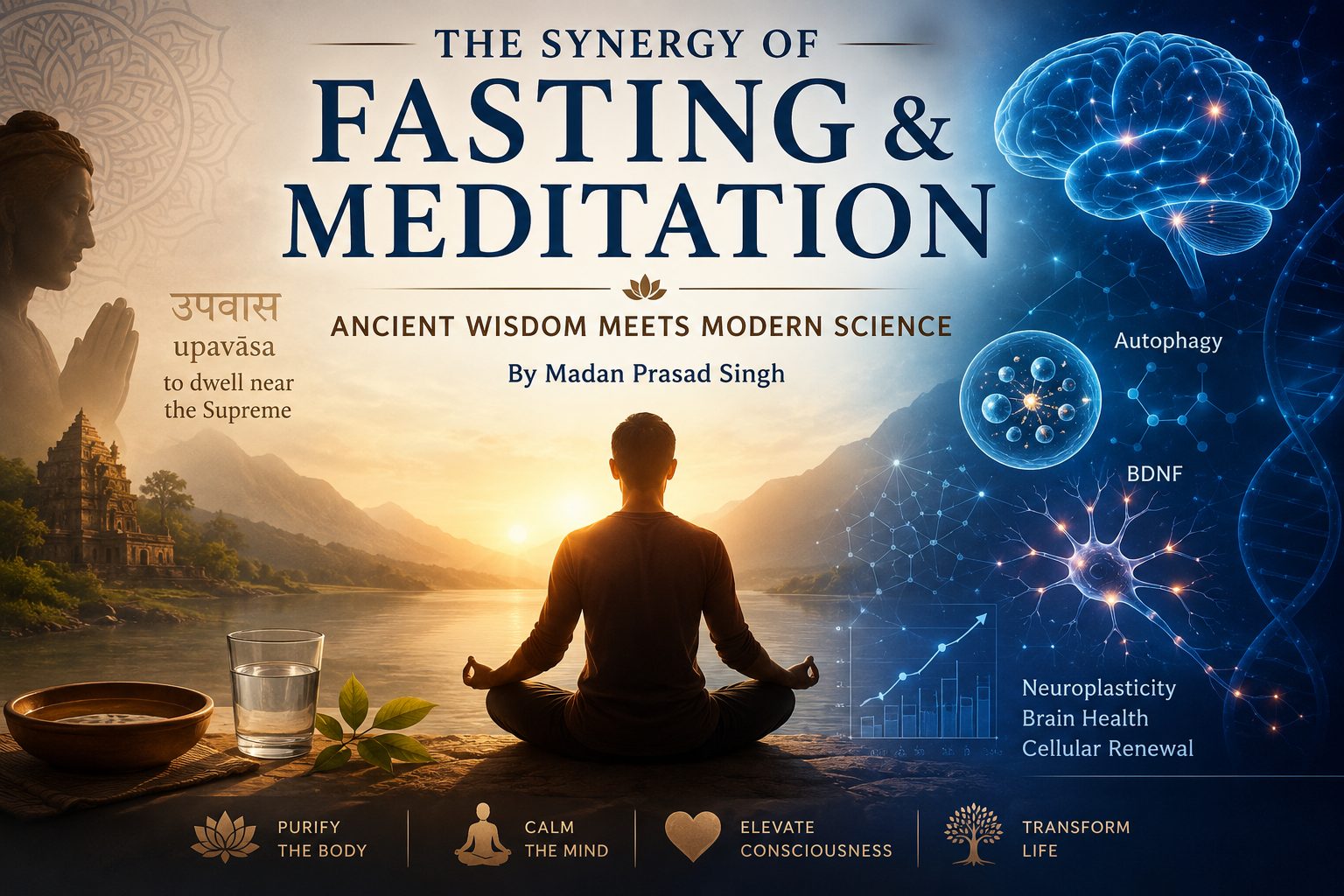
The Synergy of Fasting and Meditation: Ancient Wisdom Meets Modern Science

The Synergy of Fasting and Meditation: Ancient Wisdom Meets Modern Science

By Madan Prasad Singh

For thousands of years, fasting and meditation have been practiced together in spiritual traditions across the world. Yogis, monks, and sages regarded them as complementary disciplines that purified the body, sharpened the mind, and elevated consciousness. Today, advances in biology and neuroscience are revealing that many of these ancient practices have measurable physiological and psychological effects.

Within the socio-spiritual philosophy of Ananda Marga, founded by Shrii Shrii Anandamurti Ji (Prabhat Ranjan Sarkar), fasting is understood not merely as refraining from food but as a profound spiritual discipline designed to deepen one’s relationship with the Supreme Consciousness.

Shrii Shrii Anandamurti Ji explained the true meaning of upavása as follows:

“Upavása” – on these days of fasting, what are all spiritual aspirants to do? Mentally they should live near their Lord. On all other days they are to remain balanced between objective adjustment and subjective approach. On these days of fasting, however, on these days of upavása, one remains in closer proximity to the Lord than to oneʼs mundane duties. That is why these days are known as “upavása”. The word “fasting” does not represent the proper sense or proper spirit.

This interpretation shifts the emphasis from the physical act of abstaining from food to the deeper purpose of cultivating constant remembrance of the Divine. In Sanskrit, upa means “near,” and vása means “to reside.” Thus, upavása literally means “to dwell near the Supreme.” Physical fasting becomes a supporting discipline that helps the practitioner remain mentally and spiritually closer to the Divine.

Shrii Shrii Anandamurti Ji also explained the physiological significance of fasting:

The food that we take is converted, through transformation, into its final essence, called shukra. Shukra is the food of the brain. From it, the ectoplasmic particles of the unit mind are produced. If one fasts according to the system, no excess shukra will excite the lower vrttis of the mind, and the mind will be led toward the higher vrttis. Furthermore, as a result of fasting, the poisonous and unnecessary waste of the body gets destroyed and expelled. Moreover, the energy that is not expended in digesting food can be utilized for other purposes. Therefore, a fast day is an excellent time for sádhaná.

While the terminology reflects the yogic and spiritual science of Ananda Marga, modern biological research has identified several physiological mechanisms that resonate with some of these observations.

One of the most important discoveries is autophagy, the body’s natural cellular recycling process. During fasting, cells begin removing damaged proteins, dysfunctional organelles, and accumulated cellular waste, allowing healthier components to replace them. This process contributes to cellular maintenance and resilience. The molecular mechanisms underlying autophagy were elucidated by Japanese cell biologist Dr. Yoshinori Ohsumi, who received the 2016 Nobel Prize in Physiology or Medicine for this pioneering work.

Fasting also influences brain function. Research by neuroscientist Dr. Mark Mattson and others has demonstrated that fasting increases the production of brain-derived neurotrophic factor (BDNF), a protein that supports neuronal survival, learning, memory, and cognitive adaptability. Elevated BDNF levels are associated with improved brain health and greater mental resilience.

Meditation complements these biological changes. While fasting initiates internal physiological repair and conserves metabolic energy, meditation trains the mind to become calm, focused, and inwardly aware. Neuroscientific studies have shown that regular meditation enhances attention, emotional regulation, stress resilience, and neuroplasticity—the brain’s remarkable ability to reorganize itself by forming new neural connections.

Together, fasting and meditation create a powerful synergy. Fasting reduces physiological demands on the body while activating restorative processes. Meditation directs the conserved physical and mental energy toward self-awareness, concentration, and spiritual realization. In this way, each practice reinforces the benefits of the other.

Beyond physical health, these disciplines cultivate self-control, moderation, clarity, compassion, and resilience. They encourage individuals to transcend habitual patterns of thought and behavior, enabling a more balanced and purposeful life.

Although fasting offers numerous potential benefits, it should always be practiced responsibly. Extended fasting may not be suitable for everyone, including children, pregnant women, individuals with eating disorders, or those with certain medical conditions. Medical guidance is advisable before undertaking prolonged fasting.

Modern science does not claim that fasting or meditation is a universal cure. Rather, an expanding body of research suggests that, when practiced appropriately, they can support metabolic health, cognitive performance, emotional well-being, and healthy ageing.

The teachings of Shrii Shrii Anandamurti Ji present a broader perspective: the highest purpose of fasting is not simply physical purification but spiritual proximity to the Divine. Scientific research is increasingly illuminating many of the biological benefits associated with fasting and meditation, while the spiritual traditions remind us that these practices ultimately aim at inner transformation.

When the body is purified, the mind becomes clearer. When the mind is stilled through meditation, higher awareness naturally unfolds. In the harmonious union of fasting and meditation, ancient wisdom and modern science together point toward a healthier, more conscious, and spiritually enriched human life.

Thoughtful perspective on Yoga!

Thoughtful perspective on Yoga!

Based on the Idea of Bábá Shrii Shrii Ánandamúrti, Compiled By Acarya Gatimayananda Avadhuta(CTS Sweden)

The distinction to practice—that yoga is the merging of the unit soul (Jiiva´tma´) with the Supreme Soul (Parama´tmanah), rather than just physical exercise or a state of “thoughtlessness”—is a powerful theme for International Yoga Day 2026.

The fundamental ideology of Ánanda Márga yoga, distinguishing it from common physical exercises and traditional Raja Yoga definitions.

It affirms that true yoga is not merely the suspension of mental propensities or the absence of worry, but rather the spiritual unification of the individual soul with supreme consciousness.

The subject of discourse is for the necessity of cosmic ideation during practice to transform simple movement into a spiritual pursuit. Furthermore, its a vision for a righteous society where destructive animal instincts are replaced by refined intellect and spiritual purpose. It frames the cycle of life and death as a divine process of renewal, comparing the discarding of an old body to replacing tattered clothing. Ultimately, the writing about Yoga serves as a call to practical action, urging individuals to attain spiritual heights through persistent effort and devotion.

In Yoga practise, breathing without ideation it is only exercise and breathing with proper Ideation is part of Yoga.

In Ánanda Márga Yoga it explains that in the crude part of mind, that is in citta what the vrttis exist, all those propensities of human mind cannot be suspended and if there is suspension of all those propensities in the mind, it is termed as Yoga as per Patanjali, but citta vrtti cannot be suspended why because if anyone is in senseless condition or state,even in that state the citta vrttis gets suspended, there is no anger, no greed, then when one is senseless – is it possible in that state Yoga happens, no Yoga doesn’t happen, it is not so effortless or easy.

If in case of Raja Yoga’s definition, when the minds are free from all the worries that is how then worries must be annihilated and to remain without thinking, for becoming free from thought, During painful condition, if one sleeps and if one has slept for an hour, during that state of sleep there was no thinking, he was under peace for an hour, then it is termed as Yoga in the Philosophy of Raja Yoga, how to accept it and follow such practice.

So what is the Proper definition as per Ánanda Márga’s tantra definition, Sam´yoga yoga ityukto jiiva´tma´ Parama´tmanah – when jiiva´tma´ merges with Parama´tmanah – that itself is Yoga, the other yoga is not proper Yoga.

When a shirt is torn and you change it for a new one, it is not an act of cruelty. When the clothes become old and tattered, they are replaced with newer ones. This is the law.

Nobody wants to wear old, tattered and dirty clothes. When the body becomes senile and worthless, it is changed with newer ones.

So, to introduce Ánanda Márga Yoga lifestyle it is a prime time and we must materialise all the key knowledge practically to one and all. Every body and mind is structured according to its dominant desire.

Movement in the physical realm means construction of a Sadvipra society.

One who annihilates the physical unrighteousness is a Sadvipra.

In the psychic realm, you have to establish righteousness by removing the germs of crude mentality. Today everywhere in the world, there is the dominance of crude intellect.

Crude animal intellect is reigning supreme throughout the world today. You have to remove it.

In the spiritual realm, your task is to establish Cosmic Ideation.

The destructive aspects of Godhood are also due to His extreme kindness towards His creation.

God creates this universe, maintains it and goes on changing and destroying its useless parts with new ones.

When He finds a particular structure incapable of performing its part well, He discards it for another. It is like the organizer of a puppet show changing one of His puppets.

By effort what is not attained, it means by effort everything is attained-this must be kept in mind.

Lastly the profound spiritual philosophy of Ananda Marga, distinguishing true yoga from mere physical exercise or the simple suppression of thought. Discourse argues that authentic yoga is not found in a senseless state or a quiet mind, but rather in the intentional union of the individual soul with Supreme Consciousness.

By integrating proper ideation into every action, practitioners are encouraged to transcend animal intellect and establish a sadvipra society defined by righteousness and spiritual purpose.

In the end, the practitioners serves as a call to action to replace crude mentalities with cosmic ideation, viewing even the destructive cycles of life as acts of divine kindness that allow for renewal and progress.

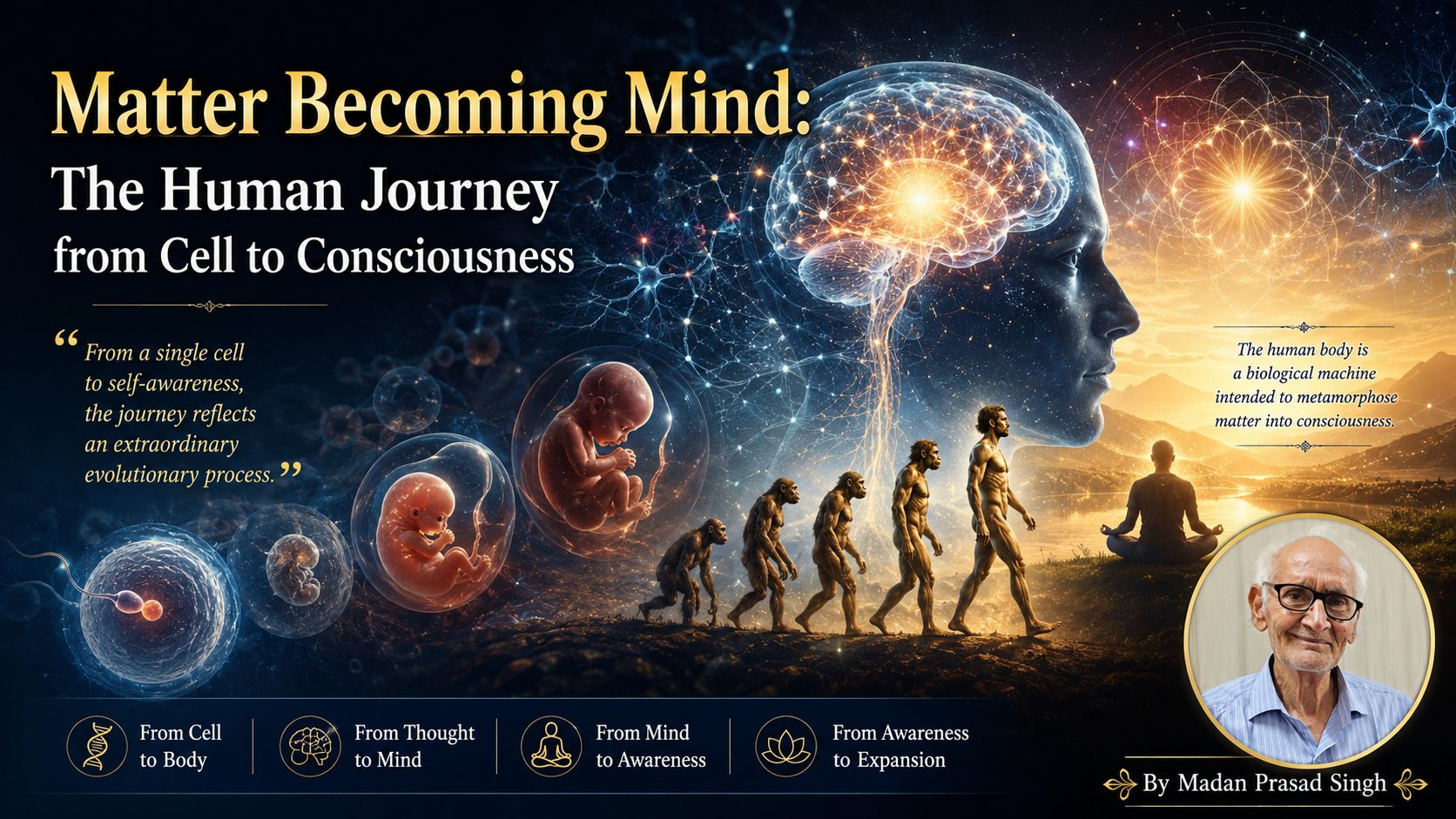
Matter Becoming Mind: The Human Journey from Cell to Consciousness

Matter Becoming Mind: The Human Journey from Cell to Consciousness

By Madan Prasad Singh

Among all known forms of life, humans are perhaps the clearest example of how matter can gradually transform into consciousness. A single fertilized cell—formed by the fusion of sperm and egg—silently carries within it the blueprint of a complete human being. From this microscopic beginning emerges a body containing nearly 37 trillion cells, an intricate nervous system, emotions, imagination, memory, and the mysterious sense of “I”.

Science explains much of this transformation biologically. During embryonic development, the monozygotic cell divides repeatedly and differentiates into muscles, bones, blood, organs, and billions of neurons. Yet the greatest mystery remains: how does organized matter become subjective experience? How does the brain generate awareness, identity, and self-reflection?

Humans are metazoans with a clear and distinct “I-feeling”—the inner sense that “I exist.” This I-feeling is mental in nature. Even identical twins, though genetically nearly the same, are never identical psychologically. They think differently, feel differently, develop different personalities, and make different choices. This uniqueness suggests that consciousness is not merely a mechanical assembly of matter, but an emergent phenomenon shaped by experience, learning, environment, and self-directed thought.

Modern neuroscience partially supports this view. Studies on neuroplasticity show that repeated thinking physically reshapes the brain. Thoughts are not passive shadows; they alter neural pathways. In a real sense, what we repeatedly think becomes part of what we are.

Thought may be understood as energy carrying instruction. Electrical impulses travel through neurons, but unlike ordinary physical energy, thoughts possess direction and meaning. A stone rolling downhill has energy but no intention. Human thought, however, can build a bridge, compose music, heal emotional wounds, or start a war. It is energy organized by awareness.

A useful analogy is that of a computer. The brain resembles hardware, while the mind functions more like software—dynamic, adaptable, and capable of self-modification. Yet even this analogy is incomplete because humans possess self-awareness: the thinker can observe his own thoughts. We can ask ourselves, “Why am I thinking this?” or “Should I continue this line of thought?” This capacity for self-observation distinguishes human consciousness from ordinary machine processing.

The “I” is our identity, but it is not fixed. It changes continuously throughout life. A child’s sense of self is simple and immediate. As knowledge, relationships, language, and experiences accumulate, the I-feeling becomes layered and stratified. A student, parent, artist, scientist, or spiritual seeker may all emerge from the same person at different stages of life.

Psychological development demonstrates a similar progression. Children pass through stages of cognitive development, gradually building more sophisticated mental models of reality. Likewise, modern developmental neuroscience shows that the human brain continues restructuring itself well into adulthood.

Our limitations and capabilities are deeply connected to how we think. Repeated fearful thinking narrows the mind, whereas creative and compassionate thinking expands it. Mental activity is like exercise for the brain. Just as repeated physical training strengthens muscles, repeated patterns of thought strengthen corresponding neural circuits.

Every thought creates a mental picture or pattern. These patterns become meaningful because there is a thinker behind them—an observing center capable of judging, continuing, or concluding thought. In meditation and introspection, many people experience this distinction directly: thoughts come and go, yet an observing awareness remains.

The human story, therefore, is not merely one of biological evolution but of the progressive unfolding of consciousness through matter. From a single cell to self-awareness, the journey reflects an extraordinary evolutionary process.

The process of evolution, which was dominant at the biological level, gradually shifted to the mental level. The nerves and glands became more complex. Brain size increased, while proportionately physical capacity decreased. Humans thus became predominantly mental beings. The manifestation of the I-feeling corroborates this development.

Some other species also possess an I-feeling, but they are largely guided by instinct. Humans, on the other hand, are guided by intellect. Our I-feeling is stratifiable into different layers of subjectivity: the doer-I, the knower-I, and still subtler layers. Furthermore, humans can think, “In waking, sleeping, and dreaming states, I am being watched by the One whom I do not see.” When one meditates on such an object, the mind undergoes expansion.

The idea or object that tends to expand the arena of the mind has been called subjectivated pabulum. Our objects of thinking can broadly be classified into subjectivated and objectivated pabula based on their impact on the mind. This terminology was coined by P. R. Sarkar (Ananda Murti), who redefined cells and the process of evolution in a new light to explain the complexity of human behavior, as well as the extent and speed of evolution.

From this perspective, human life itself is an evolutionary journey. The peak of evolution is attainable. We have been designed to evolve much faster by taking advantage of our developed mental faculty and its flexible subjective counterpart, which is stratifiable into different layers of subjectivity, culminating in Supreme Subjectivity. This is the very goal aimed at in dhyana.

Human beings exist at different stages of evolution. Accordingly, some are predominantly instinctive, some intellectual, and still others spiritual. The full spectrum of reality—from matter to consciousness—can be observed in fully evolved human beings.

The human body is a biological machine intended to metamorphose matter into consciousness.

When we think about something, the idea is projected by the objective mind. The subjective layers then perform their respective roles in portraying, witnessing, and evaluating it.

What can be portrayed by the objective mind is considered objective reality.

MICROVITUM: A NEW CONCEPTUAL FRAMEWORK OF MYSTERIOUS CARRIERS OF LIFE ACROSS THE COSMOLOGICAL UNIVERSE

MICROVITUM: A NEW CONCEPTUAL FRAMEWORK OF MYSTERIOUS CARRIERS OF LIFE ACROSS THE COSMOLOGICAL UNIVERSE

Based on the Idea of Shrii P.R.Sarkar complied by Ácárya Gatimayánanda Avadhúta(CTS, Sweden)

Let’s connect microvita to the vast cosmology of space exploration and the concept of transcending the universe.

In a profound RU Club meeting, Shrii Prabhát Raiṋjan Sarkar introduces the concept of Microvita, which Shrii P.R.Sarkar defines as mysterious, sub-atomic entities that serve as the fundamental carriers of life across the cosmos. These entities exist on a spectrum of density, ranging from crude forms detectable by microscopes to subtle variations perceivable only through advanced spiritual intuition.

Unlike traditional science which focuses on carbon atoms, Shrii P.R.Sarkar or whom we dearly address as Bábá, reasons that Microvita are the true creator of both physical bodies and psychic structures. Bábá suggests that these entities propagate through various media, including sound, smell, and even ideas, forms, figures, allowing for the rapid spread of life or thought throughout the universe.

Ultimately, the idea of microvita calls for rigorous scientific and spiritual research into these forces to better understand the origins of vitality and solve modern societal challenges.

By gaining control over these emanations, humanity can transcend current intellectual limitations and achieve a deeper mastery over the mechanisms of existence.

In a few of this Renaissance speech, Shrii P.R.Sarkar introduces Microvita as the fundamental carriers of life, conceptualised as mysterious entities that exist on the threshold between the physical and psychic realms. He claim that these entities are subtler than subatomic particles and far more foundational to the vital principle than the carbon-based molecules traditionally studied by science.

By categorising them into three levels—ranging from those detectable by microscopes to those perceptible only through heightened spiritual conception—the concept of microvita express a universe where life and ideas are propagated across galaxies through these vibrational media.

At long last, Bábá calls for rigorous research into these subtle emanations, suggesting that mastering Microvita through spiritual sadhana practice and intellectual advancement is the key to solving the profound mysteries of cosmic existence.


 All of these Renaissance speech and related seminar sessions as well RU club meeting interactions was presented not merely as a “theory” in the sense of a speculative guess, but as a new conceptual paradigm and a call for a new branch of scientific and spiritual research.

While a traditional scientific theory often relies on observable data from the current “arena of senses,” Shrii P.R.Sarkár propositions that Microvita are objective entities that exist regardless of whether we currently have the instruments to detect them.

To clear this up properly, here is a “vital” explanation of why Shrii P.R. Sarkar gave course of instruction and demonstrated to practically prove on MICROVITUM over the short period of two and a half years from 31 December 1986 RU speech, Calcutta to 10 June 1989, Calcutta. It should be viewed as “something else”—specifically a fundamental bridge between physics, chemistry, biology, zoology, mathematics, material science, pyro-technology, bio cum para psychology as well apexed psychology, The Poles shift their respective positions and likely with Sidereal Year etc.

To quote from Shrii P.R.Sarkar’s viewpoint, “Billions of microvita produce a single carbon atom. That is why it cannot be said that everything comes from carbon atoms. Rather, the carbon atoms come from microvita. Not only carbon atoms, but all other kinds of atoms are the creation of microvita. Naturally, chemistry, biochemistry and all other associated branches of science will undergo a revolutionary change. A day is sure to come when an omega of mathematics will coincide with an omega of biochemistry. All formulae and theories followed up till now will have to be reformulated, redefined and reclassified.

Why Shrii Sarkar’s labels Microvita to be Mysterious emanations, it is not just an Idea. Shrii Sarkár labels because Microvita as a “Mysterious Emanation of Cosmic Factor”, to be proven that it must be used scientifically to describe something that we know exists through its effects (actional vibrations) but whose internal characteristics are not yet fully understood by modern instruments.

And regarding emanation”, it is described as a fundamental outpouring or creation within the “Returning phase” of Cosmic expression, where crude matter is being metamorphosed back into subtle psychic states.

To explain more it is a Shift in the “Initial Point of Life” and as such it serves as a corrective to current biological theory.

While modern science treats carbon atoms or carbon molecules as the “initial point of life,” Shrii P.R.Sarkár asserts that they have “little to do” with the actual origin of vitality.

But instead, the unit Microvitum is the actual “Root cause of Life” and the “carrier of Life” throughout the universe. It is the missing link that creates minds and living bodies in different celestial bodies.

In Bábá’s own words, on 4th October, 1989 at Calcutta from known source from our correspondent: NEGATIVE MICROVITA ATTACK AT TRAINING CENTRE: SHRII PRABHÁT RAIṊJAN SARKÁR SAID “A SPECIAL KIND OF NEGATIVE MICROVITA HAS COME FROM ANOTHER PLANET. IT WANTS TO DESTROY THE LIVING ORGANISMS OF THIS EARTH. IT HAS NO NAME”.  ITS EFFECTS WILL BE MORE AND QUICKER ON THOSE WHO HAVE NO MOUSTACHE AND BEARD. THE LADIES WILL NOT BE AFFECTED.” BÁBÁ WAS TELLING EVERYTHING AS IF HE KNEW THE WHOLE THING.

BÁBÁ SAID WITH AUTHORITY: “I WILL NOT ALLOW TO LET THE EARTH BE DESTROYED.”

So it reveals a new category of existence and thus proposes a category of existence that does not fit into the current binary star of “physical” versus “mental.”

Its position is that Microvita sit precisely between the electron (the smallest unit of physicality) and ectoplasm (the substance of the mind). Regarding its subtlety we must understand it is because they are “subtler than atoms,” they represent a sub-atomic stratum of reality that requires a “special type of perception” or a “spiritually oriented mind” to be fully realized.

So, a framework for Future Research, Shrii P.R.Sarkár frames this ideas through various discourses stating it is a gigantic research task that is “extremely necessary” for solving the problems of modern society.

Shrii P.R.Sarkar argues that, the current term “virus” is vague and should be replaced by the more precise concept of “Microvita”.

Understanding Microvita is the key to gaining proper control over the forces of life and the spread of ideas through “conceptionally developed minds”.

For conclusion to state that Microvita is a theory versus realization, in summary, this article is an invitation to transition from perception (what we see) to conception (what we can understand through deep intellect and spiritual practice).

It declares that through Sadhana (spiritual practice), humans can develop the “conceiving power” to unlock the secrets of these entities, moving the concept from a “mysterious” proposal to a controlled reality.

Thus, Microvita represents entities whose existence is acknowledged through their effects, yet whose fundamental characteristics and internal mechanics remain beyond the current limits of human sensory perception and conventional scientific instrumentation.

In a modern scientific environment, this can be elaborated as follows, the “Mysterious” nature like that of epistemic(epistemology) gaps, from a scientific perspective that, Shrii P.R.  Sarkár explains that “mysterious” is applied when the existence of a phenomenon is known—often through its actional vibrations or expressions—but its specific properties and particulars are not yet understood.

When beyond the standard model, these entities occupy a sub-quantum or “sub-electronic” stratum, being described as subtler than electrons, protons, neutrons, or positrons. Under limitation of observation, it is because they are not of a protoplasmic order and do not rely on carbon atoms, they do not fit into the current biological definitions of life.

So, there are detection challenges which has to be experimented while “crude” Microvita may be detected by highly developed microscopes (often vaguely categorized by modern science as “viruses”), “subtle” and “highly subtle”.

Microvita escape direct observation and can only be inferred through their impact on the physical and psychic realms, and secondly “Emanation of Cosmic Factor”, has to be introduced as a Non-Materialist Origin, thus this name is phrased as “emanation of Cosmic factor” positions Microvita as fundamental outpourings from a higher order of cosmic existence.

As per the Cosmic Cycle of creation, this phase of expression, they are described as creations within the “Returning phase” (introvert phase, that is Pratisaincara in Ananda Marga Ideology) of Cosmic expression, where crude matter is metamorphosed back into subtle psychic states. It is the bridge entity that they function as a bridge between the physical and the psychic, positioned precisely between ectoplasm (psychic substance) and the electron (physical substance), though they are neither.

From the Universal Mobility, there are as emanations, they move “unbarred” throughout the universe, crossing nebulae,  galaxies, milky way, supernova etc without being hindered by atmospheric or barometric conditions, thirdly to verify the recent scientific conceptualization, if translated into contemporary scientific terminology, Microvita can be viewed as non-carbon-based information carriers or proto-vital entities.

If we consider the information theory, then Subtle Microvita use “Ideas” as a medium for movement. So Shrii P.R. Sarkar’s says, a highly developed mind can act as a catalyst, spreading these “emanations” across planets or the universe, suggesting a mechanism for the universal propagation of consciousness and life.

But in relation to vitality beyond carbon, it asserts that the unit Microvitum—not the carbon molecule—is the true starting point of vitality.

This imply that life is an emanation of a subtler field rather than an emergent property of chemical reactions. By seeing its actional Vibrations it can be referred much like “dark matter” is inferred through gravity, subtle Microvita are understood through their “actional vibrations” or the results of their expressions in the physical world.

To recollect why they are called “mysterious emanations” is because they represent a sub-atomic, non-protoplasmic reality that originates from the Cosmic Factor and serves as the fundamental carrier of life and thought throughout the universe, awaiting a more advanced level of human “conceiving power” to be fully understood.

Shrii P.R.Sarkar’s demonstrated Microvita which are the fundamental root cause and carriers of life throughout the universe.

But while conventional scientific thought often identifies carbon atoms or carbon molecules as the initial stage of life, but stated above carbon molecules have very little to do with the actual origin of vitality.

Instead, it is the unit Microvitum, rather than the unicellular protozoa or protoplasmic cell, that serves as the true starting point for living beings.

The relationship between Microvita and the origin of life is seriously explained that creation of Minds and Bodies exist because Microvita possess the power to create minds and living bodies across different celestial bodies, including stars, planets, and satellites.

It is structured with Universal mobility and thus act as the “carriers of Life” by moving unbarred across the universe, crossing galaxies and nebulae to spread life and ideas, which is beyond protoplasm. Bábá has demonstrated amongst His honourable highly spiritually advanced Spiritual aspirants, who have lively witnessed but unrecorded but below it is mentioned live recording fact witnessed by thousands Intuitional practitioners.

Thus Microvita are not of a “protoplasmic order,” meaning they do not share the protozoic or metazoic structures typically associated with biological life as it is currently understood, but cosmic Positioning.

Shrii P.R.Sarkar described it as a creation within the “Returning phase” of Cosmic expression, occupying a space between the physical (electrons) and the psychic (ectoplasm). Ultimately, it should be understood the origin and development of life requires extensive research into these entities, as many problems of modern society cannot be solved without grasping the “secrets” of Microvita.

Thus in first original discourse, Shrii Prabhát Raiṋjan Sarkár introduces Microvitum (plural Microvita) as a “Mysterious Emanation of Cosmic factor” that exists beyond the current reach of conventional human perception and scientific instruments.

When we dive deep to follow all Shrii P.R.Sarkar’s pointwise view from above references in His Microvita Book: Microvita in a Nutshell and article, it can be elaborated on the key concepts of Microvita as:

1. Fundamental Nature and Position

Microvita are entities that bridge the gap between physicality and psychic expression.

•                  Subtler than Atoms: They are described as being subtler than atoms, electrons, protons, or neutrons.

•                  Relation to Mind: In the psychic realm, they are subtler than ectoplasm or its extro-psychic coverage, endoplasm.

•                  Distinct from Protoplasm: Unlike biological life as currently understood, Microvita are not of a “protoplasmic order” and do not depend on carbon molecules or atoms.

2. The Three Categories of Microvita

Shrii Sarkár divides these entities into three broad categories based on their density and the means required to perceive them:

•                  Crude Microvita: These can be detected through a highly developed microscope. Shrii Sarkár notes that what scientists currently call a “virus” is actually a crude form of Microvita.

•                  Subtle Microvita: These cannot be seen through a microscope but can be perceived through their “actional vibrations” or the results of their expressions.

•                  Highly Subtle Microvita: These are beyond common perception and can only be realized by a “special type of perception” available to those with spiritually oriented aspirants or highly developed minds.

3. Mobility and Media of Movement

Microvita move throughout the entire universe, crossing galaxies and nebulae without being hindered by atmospheric or barometric conditions. They require media to travel, which include:

•                  Physical Media: Sound, tactuality (touch), forms, figures, fluids, and smell. On the occasion of Great Spiritual congregation, our Supreme Guru deliberates and demonstrates during His discourse on  “CULT, INFERENCE AND PROPENSITIES” on 4 June 1989 at Anandanagar, Headquarters of Ánanda Márga Pracaraka Samgha,  INDIA. Here Shrii P.R.Sarkar or Shrii Shrii Ánandamúrti verbalize that they are Positive Microvita, and application of Positive Microvita through planes of different Inferences applied on different planes of Propensities on physical and psychic human body. Do you follow? He also states, “It is not a Miracle, it is the practical side of what I said, during the speech, Renaissance Speech”.

•                  Psychic Media: Subtler Microvita move through Ideas. A person with a “great conceptionally developed mind” can spread ideas across planets or the universe using Microvita as carriers.

4. The Root Cause of Life

The first Microvitum discourse challenges the notion that life begins with carbon atoms or unicellular protozoa, until this date, there was no alternative, so from now onwards we know that, Microvita are the true “carriers of Life” and the “root cause of Life” in the universe. Microvita have the power to both create and destroy minds and physical bodies across different celestial bodies.

5. Historical and Spiritual Context

Shrii P.R.Sarkár connects these entities to ancient spiritual knowledge, stating that ancient Rishis identified seven species of Microvita based on their level of subtlety: Yakśa, Gandharva, Vidyádhara, Kinnara, Siddha, Prakrtiliina, and Videhaliina. Thus Shrii Sarkar’s suggests that through spiritual Sadhana (practice), humans can develop the “conceiving power” necessary to understand the secrets of these entities and eventually gain control over them.

6. Call for Research

The Renaissance speech about Microvitum discourse concludes that extensive research into Microvita is a “gigantic” and “extremely necessary” task for modern society. Shrii P.R. Sarkár asserts that many contemporary problems cannot be solved without a proper intellectual and scientific understanding of these mysterious emanations.

THE GURU’S MÁYÁ: UNDERSTANDING THE SUPREME ART OF THE IMPOSSIBLE

THE GURU’S MÁYÁ: UNDERSTANDING THE SUPREME ART OF THE IMPOSSIBLE

by Ácárya Gatimayánanda Avadhúta(CTS Sweden)

In many spiritual traditions, the word Máyá is often simplified to mean “illusion,” but its true depth is far more profound and active.

At its core, Máyá is defined as the creative power or principle that allows the impossible to manifest in our reality.

According to the teachings of Bábá, Máyá is described by the grammatical tantric construction aghat́ana-ghat́ana-pat́iiyasii Máyá: the power that is supremely skillful in making the impossible possible, and the possible impossible.

To understand Máyá, one must view the entire universe as a “Cosmic Magic Show”.

While a human magician might trick an audience for a few minutes, Máyá has sustained the appearance of a real, solid universe for billions of years, deceiving even the most brilliant philosophers. This is why she is called Pat́iiyasii, meaning the “Skilful of Skilful”.

Máyá operates by breaking the standard laws of logic and cause-and-effect:
– The Formless Takes Form: Guru’s Máyá allows the formless, infinite Brahma to appear as Krśńa or other finite forms.
– The Infinite in the Finite: She enables the vast, infinite consciousness to be perceived by the small, limited human mind.
– The One Becomes Many: Through Guru’s Máyá, the singular source of existence appears as a universe of billions of distinct objects and beings, a feat that defies traditional logic.


Guru’s Máyá across three levels of existence, so Guru Máyá’s influence is not just a high-level philosophical concept; it functions practically across three specific levels of our lives:
1. The Physical Level: Consider a tiny seed. Logically, a seed cannot become a massive tree on its own. It is Guru’s Máyá that mastermind the presence of soil, light, water etc making the “impossible” growth of the tree a reality.
2. The Mental Level: You may have a sincere desire to perform spiritual practices (sádhaná). While this is “possible,” but Máyá often introduces the “impossible” obstacle of laziness, preventing you from sitting for your sádhaná practice.
3. The Spiritual Level: For a “bound” being tied down by worldly attachments, liberation seems impossible. However, through the Sattva (pure) aspect of Guru’s Máyá and the Guru’s grace, that liberation is made possible.


Why Does Guru’s Máyá Exist?

Guru’s Máyá is not a force of devilment or a mistake in the universe. Her purpose is to exhibit Guru’s Liilá—the Divine Play.

If everything happened strictly according to cold logic and cause-and-effect, the universe would be nothing more than a “dead machine”.

Without Guru’s Máyá, there would be no yearning, no devotion, and no spiritual journey. Thus Guru’s Grace or Guru’s Máyá creates the “game of hide-and-seek” between the Creator and the created, allowing for the experience of love and deep longing.

Navigating the world of Guru’s Máyá for the spiritual sádhaka (aspirant), the goal is not to fight Guru’s Máyá with logic, because Guru’s Máyá is designed to break logic. Instead, one must learn to use Guru’s Máyá to defeat Máyá. This is done by taking the “impossible” thought—such as “I am too much of a sinner to reach the Divine”—and turning it into a “happening” through dedicated spiritual sádhaná practice.

The Guru’s Role is that the Guru is the Master of Máyá. By following the Guru’s guidance, a quester can move beyond the confusing aspects of this creative power. The Final Realization comes from Illusion to Guru’s Lap, which is the most beautiful transition in an aspirant’s (seeker’s) journey occurs when they truly realize the nature of Guru’s Máyá. At that moment, Guru’s Máyá is no longer seen as a deceptive force or a cold principle of measurement. Instead, the Guru is often seen as the ultimate consciousness, the unchanging, infinite consciousness.

Guru’s Máyá is the dynamic power or force of that consciousness (Supreme Guru).

Think of it like this:
– Guru = the ocean (vast, still, infinite)
– Guru’s Máyá = the waves (movement, energy, action)
The waves aren’t separate from the ocean; they’re the ocean’s expression, its power in motion. Similarly, Guru’s Máyá is Guru’s power expressing itself, creating, sustaining, and dissolving the universe. The spiritual aspirant (seeker) realizes that all the “impossible” tricks and games were merely Guru’s Máyá’s way of playing, eventually leading her manifested children back to Guru’s lap.