THE DADHICHI DIVAS: A COMMENDATION TO UNWAVERING COURAGE FACED BY BABA’S CHILDREN

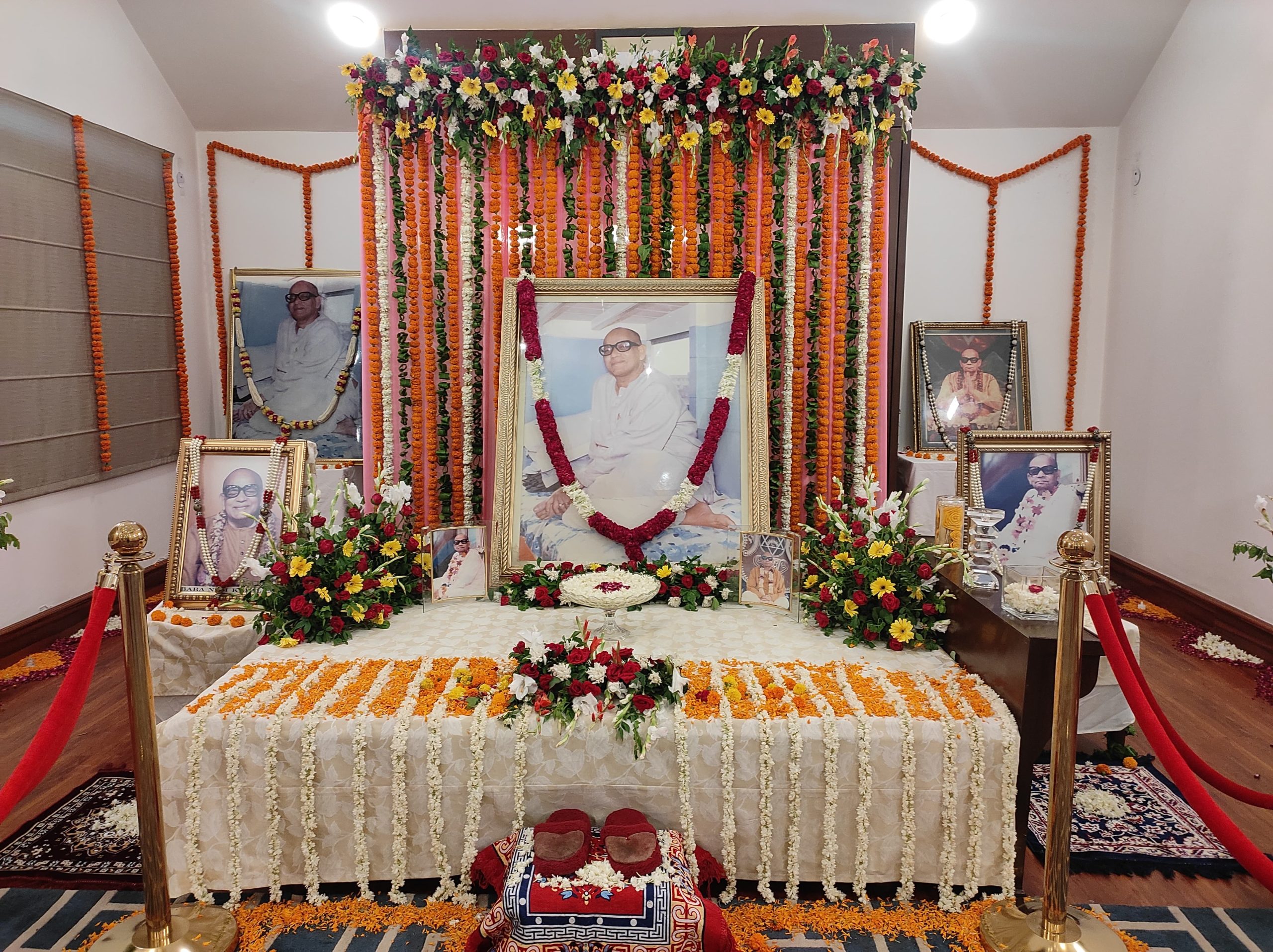
March 5th marks a painful day in the Ananda Marga calendar, as we honor the memories of five courageous Sadvipras who, like Dadhichi, willingly sacrificed their lives to vanquish a great evil on 5th March 1967 at Ananda Nagar. This day is remembered with profound unhappiness and joyousness, as we recall the heroic deeds of the Dadhichi Five and all those who have given their lives for the Ideology. 

The Dadhichi Divas/Day was born out of a tragical event that unfolded on March 5th, 1967. Five of Shrii Shrii Anandamurti jii’s most devoted WT children– Ac’Abhedananda Avt, Bharat Kumar, Prabhas Kumar, Abodh Kumar, and Ac’Sachidananda Avt. – demonstrated unshakable courage in the face of adversity. Despite being vastly outnumbered by the local goons or villagers especially instigated by communists mentality, as our cadres of Baba fought valiantly against their attackers, ultimately succumbing to their injuries and were butchered. 

Their sacrifice will never be forgotten, and their bravery has earned our Dadhicii brothers permanent place in the annals of Ananda Marga as well in Global chronological history. To commemorate their sacrifice, we observe the Dadhichi Day every year with half a day fasting, collective meditation, and a collective meal in the evening.

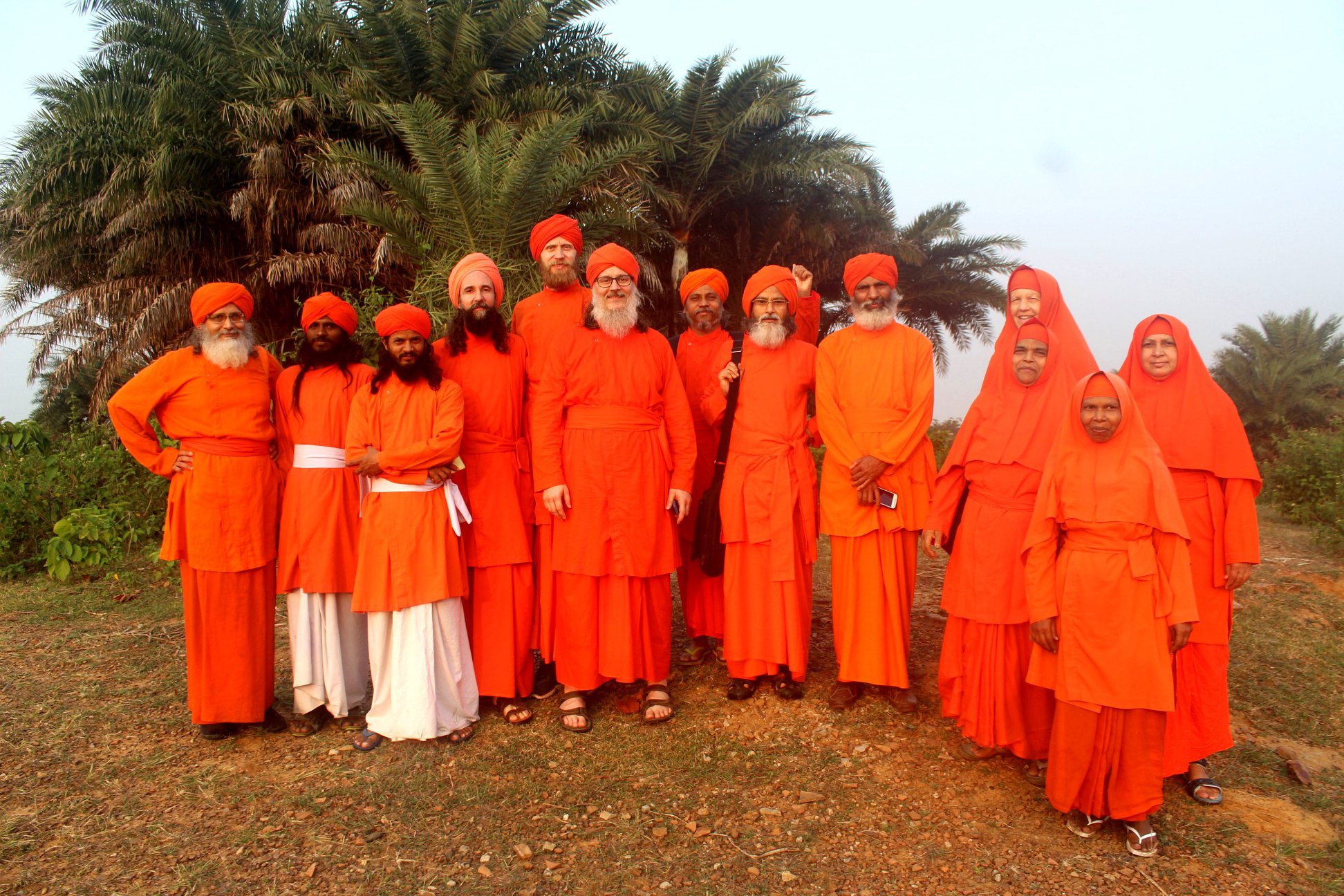
In the continuation, it is hereby mentioned the Calcutta Tragedy: A Heinous Act of Violence on April 30th, 1982, a gruesome incident shook the city of Calcutta. A group of thugs, incited by malicious propaganda of communists again, surrounded a group of Ananda Marga sannyasi monks and sannyasi nuns attending an educational convention. The attackers blinded them with acid, mutilated them with knives, beat them with iron rods, and burnt them alive. 

The brutality of the attack sent shock-waves throughout the city, with widespread outrage and condemnation. The local police, despite being in close proximity, failed to arrive on the scene in a timely manner. The perpetrators, though identified, were never apprehended or brought to justice even to this day. 

The victims were none other than Baba’s children to face this heinous crime were our Dadhicii’s – 16 sannyasi monks and – 1 sannyasi nun. 

Their memories will live on, and their sacrifice will continue to inspire us to uphold the principles of justice, compassion, and righteousness. 

“As humanity stands at the threshold of a crucial moment, two distinct paths lie before us. On one side, a radiant new era beckons, promising unprecedented glory and transformation. On the other, the remnants of a bygone era linger, worn and weary. 

Baba’s message conveys for all time, a sense of urgency and hope, urging individuals to seize the opportunity to create a brighter future. It emphasizes the importance of spiritual growth, renewal, and collective effort in shaping a glorious new era. The tone is inspirational, motivational, and optimistic, encouraging all our Baba’s children to embrace change and work towards a better tomorrow. 

Truly at His wee bit Grace, 
Acarya Gatimayananda Avadhuta

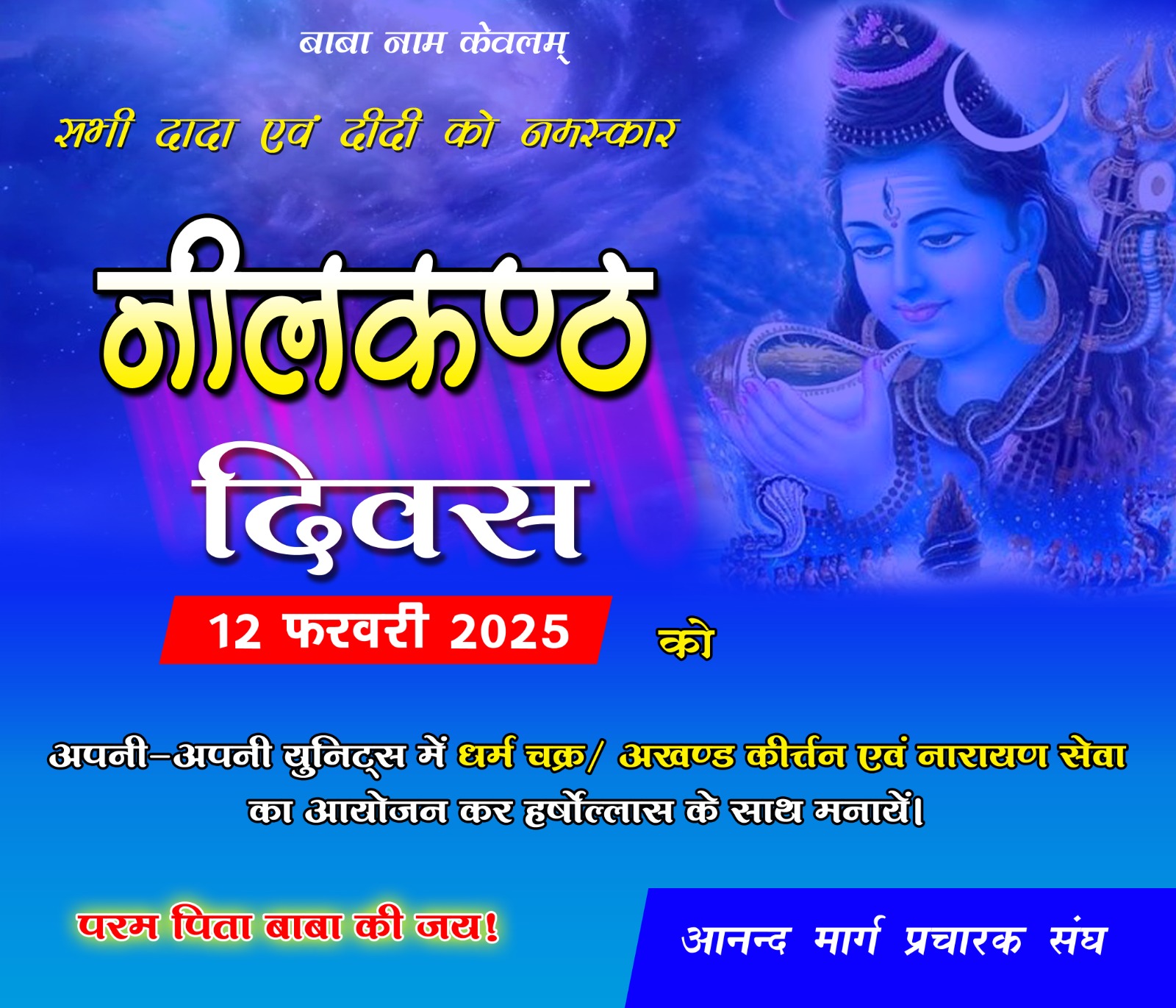
Observance of Niilakanta Divas on 12 February, 2025 !

Baba’s profound message resonates deeply within us: “All beings in this universe are kith and kin… none is despicable… all are equally respectable… and entitled to equal love and affection.” As we navigate the complexities of our world, we must recognize that every problem is a collective concern, requiring a unified response.

In the face of adversity, we draw inspiration from Baba’s words: “Degradation is impossible for one who has accepted the Supreme Being as one’s life’s ideal.” As we move forward, let us remain steadfast in our commitment to Neo-Humanism and its transformative power.

As we approach Niilakanta Divas on February 12th, we recall the poignant incident in which our beloved Baba was poisoned in Bankipur Central Jail in 1973. This day has been consecrated as Niilakanta Divas, symbolizing Baba’s selfless role in absorbing the poison, much like Lord Shiva’s legendary act of saving the universe by drinking the poison and retaining it in His throat, which turned blue.

In commemoration of this event, we honor Baba’s unwavering spirit and His unshakeable commitment to protecting humanity. As we observe Niilakanta Divas, let us reaffirm our devotion to Baba’s ideals and our pledge to uphold the principles of Neo-Humanism.

February 12th every years holds profound significance for Ananda Margiis worldwide. On this day in 1973, our Most Lovesome Guru, Shrii Shrii Anandamurti ji, was treacherously poisoned by a prison doctor in Patna’s Bankipur Jail. This heinous act was an attempt to silence His voice and thwart His mission.

Throughout history, visionary leaders and spiritual icons have faced similar persecution, often meeting with tragic ends. However, Ananda Margiis choose to observe this day not as a somber occasion, but as a celebration of triumph and resilience.

We commemorate February 12th as Niilakantha Divas, an auspicious day that honors Lord Anandamurti ji’s unwavering spirit and unshakeable commitment to establishing and protecting dharma.

This observance serves as a poignant reminder of the enduring power of spirituality, compassion, and wisdom. As we reflect on the significance of Niilakantha Divas, we reaffirm our dedication to the principles of Ananda Marga and our commitment to spreading love, peace, and harmony throughout the world.

Throughout Ananda Marga history, Our Beloved Baba, who have dared to challenge injustice and seek clarification on doubts have often faced severe repercussions.

Baba since His advent have sought truth and protested against wrongdoings so He along with His missionary followers were frequently targeted by evil forces that sought to maintain their power and control. One of the most nefarious tactics employed by these forces was the administration of poison to Beloved Baba, a subtle yet deadly means of silencing dissenting voices.

In addition to physical harm, these individuals were also subjected to slander and character assassination. Our Ananda Marga mission’s reputations were tarnished, and their credibility was undermined through malicious rumors and false accusations. The perpetrators of these injustices often misused their authority, exploiting their positions of power to mercilessly deal blow after blow to those staunch margiis and Dadas/Didis, who dared to challenge them.

The assaults were not limited to physical harm; they also took the form of emotional and psychological trauma. The victims were often left feeling isolated, vulnerable, and powerless. Despite these overwhelming challenges, many individual missionary continued to courageously speak truth to power, even in the face of extreme adversity.

Our margiis/Dadas/Didis bravery and resilience serve as a testament to the human spirit’s capacity for endurance and resistance. However, it is also essential to acknowledge the immense suffering and hardship that entire Ananda Marga endured. Their struggles should not be forgotten or overlooked, and their sacrifices should be honored and remembered.

In remembering these courageous cadres of Ananda Marga Society, we are reminded of the importance of standing up against injustice and seeking truth, even in the face of overwhelming opposition. Our cadres of Ananda Marga sets examples inspire us to cultivate the courage and resilience needed to challenge evil forces and promote justice, compassion, and equality. By learning from their experiences, we can work towards creating a more just and equitable society, where individuals can seek truth and challenge injustice without fear of retribution.

The flame of a lamp has the profound ability to illuminate countless other lamps, spreading its warmth and light far and wide. Similarly, a great personality Baba had the power to awaken numerous sleeping hearts, inspiring and motivating them to reach their full potential. This phenomenon is not limited to the physical realm; it also has a profound impact on the spiritual and metaphysical dimensions.

In the realm of spirituality, the eternal glow of the boundless élan vital of Cosmic Consciousness has been illuminating the life-lamp of universal humanism since time immemorial. This cosmic energy is the divine spark that resides within every being, guiding and directing them towards their higher purpose. As this energy awakens, it sets off a chain reaction, inspiring and uplifting countless individuals and communities.

The concept of élan vital, coined by French philosopher Henri Bergson, refers to the vital force or energy that drives all living beings to evolve and grow. In the context of Cosmic Consciousness, this energy is amplified and intensified, becoming a boundless and eternal force that permeates every aspect of existence. As this energy illuminates the life-lamp of universal humanism, it fosters a deep sense of connection and unity among all beings in and around the Globe.

Universal humanism is a philosophy that emphasizes the inherent value and dignity of every human being, regardless of their background, culture, or creed. As the eternal glow of Cosmic Consciousness illuminates this philosophy, it inspires our entire Ananda Marga designatories to work towards the betterment of humanity as a whole. This, in turn, creates a ripple effect, spreading love, compassion, and understanding throughout the world.

In conclusion, the eternal glow of the boundless élan vital of Cosmic Consciousness has been illuminating the life-lamp of universal humanism since time immemorial. As this vital energy continues to inspire and uplift humanity, it reminds us of our deep connection to one another and to the universe as a whole. By embracing this energy and allowing it to guide us, we can work towards creating a brighter, more compassionate, and more harmonious world.

February 12, 1973, marked a pivotal moment not only in Ananda Marga but also bears testimonial history, as a heinous crime which was perpetrated against Shrii Shrii Anandamurtiji. This assassination attempt, orchestrated from the highest echelons of power in Delhi, was a blatant display of malice and corruption.

The aftermath of this event is a testament to the enduring spirit of Shrii Shrii Anandamurtiji. Despite suffering from the debilitating effects of poisoning, He embarked on a remarkable 5-year, 4-month, and 2-day fast, demanding a judicial inquest into the circumstances surrounding the attempt on His life.

The refusal of the authorities to grant this inquest, despite Baba’s unwavering commitment to justice, raises disturbing questions about the involvement of those in power. It is evident that they feared an impartial investigation would expose their complicity in this nefarious crime.

Many devotees believe that the long-term effects of the poisoning significantly compromised Baba’s health. However, His remarkable resilience and determination enabled Him to recover and continue His mission.

Upon His release, Shrii Shrii Anandamurtiji resumed His tireless work, perhaps this was part of His reason for undertaking such a fast to set example in History that Supreme Father came out victorious and broke His fast and travelled throughout the world after His release and started the next day on 3rd August with a general darshan “LIVE WITHOUT FEAR” and henceforth rendering marathon dictating numerous books and treatises on various subjects, including the life histories of Lord Krsna and Lord Shiva, Neo-Humanism, 5018 Prabhata Samgiita series, regarding all multifarious branches of Philosophical, Social, Spiritual and Intuitional knowledge, and touch the Mysterious emanation of Microvita, Gurukul, and the among others.

This remarkable productivity, in the face of adversity, serves as a testament to Shrii Shrii Anandamurtiji’s unwavering commitment to His mission and His unshakeable spirit. Parama Pita Baba Ki Jai.

Truly at His Beloved Feet,

Compiled By:
Acarya Gatimayananda Avadhuta

Subhash Chandra Bose: An Icon of Youth andRevolutionary Spirit

On this momentous occasion of Netaji Subhash Chandra Bose’s birth anniversary, we remember a leader whose life exemplified courage, resilience, and unwavering commitment to the cause of India’s independence. Subhash Chandra Bose, born on January 23, 1897, in Cuttack, Odisha, continues to be an eternal source of inspiration for youth across generations. His revolutionary ideals and fiery determination make him a beacon for those striving for justice and freedom.

Subhash Chandra Bose’s extraordinary contribution to India’s freedom movement earned him a special place in the hearts of millions. Among his admirers was none other than Shri Prabhat Ranjan Sarkar, the propounder of PROUT (Progressive Utilization Theory). Sarkar, in his book The Problems of the Day, paid a heartfelt tribute to Bose, dedicating it with the words:

To the great hero Shrii Subhash Chandra Bose whom I did love and whom I do love even now.

(Problems of the Day, January 26, 1958, Trimohan, Bhagalpur)

Such a profound dedication speaks volumes about the enduring legacy of Bose as a leader who transcended his era to become an icon of youthful vigor and revolutionary zeal. The world today is looking for such Sadvipras – spiritual revolutionaries with moral integrity and courage – to save humanity from its challenges and lead it towards a brighter future.

Early Life: Foundations of a Visionary

Subhash Chandra Bose was born to Janakinath Bose, a successful lawyer, and Prabhavati Devi, a pious and disciplined homemaker. From a young age, Subhash displayed exceptional academic brilliance and a deep sense of patriotism. Influenced by the teachings of Swami Vivekananda and the ideals of selfless service, he cultivated a burning desire to liberate India from colonial rule.

After graduating with distinction in Philosophy from Presidency College, Kolkata, Bose moved to England to prepare for the prestigious Indian Civil Service (ICS). While he successfully cleared the examination in 1920, he chose to resign from the ICS, declaring that serving a foreign government was against his principles. This bold decision marked the beginning of his relentless pursuit of India’s freedom.

Bose’s Role as a Revolutionary Youth Icon

Subhash Chandra Bose’s fiery spirit and radical approach appealed immensely to the youth of India. His bold slogans, such as “Give me blood, and I will give you freedom,” galvanized young Indians to rise against British rule. Unlike the moderate leaders of the Indian National Congress, Bose advocated for complete independence and did not shy away from exploring militant methods to achieve this goal.

Bose’s election as the President of the Indian National Congress in 1938 and 1939 symbolized the growing influence of youth in the freedom movement. However, his progressive views often clashed with the moderate leadership, leading him to resign and establish the Forward Bloc, aimed at mobilizing the masses for uncompromising independence.

The INA: Mobilizing Youth for Armed Struggle

Bose’s belief in the power of youth found its most profound expression in the formation of the Indian National Army (INA). With the rallying cry of “Chalo Dilli” (March to Delhi), Bose inspired thousands of young Indians, including women, to join the INA and fight for their motherland. The creation of the Rani Jhansi Regiment, an all-female combat unit, was a testament to his progressive vision of empowering youth across genders.

Prabhat Ranjan Sarkar’s Tribute to Subhash Chandra Bose

In his book The Problems of the Day, written on January 26, 1958, at Trimohan, Bhagalpur, Sarkar expressed his deep admiration for Subhash Chandra Bose, dedicating the book with a heartfelt tribute:

“To the great hero Shrii Subhash Chandra Bose whom I did love and whom I do love even now.”

Sarkar’s dedication highlights the shared commitment of these two great thinkers to the ideals of justice, freedom, and the empowerment of humanity. Sarkar’s PROUT philosophy aligns with Bose’s vision of a self-reliant and equitable society, emphasizing the importance of youth in nation-building. The world is in dire need of leaders like Bose and Sadvipras, who can inspire, uplift, and guide society towards harmony and progress.

Legacy and Lessons for Today’s Youth

Subhash Chandra Bose’s life offers invaluable lessons for today’s youth:

  1. Courage in Conviction: Bose’s resignation from the ICS exemplifies the courage to stand by one’s principles.
  2. Visionary Leadership: His formation of the INA and the Provisional Government of Free India showcase his ability to inspire and organize people.
  3. Commitment to Social Justice: Bose’s emphasis on women’s empowerment and youth leadership underscores his commitment to an inclusive society.
  4. Global Perspective: By seeking international alliances, Bose demonstrated the importance of thinking beyond borders for a greater cause.

Conclusion: A Flame That Continues to Burn Bright

Subhash Chandra Bose remains an eternal flame of inspiration for young minds across the globe. His life’s work teaches us the value of resilience, innovation, and selfless service. As we celebrate his birth anniversary, let us pledge to uphold the ideals he stood for—a just, equitable, and progressive society.

In the words of Netaji himself:

“Forget not that the grossest crime is to compromise with injustice and wrong. Remember the eternal law: You must give, if you want to get.”

Let us honor his legacy by dedicating ourselves to the service of humanity and the creation of a better world for all. Today, as Shri Prabhat Ranjan Sarkar’s tribute reminds us, the love and reverence for Netaji Subhash Chandra Bose remain undiminished, lighting the path for generations to come. The world is looking for such Sadvipras to save the world and guide it toward a brighter future.

Transforming Youths Through Service and Spirituality

Transforming Youths Through Service and Spirituality: The Need of the Hour

The world today stands at a crossroads. We face crises on multiple fronts—climate change is spiraling out of control, political systems are increasingly marred by corruption and divisiveness, and economic disparities continue to deepen. Culture and values, once the bedrock of harmonious societies, are eroding under the weight of materialism and individualism. In such a bleak scenario, the transformation of youth through the twin principles of service and spirituality emerges not just as an option but as a necessity. This is the pathway to fostering a generation of Sadvipras—leaders with a balanced blend of courage, compassion, and integrity— capable of guiding humanity toward a brighter future.

The Current Crisis: A Leadership Vacuum

The failures of current leadership are evident in every sphere of life. Short-term gains dominate decision-making, while long-term sustainability and welfare are sidelined. Environmental

degradation, driven by greed and apathy, threatens our planet’s very survival. Politics, increasingly polarized, is more about power struggles than genuine service to the people. Economic systems favor the wealthy few, leaving vast populations in poverty and despair. The youth, disillusioned by these failures, often fall prey to cynicism, escapism, or extremism.

“ Role of Youth …

“When new ideas and technology come forward, it is the young minds that can grasp them faster. Our world needs a great change in order to move forward and progress. A new order, a new wave, will have to take the place of the old to remedy all the physical, social, economic, intellectual and spiritual ills of the world.

It is the youth, and the youth only, who have the vigor to bring about the necessary change. It is the youth who have the resilience to change and adapt and implement the vision of a new society. Without this vision, without the youth, the world will continue in the morass of suffering, injustice and exploitation that is our present social condition. It is the youth of the world only who can help bring about the new world order and the vision of a new humanity, Neo-humanism and implement PROUT for the welfare and happiness of all. As the vanguard of this new movement, the youth are indispensable.

Service: A Path to Collective Well-Being

Service acts as an antidote to the self-centered tendencies that pervade modern society. When young individuals engage in acts of service, they cultivate empathy, a sense of purpose, and a commitment to collective welfare. Service opportunities can take many forms, including:

  • Environmental initiatives: Tree planting, conservation efforts, and advocacy for sustainable practices.
  • Community engagement: Volunteering in underserved areas, organizing educational programs, or supporting cooperative enterprises.
  • Social justice advocacy: Working to eliminate inequalities and uphold the rights of marginalized groups.

Through service, youth learn that true leadership is rooted in humility and a commitment to uplifting others. They become active agents of change, addressing the systemic issues that perpetuate economic and social disparities.

Spirituality: Cultivating Inner Strength

While service transforms the external world, spirituality strengthens the inner world. In an age of relentless distractions and pressures, spirituality provides youths with tools to develop resilience, focus, and ethical grounding. Practices such as meditation, Practicing yoga Postures ( Asanas), and introspection foster:

  • Self-awareness: Understanding one’s strengths, weaknesses, and purpose.
  • Emotional intelligence: Managing stress, building meaningful relationships, and maintaining composure in adversity.
  • Universal outlook: Cultivating a sense of interconnectedness and compassion for all living beings.

Spirituality is not confined to rituals or dogmas. It is a dynamic process of aligning oneself with higher ideals and embracing the interconnectedness of life. When combined with service, it ensures that actions are guided by values and principles, not ego or self-interest and

“Átmamokśártha jagat hitáya ca” becomes the mission of life.

“One will meditate on the Supreme to become one with the Supreme, and at the same time, to purify one`s mind, one is to render selfless service to human society.” Without rendering selfless service to society, one cannot come in close proximity to the Supreme. And without practicing meditation, one cannot render selfless service to the society. So one should remember that one`s motto in life is Átmamokśárthań jagat hitáya ca.

( Shrii Shrii Anandamurtiji,’Unit Spirit and Cosmic Spirit’ Subháśita Sańgraha Part 21)

Creating Sadvipras: The Ultimate Goal

The concept of Sadvipra, as envisioned in Prout’s philosophy, embodies the ideal leader— someone who is morally upright, spiritually aware, and socially committed. Sadvipras are not mere administrators; they are visionaries who prioritize the collective good over personal gain. They are warriors against exploitation, guardians of justice, and custodians of cultural and spiritual values.

The process of creating Sadvipras begins with the youth. By immersing them in service and spirituality, we can:

  • Instill ethical leadership qualities.
  • Inspire them to challenge and replace exploitative systems.
  • Equip them to design and implement solutions for ecological balance, economic democracy, and social harmony.

The Urgency of Transformation

Time is running out. The challenges we face today are existential, and the window for meaningful action is rapidly closing. Youth represent our greatest hope. Their energy, creativity, and idealism, if channeled through service and spirituality, can reverse the tide of despair and destruction.

Educational institutions, community organizations, and spiritual leaders must unite to create platforms where youth can learn, serve, and grow. Governments and policymakers should prioritize programs that integrate values-based education with practical service opportunities. Media and technology must be leveraged to spread the message of this transformative approach.

Conclusion

The transformation of youths through service and spirituality is not a utopian dream; it is a practical necessity. It offers a way to address the failing leadership and systemic flaws that plague our world. More importantly, it nurtures the emergence of Sadvipras—leaders who can guide humanity through its darkest hour and into an era of balance, prosperity, and peace.

As we stand on the precipice of unprecedented change, let us place our faith in the transformative power of the youth. Through their service and spiritual awakening, a new dawn of ethical leadership and universal welfare can emerge. The time to act is now.

Contact us for More Info:


+91-7096280534

Human existence is an ideological flow

In our day-to-day busy lives, we have given up even a moment of contemplation on Him, the humble Creator of the universe. Have we adopted someone as our ideal? Have we set any parameters for our lives? How do we live our lives? What should our personality be? These are the questions we must answer and reflect upon.

Human beings are not only social creatures but also normative beings. As Shri Shri Anandamurti Ji beautifully observed, sanity is the only factor that differentiates humans from animals. Since the very beginning, humanity has strived to establish new dimensions of development. The journey to infinity is unceasing. Yet, in this materialistic world, the human mind is filled with endless imagination, seeking a contentment that often remains elusive. Despite these efforts, dissatisfaction persists as one desire is replaced by another. Physical happiness, being temporary, fades even before its taste can be fully savored. Why is this so? Because the pursuit of happiness lies beyond limitations, whereas the material world is bound by finite means. Not just human beings, but all living beings—herbs, shrubs, trees, and other creatures—are born with the ultimate goal of emancipation. This is the universal wish of all, irrespective of their religion—Hinduism, Islam, Christianity, or others—their ultimate aim is to attain God.

In today’s context, society’s structure reveals how little time people devote to contemplating the Almighty. They treat the idea of God as something to fit into spare moments, much like filling in blanks. During festivities, many believe that merely thinking of God is sufficient.

If one desires to eat a mango, one must make an effort to acquire it—either by obtaining it from others or purchasing it. In the same way, achieving divine realization requires effort. However, we are so engrossed in worldly activities that we have completely sidelined our contemplation of God. Consequently, we have no role models or ideals to guide us. To whom do we pay respect as our ideal? Do we have any standards or parameters for living a meaningful life? How should we shape our rare and precious lives? What kind of personality should we aim to develop? These are questions that require serious reflection and action.

We may be religiously influenced to some extent, but do we truly accept religious ideology and strive to follow it? Have we chosen an ideal for ourselves? To build a civilized society, we must adopt an idealistic stream of thought and agree upon principles to guide our lives. Everything has a specific quality that defines it. For instance, the defining quality of fire is to burn. Similarly, saints and respected individuals dedicate themselves in a specific direction, shaping their lives through their endeavors. They establish ideologies in their lives. The foremost aim of human beings is to achieve emancipation or God-realization and to serve all living beings. This is the dharma or intrinsic nature of humanity. Whether knowingly or unknowingly, every individual is on a voyage to God. Therefore, we must choose a proper and specific direction and follow the path of enlightenment.

Rendering service to the universe is essential. It must become our foremost duty and mission. How should this service be rendered? We must help those in need, especially during natural calamities such as floods, droughts, hunger, cyclones, and earthquakes. Great attention should also be paid to environmental protection through plantation and forest conservation. Keeping the Earth green is inevitable for sustaining life. Serving the hungry, disabled, frustrated, and helpless must be done with proper planning.

“To beggars, cooked food should be given to eat. Giving raw rice or money should be avoided.” 
— Shri Prabhat Ranjan Sarkar

An appropriate plan must be implemented to benefit needy and helpless individuals. It is better to provide essential needs such as food grains, clothing, shelter, education, and medical aid in a well-planned manner to enhance their physical, mental, and spiritual abilities. By embracing service to humanity as a goal, we align ourselves with the Almighty. The welfare of humanity demands it. Efforts in this direction, when firmly believed and sincerely executed, lead to the experience of supernatural happiness.

Goutam Pradhan
Raigarh, Chhattisgarh

The Dance of Microvita: Prabhat Samgiita, Capitalism, and PROUT’s Path to Spiritual Balance

The Dance of Microvita: Prabhat Samgiita, Capitalism, and PROUT’s Path to Spiritual Balance

(14th Sep. Prabhat Samgiita Day Special)                  By Rajendra

The Capitalist Urge and the Dance of Microvita

In today’s world, the overwhelming urge to acquire wealth drives many into the grip of capitalism, where accumulating resources becomes an all-consuming goal. According to the teachings of PROUT (Progressive Utilization Theory) and Ananda Marga, this desire to endlessly accumulate wealth arises from a deeper psychic ailment, caused by the influence of negative microvita called “yakśa”. These microvita stir the human mind into a frenzy, perpetuating greed and materialism.

Yakśas, one of seven types of  Devayonis , microvita, corrupt the mind when people lose their connection to higher ideals. This results in an insatiable hunger for wealth, reducing life’s purpose to mere material acquisition. In stark contrast to this, the influence of positive microvita, such as gandharvas, inspires the mind towards art, music, and deeper ideations that bring us closer to our spiritual essence. Gandharva microvita evoke  art, music,, creativity, and devotion, offering an antidote to the psychic affliction caused by capitalism.

Prabhat Samgeet: A Musical Path to Spiritual Awakening

At the heart of this spiritual progress lies Prabhat Samgiita, a unique genre of devotional music created by Shrii Shrii Anandamurti also known as Shrii Prabhat Ranjan Sarkar. These songs hold immense significance as they channel positive microvita into the human psyche, leading the mind toward divine love, devotion, and self-realization. Prabhat Samgiita is not just a musical form; it is a distinct “gharana” of devotional music that expresses mysticism and devotion through vernacular languages and global  folk melodies.

Each song in Prabhat Samgeet serves as a bridge between the individual and the Supreme, providing a direct connection between the devotee and the Divine. The songs are filled with optimism, hope, and infinite love, acting as instruments that expand one’s heart and accelerate the soul’s journey toward the Great. By channeling the subtle emotions of the human heart into vibrant melodies and rhythms, Prabhat Samgeet transforms personal longing into spiritual conversation.

In song 4403, for example, the devotee engages in a personal dialogue with the Supreme, reflecting the intimate nature of Prabhat Samgeet. This direct communication between the unit self and the Divine elevates the listener’s consciousness, moving them from the realm of the mundane to that of the Supra-Aesthetic Science—an experience where art and spirituality merge to illuminate the path to the Divine.

A Cultural Expression of Spiritual Ideology

Prabhat Samgeet is an expression of Shrii Shrii Anandamurti’s complete ideology. The songs capture multifarious aspects of life—spiritual, social, and emotional—encouraging individuals to move from darkness toward light. These songs act as positive microvita that elevate consciousness and cultivate a spirit of true devotion. Whether addressing themes of personal surrender, mysticism, or social upliftment, Prabhat Samgeet consistently calls humanity to higher awareness.

In song 1222, for example, the focus shifts toward social upliftment, addressing the issues of poverty, hunger, and suffering. Meanwhile, songs like 1090 awaken social consciousness, while 4370 directs the mind toward spiritual empowerment. This balance between addressing human suffering and invoking higher spiritual ideals makes Prabhat Samgiita a powerful tool for personal and collective transformation.

The Healing Power of Music and Spiritual Ideation

The healing power of Prabhat Samgeet extends beyond individual devotion to become a panacea for society’s ills. Where capitalism, driven by yakśas, degrades the human spirit, Prabhat Sangeet, guided by Gandharva Microvita, offers a path of renewal. These songs lift the human mind out of material obsession, reconnecting it with its higher purpose and aligning it with the universal rhythms of divine ideation.

Furthermore, the rāgas and melodies in Prabhat Samgeet have a deep spiritual significance. Shrii Shrii Anandamurti revived many ancient rāgas that had fallen into disuse, such as Raag Sindhu Bhairavii, and even created new, unnamed rāgas, thus enriching both the cultural and spiritual landscape. These musical compositions carry the capacity to channelize human tendencies from crudity to subtlety, transforming base desires into divine aspirations.

Prabhat Samgeet is a celebration of human life in all its forms. Whether through love for nature, as seen in songs like 3476, or the call to social service and universalism, as in 3714 and 880, this musical tradition provides a comprehensive spiritual and emotional map for humanity.

Prabhat Samgeet and the Universal Renaissance

The universal appeal and spiritual potency of Prabhat Samgeet position it as an instrument for global change, potentially ushering in a Universal Renaissance. By inspiring deeper levels of social consciousness and spiritual alignment, these songs have the power to transform individuals and society. They are more than just songs—they are a spiritual science, offering a direct path from darkness to light.

Shrii Shrii Anandamurti envisioned this musical tradition as part of a Sadvipra society—a future society marked by physical fitness, mental strength, and spiritual elevation. Such a society would not be driven by greed or materialism but by a harmonious balance of all human faculties—fueled by the ideals of Neo-Humanism, PROUT, and spirituality. The expression of devotion through Prabhat Samgeet helps align the individual with the collective mission of building a world rooted in rationality, justice, and universal love.

A Call for Transformation

As we face the challenges of capitalism and materialism, Prabhat Samgeet offers a remedy through its unique blend of devotion, mysticism, and social awareness. The teachings of PROUT and the profound spirituality of Prabhat Samgeet provide a roadmap for transforming both the individual psyche and the broader society. Together, they present a vision for a world where art, literature, spirituality, and social justice coexist harmoniously, guiding humanity toward a brighter, more equitable future.

In this global renaissance, Prabhat Samgeet becomes more than just a cultural artifact—it is a spiritual tool capable of shifting consciousness from the crude to the sublime, from capitalism’s insatiable greed to PROUT’s vision of economic democracy and universal well-being. This holistic integration of music, spirituality, and socio-economic ideology invites us to walk the path of light, where both the individual and society can flourish in harmony with the divine.

Reference:

  1. Crude and Subtle Microvita ,22 February 1987, Calcutta By Shrii  P.R Sarkar

Microvita in Nutshell ( AMPS Publication)

  • The Rule of Rationality ( Prout in a Nutshell Part 12 )
  • 5018 Songs of Prabhat Samgiita ( By. Shrii P.R.Sarkar )

 Healthy Spine The Key to Physical and Emotional Well-being

 “Healthy Spine The Key to Physical and Emotional Well-being” By Dr. Ashu

The spine, often referred to as the backbone of the human body, plays a crucial role not only in maintaining physical stability but also in nurturing emotional well-being. This intricate structure consists of a series of vertebrae, discs, nerves, and muscles, all working in harmony to support our body’s movements and protect the delicate spinal cord. From a medical perspective, the spine is central to our overall health, and any issues affecting it can have far-reaching consequences.

Physically, the spine serves as the foundation upon which our entire body functions. It provides structural support, allowing us to stand upright, walk, run, and perform various activities. Additionally, the spine houses the spinal cord, a vital component of the central nervous system that facilitates communication between the brain and the rest of the body. Any misalignment or damage to the spine can lead to a range of physical ailments, including back pain, sciatica, herniated discs, and even neurological problems.

Moreover, the spine’s health is closely intertwined with our emotional well-being. Research in the field of psychoneuroimmunology has shown that the mind-body connection plays a significant role in overall health. Emotional stress and psychological factors can manifest as physical symptoms, and vice versa. When we experience stress, anxiety, or depression, our bodies respond by tensing up, often leading to muscle tension and stiffness, particularly in the back and neck areas. This can exacerbate existing spinal issues and contribute to a vicious cycle of pain and discomfort.

In light of these interconnected factors, it becomes evident that maintaining a healthy spine is essential for both physical and emotional well-being.

The spine is crucial for self-esteem, constantly battling gravity’s force. Our discs, serving as shock absorbers, endure heightened strain as we stand, dance, and evolve with each generation. With the escalating hours spent sitting, we burden our lower backs and necks. Despite proximity to nature, our sedentary lifestyles prevail. It’s evident we’ve neglected a vital aspect of our well-being, necessitating immediate attention and correction.

While there are various approaches to achieving this, like walking, Exercises and Yoga Postures;  one particularly effective and preventive solution is Kaoshikii dance a new generation Yogic dance.

The True Friend of the Spine: Kaoshikii Dance

KAUSHIKII is a few minutes fitness exercise for body & mind. It is devotional dance-exercise. It has two components, ideation of supreme, rhythmic action engaging all parts of the body as well as mind.

Kaoshikii dance, a unique dance, combines physical movements, ideas and meditation to promote holistic wellness. Kaoshikii dance focuses on harmonizing the body, mind, and spirit through rhythmic motion and conscious thought process. By incorporating gentle stretches and repetitions, it helps preventing tension and stiffness in the spine, promoting flexibility and mobility. Additionally, the rhythmic nature of the dance fosters relaxation and mental clarity, reducing stress and promoting emotional balance.

From a bio-psychological perspective, Kaoshikii dance offers numerous benefits for spinal health and overall well-being. The rhythmic movements stimulate blood circulation, delivering essential nutrients and oxygen to the spinal tissues and promoting healing. The mindful focus on rhythm and movement helps release tension stored in the muscles, allowing for greater freedom of movement and improved posture. Moreover, the meditative aspects of the dance enhance mindfulness and self-awareness, empowering individuals to manage stress more effectively and cultivate a deeper connection with their bodies.

In conclusion, the spine serves as the cornerstone of physical and emotional health, and nurturing its well-being is essential for overall wellness. Kaoshikii dance emerges as a powerful solution, offering a holistic approach to spinal care that addresses both the physical and psychological aspects of health. By embracing this practice, individuals can unlock the potential for greater vitality, resilience, and joy in their lives. Let us dance our way to a healthier spine and a happier life!

The Universal Guide: Shrii Shrii Anandamurti’s Vision for a Harmonious World

The Universal Guide: Shrii Shrii Anandamurti’s Vision for a Harmonious World

-By Ananda Marga

Throughout history, during times of crisis and confusion, a universal human emerges whose profound personality and revolutionary philosophy steer the world away from chaos and destruction. These individuals embody the eternal soul of humanity and play pivotal roles in averting the decline of ethical values and societal collapse. For instance, Gautam Buddha arose during an era of blind bigotry, halting the erosion of moral principles. Similarly, Jesus Christ appeared when the West was beset by religious persecution, offering salvation and a new spiritual path. Each historical epoch presents a monumental problem to solve, and it is the universal person, with their deep understanding of the era’s dilemmas and complexities, who heralds the dawn of a new age.

For centuries, spiritual and religious leaders have been teaching mankind how to realize the Truth within themselves. Some have instructed their followers to shun the world and its temptations; others have preached simply that individuals must lead moral lives in society to attain eternal spiritual happiness. However, very few have ever discussed in detail the mundane spheres of government, politics, and economics. Development in these realms, it seemed, was not important for the spiritual journey of the individual soul.

Shrii Shrii Anandamurti, however, is a most unusual spiritual guide. His view is that this physical, material world is neither an illusion nor a great temptation, but the starting point of our spiritual journey. Thus, we must develop it even as we develop ourselves to make it a perfect base for spiritual effort. This effort is not the struggle of a few isolated individuals but the task of humanity as a whole. Human society and its institutions should not impede our progress; rather, they should be carefully planned and designed to accelerate our march toward perfection.

Shrii Shrii Anandamurti discusses all the problems that beset modern mankind—governmental corruption, economic injustice, overpopulation, crime—and offers practical solutions for them. Our first step is to realize that the true goal of humanity, the ultimate goal of evolution, is not the amassing of more and more material wealth but the expansion of consciousness. Through proper education and practical techniques of mental expansion, humanity will come to realize that the hoarding of wealth and all the ills of corruption and scarcity it creates are nothing but the misdirected longing of the human soul for infinite happiness—a longing that cannot be satisfied by money but only by internal bliss.

As human attention and activity are directed more and more toward subtler pursuits such as artistic endeavor and spiritual practice, the negative tendencies of hoarding and self-interest will be replaced by a new feeling of love and brotherhood. As we expand our minds toward the Infinite and learn to share our mundane treasures, we will realize more and more that we are indeed one humanity, that we are all the sons and daughters of one Infinite Intelligence Who is guiding us all to perfection. Instead of being based on competition and mutual hostility, society will operate through mutual cooperation and love.

We are living in a most unusual time. Governmental corruption is becoming more and more painfully evident all over the world. The over-indulgence of a small segment of humanity and the resultant poverty of the majority are creating an imbalance that is pushing the world toward its breaking point. This imbalance can lead to a collapse of the world economy. Today, even newly wealthy nations are feeling the strain of this imbalance, and it is clear that the current economic system is beginning to fail. At such a moment in world history, people are looking for new kinds of leadership.

Shrii Shrii Anandamurti speaks of a new kind of leadership in the form of “spiritual leaders.” Instead of spiritually evolved members of society renouncing the world and seeking their own enlightenment in caves and monasteries, and thus leaving the guidance of society to corrupt politicians, spiritually developed individuals should take on the leadership of society. Since their goal, developed by regular meditation and uncompromising morality, is only the realization of the Supreme and not any mundane wealth, power, or fame, there will be no chance of their corruption. Inspired and guided by them, mankind will accelerate its march toward Absolute Truth and reach new heights of spiritual and material perfection.

“You are never alone or helpless. The force that guides the stars guides you too.” —Shrii Shrii Anandamurti

A Full-Fledged Ideology: A Profusion of New Paradigms

Shrii Shrii Anandamurti introduced several original theories that, if explored and accepted, could profoundly influence the scientific and ideological paradigms of a post-materialist worldview. These theories have the potential to reshape the conceptual landscape across various academic disciplines.

For example:

In Sociology: He expounded a concept of class that is socio-psychological in nature, rather than purely economic or social as offered by Marx.

In History: He proposed that historical dynamics are largely the product of a cyclic rotation of class dominance, and he provided a practical means for this social cycle to be progressively advanced to minimize the perennial problem of class oppression.

In Chemistry: He proposed that chemical formulas need to include, along with the current molecular information, notation of the free microvita content, and he claimed that chemical reactions are affected by the quality and nature of microvita present.

In Biology: Agreeing with contemporary biological research, he asserted that evolution is guided in part by the collective micro-psychic longing of species and is not wholly the result of random mutations of genes.

In Philosophy: He expanded the scope of philosophy by adding to its traditional branches of ontology, cosmology, metaphysics, and ethics, two new sciences of mind: manovijinana (biopsychology) and intuitional science.

In Linguistics: He explained that verbal expression arises from the synchronized unity of the five lower chakras, and he linked etymological transformations to changes in physiology and collective psychology.

In Economics: He proposed that the branches of psycho-economy and people’s economy be added to the current scope of economics. He developed a system of decentralized economic planning (PROUT) and provided a new explanation for the cause of economic depressions.

In Cognitive Science: He demonstrated the profound effects of microvita on the functioning of the mind, suggesting, among other things, that developed human minds can use positive microvita to propagate new ideas and that negative microvita can foster the spread and intensification of imperialism.

In the Humanities: He distinguished culture from pseudo-culture and revealed the function of pseudo-culture in maintaining advantageous conditions for economic exploitation and social oppression.

In Psychology: He stated that the endocrine glandular system is the psychological mechanism through which the mind affects mental and emotional expression.

In Ethics: He proposed an ethical concept that transcends the conflict between the moralistic ethics of the fundamentalists and the situational ethics of the secular humanists. He asserted that morality’s purpose is to provide mental stamina and balance for undertaking spiritual sadhana.

In Human Settlement Planning: He demonstrated through his model settlement, Ananda Nagar, practical means to decentralize the urban population, integrate nature into human habitats, and provide the full range of social, economic, cultural, and spiritual needs to all people.

In Religious Studies: He detailed the historical development of Tantra and indicated the seminal influence of Tantra on Buddhist, Taoist, Hindu, and Zen mysticism.

In Liberation Ideology: He propounded Neo-Humanism, a philosophical concept that gives ideological unity to diverse progressive movements, including anti-imperialism, animal rights, women’s rights, civil rights, environmentalism, and ethnic nationalism, unifying movements for social liberation with the pursuit of spiritual liberation.

In Music: He expressed mysticism and devotional sentiments through lyrics in vernacular languages and folk melodies. He composed 5,018 songs with melodies in the span of 8 years, starting from September 14, 1982, until the last day of his physical departure, which is a unique achievement in human history.

In Pharmacology: He collated existing knowledge and identified several new herbal and Ayurvedic remedies for common ailments. He asserted that the efficacy of pharmacological remedies is affected by their microvita content and provided a conceptual framework through his theory of microvita, capable of explaining the efficacy of many forms of esoteric healing systems.

In Education: He revised the objectives of education to emphasize the integrated development of the total human personality and the inculcation of universalistic sentiment creation.

In Ecology: He gave the powerful philosophical concept of prama to bring about the harmonious balance of cultures with their ecosystems.

In Yogic Science: He introduced important new meditation practices, re-codified the system of intuitional science, and included social practices. He undercut the notion that spiritual work can be done in isolation from society, asserting instead that sadhana without service is a form of escapism and exploitation. “Self-realization and service to all” is the guiding principle. There is no other way out.

The Embodiment of Bliss

Since his early childhood in Bihar, India, where he was born at the dawn of the full moon on May 21, 1921, Shrii Shrii Anandamurti attracted millions of followers and friends with his deep love for humanity, guiding them along the path of self-realization and service to humanity. Adjusting the ancient science of Tantra Yoga practices to meet the needs of current and future generations, he developed a scientific philosophy for the sake of human transcendence to divinity and taught his updated system of practical spiritual disciplines for causing physical, mental, and spiritual transformation of one and all. In obeisance, his followers called him Shrii Shrii Anandamurti, the embodiment of bliss, or simply Baba, the loving father.

Millions of people of all races from around the world who followed his teachings found their lives transformed as they overcame their weaknesses and negative stances of their minds to experience a deep peace and bliss within. Inspired by his selfless, exemplary presence in their midst, his followers focused the efforts on serving the society and elevating the oppressed.

Redesigning Our Response Patterns to Achieve Evolutionary Peaks

Redesigning Our Response Patterns to Achieve Evolutionary Peaks

By Madan Prasad Singh

It is said that there is good and bad stress. The former helps in preparing for action and is hence beneficial. The latter inhibits and dampens the spirit. We are essentially spiritual beings and therefore blissful. We begin life from scratch and move ahead through learning and practicing.

Learning should be directed towards deepening the sense of our true selves. The spirited child knows no limits and keeps trying. Children need guidance to channel the force within them positively, not negative stroking, which adversely impacts initiative, creativity, and sensitivity.

Negative reinforcement distorts the sense of self, making us more susceptible to stress. Hence, stress is imposed and inherited, not innate. This distortion can be removed, and response patterns can be changed. Great spirits like Buddha have said that life is full of miseries, but there are ways to minimize and alleviate them. However, opinions vary among great thinkers.

There are other schools of thought as well. The spirit is blissful; hence, seeking bliss is innate. Nothing finite can satisfy us.

The mind anchored in divinity is stable and resilient, remaining unmoved even amidst storms. A stable mind can create options and escape routes, leaving no room for stress and inhibitions.

Understanding “Who am I ?” and “What am I here for?” is the first prerequisite for living life in the truest sense. Hence, the first step is crucial. How we begin the day plays a crucial role in how we live it and, finally, our entire lives.

Why do we get stressed in the first place? We assess the situations we face, consciously or subconsciously, before acting or reacting. We all build self-images based on beliefs and experiences and use them in different situations.

The most effective way to prepare for the day is to stimulate the controlling cells of the brain, the Guru Chakra, through meditation, and the nerves and glands through devotional songs and kirtans. Performing these activities in proper posture and dancing while singing, with the mind fixed on the lunar plexus, will prepare the body, mind, and brain cells to live the day using peak potential, keeping stress at bay.

Life is a battle, and brain cells are armies. There are times and ways to prepare, as emphasized by Shri Shri AnandaMurti Jii. By strengthening all aspects of our lives through these practices, we can redesign our response patterns and turn life into an ecstatic evolutionary journey. We have been designed to live life this way.

Life is lovable, livable, and enjoyable, allowing us to complete our evolutionary journey in a relatively shorter time. This is something we can know and live.

The Awakening of Women: A Vision of Equality and Empowerment by Ananda Marga

In the current landscape of social evolution, the awakening of women stands as a pivotal force driving progress and transformation across all spheres of society. This awakening, heralded by movements advocating for equal rights and opportunities for men and women, finds resonance in the teachings and vision of Gurudev Shrii Shrii Anandamurti, the founder of Ananda Marga. Through his profound insights and unwavering commitment to social emancipation, Anandamurti articulated a vision where women reclaim their rightful place in society, empowered with education, economic independence, and spiritual enlightenment.

Gurudev’s concern for the conditions of women in society was deeply rooted in his understanding of the inherent dignity and potential of every individual, irrespective of gender. He recognized the historical injustices and systemic oppression that have marginalized women for centuries, and he called for a radical shift towards equality and empowerment. Drawing inspiration from his own experiences and observations, Anandamurti emphasized the need for women to break free from the shackles of dogma and ignorance, reclaiming their voices and agency in shaping their destinies.

Central to Gurudev’s vision was the idea of education as a catalyst for women’s liberation. He believed that through education, women could emancipate themselves from imposed limitations and gain the necessary confidence to contribute meaningfully to society. Education would not only impart intellectual wealth but also instill a sense of self-worth and purpose, enabling women to challenge societal norms and prejudices.

Furthermore, Gurudev underscored the importance of economic self-reliance for women. By attaining financial independence, women could free themselves from economic exploitation and gain autonomy in decision-making processes. This economic empowerment would not only enhance women’s status within the household but also enable them to participate more actively in the socio-economic fabric of society.

In parallel with education and economic empowerment, Gurudev emphasized the spiritual dimension of women’s liberation. He rejected religious dogmas that perpetuated gender inequality and advocated for the recognition of women’s spiritual birthright. Through devotion and self-realization, women could transcend societal limitations and tap into their innate strength and wisdom, contributing to the collective upliftment of humanity.

Gurudev envisioned a society where men and women work together in harmonious cooperation, each leveraging their unique strengths for the common good. He rejected the notion of gender-based hierarchies and emphasized the fundamental equality of all individuals as children of the divine. In his view, true progress could only be achieved when both men and women are afforded equal opportunities to realize their full potentialities.

The awakening of women, according to Ananda Marga, is not merely a socio-political phenomenon but a profound spiritual awakening that encompasses the holistic development of individuals and society. It is a journey towards self-enlightenment and social emancipation, guided by the principles of love, compassion, and justice. As women break free from the chains of oppression and reclaim their dignity and agency, they pave the way for a brighter and more equitable future for all.

In conclusion, the awakening of women is a transformative force that transcends boundaries and catalyzes the evolution of society towards greater equality and justice. Through the teachings of Ananda Marga and the vision of Shrii Shrii Anandamurti, we are reminded of the inherent power and potential of women to effect positive change and usher in a new era of enlightenment and empowerment.