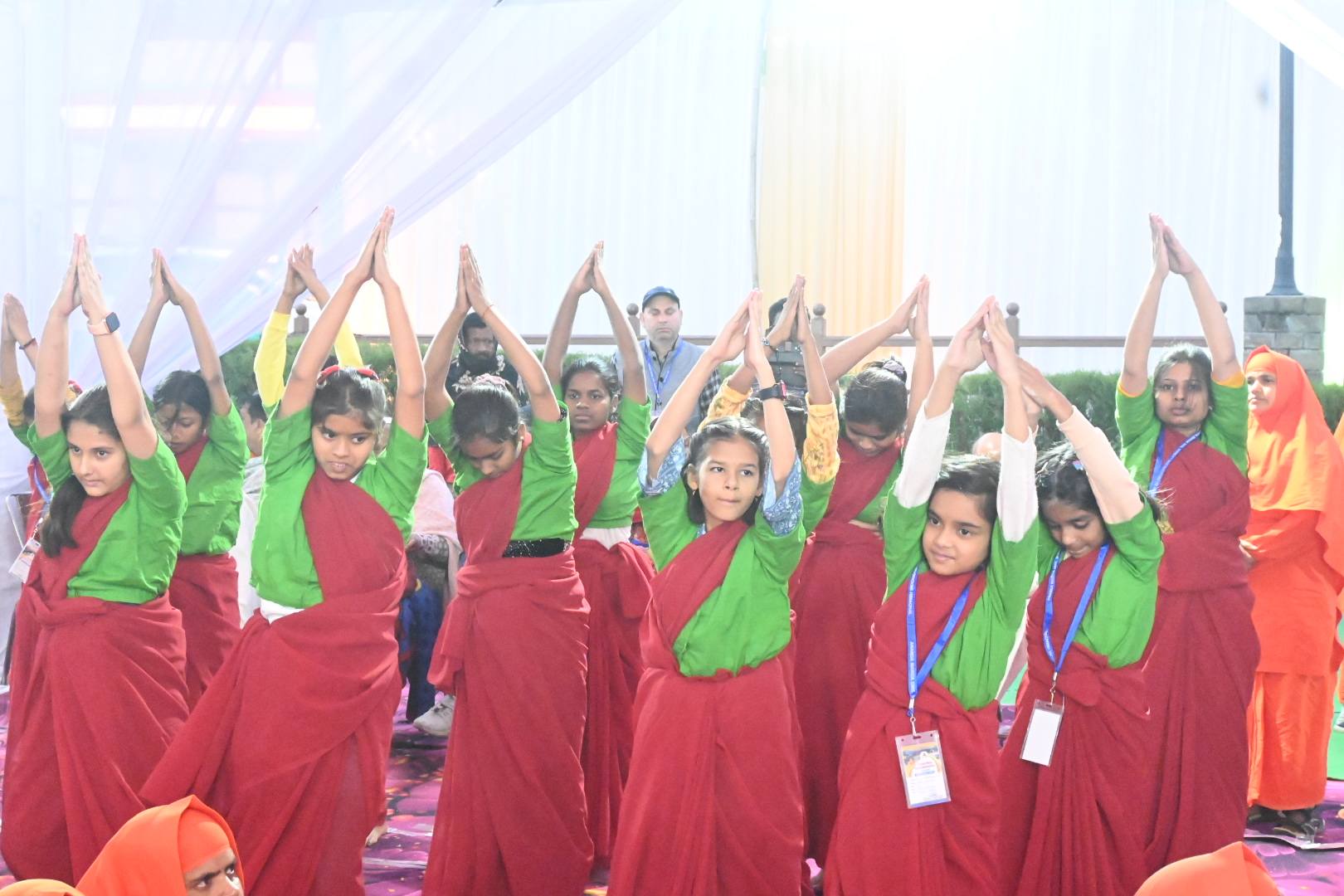
48TH KAOŚIKII COMMEMORATIVE DAY – THE DIVINE DANCE GIFTED BY SHRII SHRII ÁNANDAMÚRTI
The Unspeakable Trio of Spiritual Dance and Music – Kaośikii: History, Postures, and Scientific discipline
The spiritual heritage of humanity is deeply intertwined with rhythm, movement, and sound. In the spiritual tradition, music and dance are not merely forms of entertainment or aesthetic expression; they are precise psycho-physical tools designed to elevate human consciousness, purify the mind, and vitalize the physical body.
This unutterable trio explores the historical origins, exact physiological performance, and profound spiritual significance of the three inviolable dances: Táńd́ava, Lalita Mármika, and Kaośikii.
The Birth of Saḿgiita and Tála – A Holistic Path for Modern Wellness
- A brief summary of how these ancient practices integrate body, mind, and spirit to offer profound, holistic balance for modern practitioners.
- The Foundation of Music: Lord Sadáshiva explained how integrated the three worldly elements that are immensely helpful to spiritual life, collectively known as Saḿgiita: Giita (song), Vadya (instrumental music), and Nrtya (dance).
- The Birth of Tála: The historical adjustment between the cosmic masculinity of Táńd́ava and the deep devotion of Lalita Mármika laid the foundation for Indo-Aryan music, creating the first Indian rhythm, Tála—taking “Ta” from Táńd́ava and “La” from Lalita.
- The Musical Schools: Introduce how this synthesis split into the Áryávarta (Hindustani Saḿgiita) and Dákśinátya (Karnataka Saḿgiita) traditions.
Táńd́ava: The Dynamic Dance of Survival and Brain Purity
- Origins and Meaning: Sadáshiva invented this heroic dance roughly 7,000 years ago. The etymology of Tańd́u (“of jumping habit”), using the traditional metaphor of jumping rice (Tańd́ulam).
- The Only Physical Brain Exercise: Clarify its role as a powerful, all-corporal exercise and uniquely explain how it acts as a physical exercise for the brain to maintain physical and psychic purity. Note that it is strictly forbidden for ladies due to its intensity.
- The Heroic Battle & Symbols: The intense life-or-death battle represented by the dance. We will cover the strict rules of its symbolic gear: holding a knife or trident (trishula) representing life and stamina in one hand, and a skull representing death in the other.
- Day and Night Environmental Rules: Detail the variations allowed (using a living snake by day, or a fire torch/damaru at night) and point out that absolutely no mudras or ornaments are permitted.
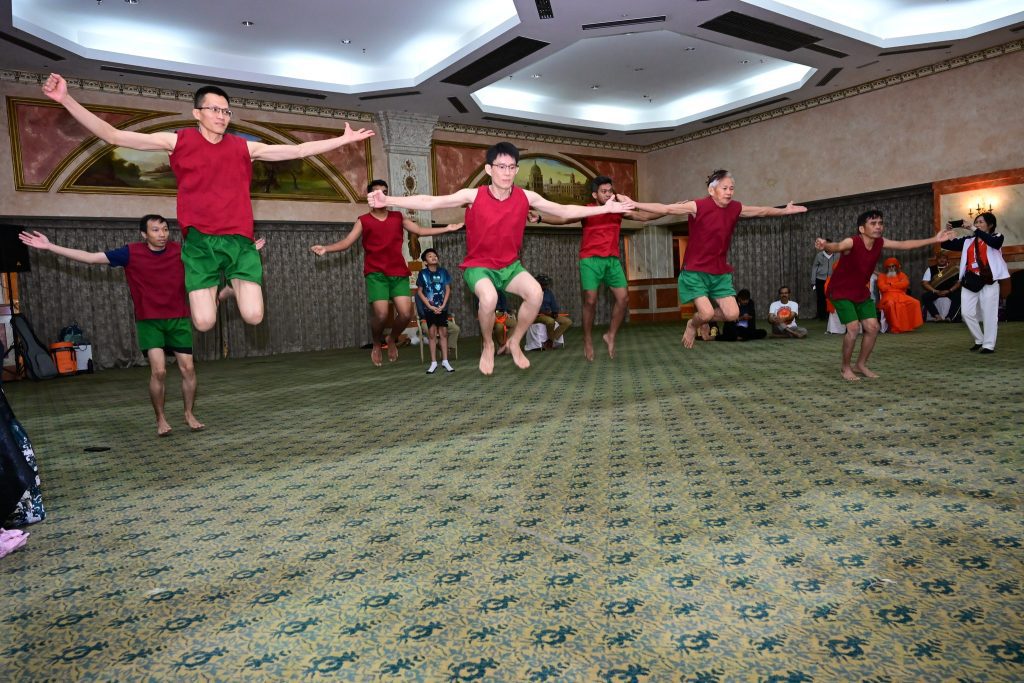
Lalita Mármika: The Surrendered Voice of the Inner Spirit
- Devotional Roots: Parvati (spouse of Shiva) invented this purely spiritual dance to represent the “Voice of the Inner Spirit” or the “Inner Voice of a Spiritual Aspirant,” used universally during Kiirtan.
- The Psycho-Spiritual Arm Angle: Break down the posture science. A normal relaxed arm is physical; a 90-degree arm utilizes psychic/mental power. Lalita Mármika requires arms raised above 90 degrees, symbolizing that the hands are completely surrendered “at the mercy of Parama Puruśa” rather than controlled by ego.
- The Carrying out of “Dhae, Dhin, Ta”: The three touchpoints of the feet:
- Dhae (toe-tip) representing the Spiritual touch.
- Dhin (ball of the foot) representing the Psychic touch.
- Ta (heel) representing the Physical touch (stamped with maximum weight).
- The Philosophy of Minimum Pressure: The profound lesson of touching the earth primarily with the toe-tip (Dhae) to exert minimum pressure on the Earth. This represents performing all worldly duties while remaining an asset—not a heavy liability—to the planet. Note that flower ornaments are fully permitted.

Kaośikii: The Psycho-Spiritual Medicine and Panacea
- The Invention: Shrii Shrii Ánandamúrti invented this heavy, all-body exercise on 6th September 1978 as a direct physiological alternative for ladies and younger boys.
- An All-Body Panacea: The extensive health benefits, explaining how practising it for 1 to 1.5 months can cure 22 distinct diseases. It serves as a brain exercise that boosts memory, ensures safe delivery for ladies, checks the onset of old age, and directly cures diseases of the heart, lungs, liver, spleen, and kidneys.
- The Quivering Mind: The etymology of the name from kaosikii illustrating Bábá’s observation of the “quivering” or palpitation (palpitation) of the mind during the dance’s physical postures.
- Design & Aesthetics: Highlight the required, eye-pleasing clothing colors of green and chocolate brown and the permission to wear flower ornaments.
These three dances represent a complete and scientific system of movement. By understanding the deep history, physical angles, and biological impacts behind these sacred practices, modern spiritual aspirants can fully unlock their physical, psychic, and spiritual potential.
The Divine Blending: Saḿgiita, Tála, and Indian Musical Heritage
The foundation of Indian classical music and dance was laid by Lord Sadáshiva (Lord Shiva) approximately 7,000 years ago. Sadáshiva selected and integrated three elements of the objective world that are immensely helpful to spiritual life, collectively known as Saḿgiita:
- Giita (Song)
- Vádya (The playing of instruments)
- Nrtya (Dance)
As a master of cosmic rhythm, Sadáshiva is also revered as Nat́arája (Nádatanu Nát́eshaḿ). The integration and historical adjustment between the dynamic, masculine energy of Táńd́ava (invented by Sadáshiva) and the gentle, devotional flow of Lalita Mármika (invented by his spouse, Parvati) gave birth to Indian rhythm or Tála. The word Tála itself is a synthesis of these two dances: taking the first letter “Ta” from Táńd́ava and the first letter “La” from Lalita.
This divine adjustment established the foundation of Indo-Aryan music. Over time, this musical heritage split into two major classical schools:
- The Áryávarta School, commonly known as Hindustani Saḿgiita.
- The Dákśinátya School, commonly known as Karnataka Saḿgiita.
Táńd́ava: The Heroic Dance of Brain Purity and Survival
Revered as the king of dances, Táńd́ava is a heroic, vigorous dance invented by Lord Sadáshiva about 7,000 years ago.
In the ancient Saḿskrta language, Tańd́u means “of jumping habit”. The traditional etymological metaphor compares this to the preparation of rice from paddy in the country style: during the husking process, the paddy and rice jump up and down. Because of this jumping habit, rice is called Tańd́ulam in Saḿskrta. By adding the suffix Sna to Tańd́u, we get the word Táńd́ava—denoting a dance where jumping is the central, defining feature.
While there are many intellectual exercises for the human brain, Táńd́ava is celebrated as the only physical exercise for the brain. It is an “all-corporal” exercise that impacts the entire body, including the brain tissues. This high-intensity, vigorous dance is designed to maintain the physical and psychic purity of a spiritual practitioner (sádhaka), directly accelerating their spiritual progress. Because of the extreme physiological strain it puts on the system, Táńd́ava is strictly forbidden for ladies.
Táńd́ava represents an eternal, heroic fight for survival—a dynamic battle between life and death. Dancers must not wear any ornaments, and there are absolutely no Mudrás (symbolic hand gestures) performed during this dance. Instead, the dancer dynamically leaps while holding specific symbolic weapons:
- In one hand, a knife or trishula (trident): Symbolises life and fighting stamina.
- In the other hand, a human skull: Symbolises death, which constantly seeks to destroy existence.
Through this posture, the dancer represents a warrior fighting against death and struggle to establish themselves in the world.
The ancient scriptures lay down strict rules regarding the physical items held by the dancer depending on the time of practice:
- During the daytime: A dancer may use a living snake (Sarpa) in place of a skull.
- During the nighttime: The dancer may use a fire mashála (torch) or a damaru (small drum).
Lalita Mármika: The Surrendered Devotion of the Inner Spirit
In stark contrast to the vigorous energy of Táńd́ava, Lalita Mármika is a purely spiritual, deeply devotional dance invented by Parvati, the spouse of Shiva. The name itself translates to the “Voice of the Inner Spirit” or the “Inner Voice of a Spiritual Aspirant”. Universally accepted as the best and only dance to be used during Kiirtan (devotional chanting), its core essence is expressed through precise Mudrás and sacred angles.
The hand positions in Lalita Mármika are governed by precise psychological and spiritual laws:
- The Physical Position (Down): The hands hanging naturally down is the physical position, used for hard physical labor (such as using a hammer).
- The Psychic Position (90 Degrees): Raising the arms straight out at a 90-degree angle utilizes mental or psychic strength [14, 15]. You hold them here because your mind desires it.
- The Purely Spiritual Position (>90 Degrees): Lalita Mármika is a purely spiritual dance. Therefore, the arms must be raised overhead at an angle greater than 90 degrees. This posture denotes that the hands are completely surrendered—held “at the mercy of Parama Puruśa” rather than controlled by personal ego or psychic willpower.
The Foot Execution: “Dhae, Dhin, Ta”
The leg movements in Lalita Mármika require the dancer to tap their feet in a rhythmic cycle divided into three distinct touchpoints:
- “Dhae” (Toe-tip): Represents the Spiritual touch.
- “Dhin” (Ball of the foot): Represents the Psychic touch.
- “Ta” (Heel): Represents the Physical touch.
When executing the physical touch (“Ta”), the heel is stamped down with maximum strength and the maximum weight of the body. However, the spiritual rule of the dance requires the dancer to primarily transition through and touch the earth with the toe-tip (“Dhae”).
This physical mechanic carries a profound philosophical lesson: as spiritual beings, humans must perform all physical, psychic, and spiritual duties on this Earth, but our pressure on the planet should remain minimum. By touching with the toe-tip, we exert minimum pressure on the Earth, ensuring we act as a light asset to the planet rather than a heavy liability.
Unlike Táńd́ava, dancers of Lalita Mármika are fully permitted to wear beautiful flower ornaments.
Kaośikii: The Psycho-Spiritual Medicine and Panacea
Invented by the Sadguru Parama Brahma Shrii Shrii Ánandamúrti on 6th September 1978 in Patna, India, Kaośikii was conceptualized as a holistic, heavy, all-body dance exercise.
The History of its Invention
Observing that the vigorous Táńd́ava dance is strictly forbidden for ladies, Shrii Shrii Ánandamúrti felt a deep spiritual necessity to design a proper dance exercise that could serve as a physiological alternative for ladies and younger boys. At 11:00 PM on 6th September 1978, Beloved Bábá called four young devotees and guided them to perform specific movements. As they danced, Bábá scientifically examined how their glands, sub-glands, and muscle tissues (kis peaschi) reacted to the postures.
Bábá observed that the unique physical movements of this dance caused a distinct quivering or palpitation in the mind. Because of this mental quivering, Parama Brahma Sadguru named the dance Kaośikii. Within three days, this beautiful, scientific dance was propagated all over the world, becoming immensely popular among both boys and girls.
Kaośikii is a heavy, psycho-spiritual exercise spanning from the brain to the feet. It begins at the psychic level and culminates at the spiritual level. When practised consistently for 1 to 1.5 months, it significantly improves overall health and acts as a direct curative medicine for 22 distinct diseases.
The human eye is naturally attracted to specific colors in the universe. To align with this psychological science, green and chocolate brown were explicitly selected as the designated clothing colors for those dancing Kaośikii, as they are highly pleasing to the human eye. Dancers are also fully permitted to wear beautiful flower ornaments.
Kaośikii and the Use of Mantra:

The rhythmic steps of Kaośikii are accompanied by the verbal incantation of the BÁBÁ NAM KEVALAM mantra. The below sketch correlates the dance step with the mantra:
Meaning of the Mudrá in Kaośikii:
Each movement of the arms in Kaośikii conveys a specific meaning, that is why it is considered a Mudráic dance.
1. The two hands when upraised and folded together represent: “Now I am trying to establish a link with the Supreme”
2. Both hands bending to the right indicate: “I know the right way to request you”.
3. The leftward movement represents:” I know how to fulfil your demands”.
4. The movement of bending in front suggests complete surrender.
5. The backward bending represents:” I am ready to face all troubles that may come”.
6. The last two stamping of the feet represents, ” O Supreme, I repeat your rhythm”.
22 Benefits of Kaośikii if you need please contact near by Local Ácárya’s or Unit Secretaries from your socio economic units:
Kaośikii when done regularly is an antidote to twenty-two types of diseases. It is especially helpful for small diseases like liver trouble. It is a panacea for almost all female diseases and for many male diseases in young boys.
How Long Should One Perform Kaośikii?
Kaośikii should be practised for as long as possible. There is no restriction of time, rather the longer the better. However like all exercise, it is advised to gradually increase the practice so as not to overexert oneself. For example, one may set a target of one minute for the first month. Thereafter according to one’s time availability one may increase the duration of Kaośikii by one minute each month up to say, 15 minutes (by the 15th month).
