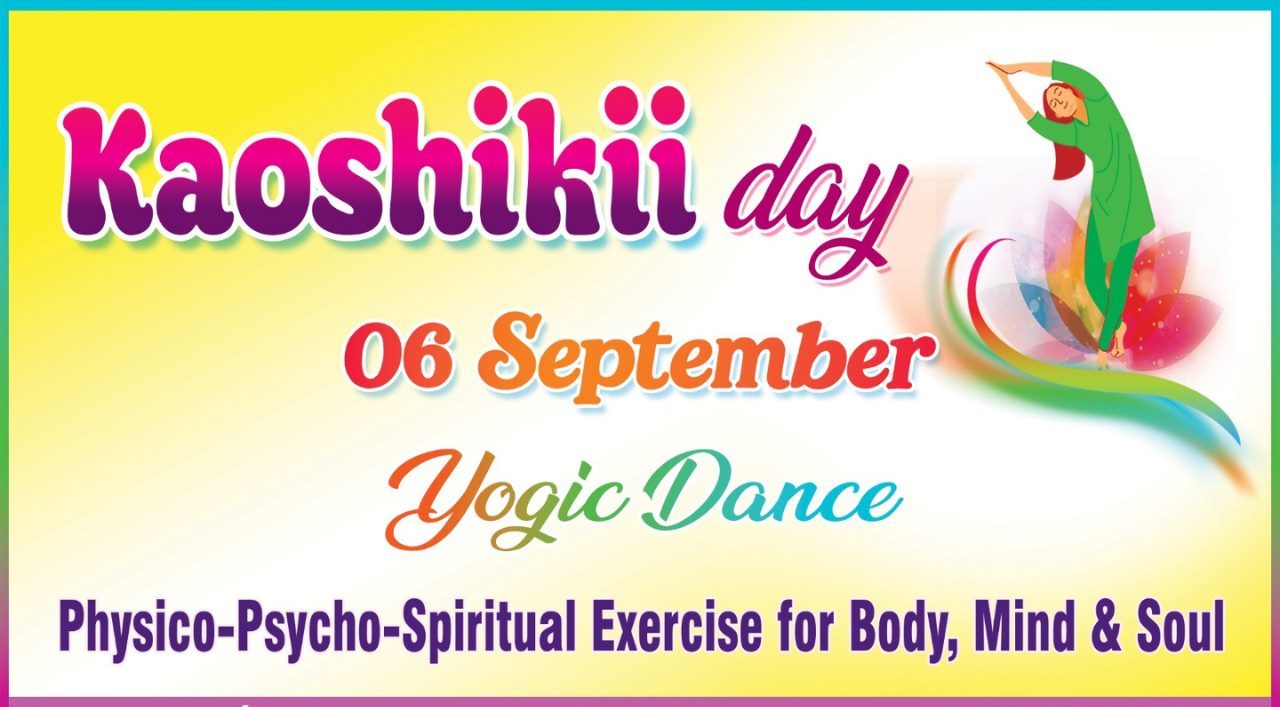
48TH KAOŚIKII COMMEMORATIVE DAY – THE DIVINE DANCE GIFTED BY SHRII SHRII ÁNANDAMÚRTI 

48TH KAOŚIKII COMMEMORATIVE DAY – THE DIVINE DANCE GIFTED BY SHRII SHRII ÁNANDAMÚRTI 

The Unspeakable Trio of Spiritual Dance and Music – Kaośikii: History, Postures, and Scientific discipline 

The spiritual heritage of humanity is deeply intertwined with rhythm, movement, and sound. In the spiritual tradition, music and dance are not merely forms of entertainment or aesthetic expression; they are precise psycho-physical tools designed to elevate human consciousness, purify the mind, and vitalize the physical body. 

This unutterable trio explores the historical origins, exact physiological performance, and profound spiritual significance of the three inviolable dances: Táńd́avaLalita Mármika, and Kaośikii

The Birth of Saḿgiita and Tála – A Holistic Path for Modern Wellness 

  • A brief summary of how these ancient practices integrate body, mind, and spirit to offer profound, holistic balance for modern practitioners. 
  • The Foundation of Music: Lord Sadáshiva explained how integrated the three worldly elements that are immensely helpful to spiritual life, collectively known as SaḿgiitaGiita (song), Vadya (instrumental music), and Nrtya (dance). 
  • The Birth of Tála: The historical adjustment between the cosmic masculinity of Táńd́ava and the deep devotion of Lalita Mármika laid the foundation for Indo-Aryan music, creating the first Indian rhythm, Tála—taking “Ta” from Táńd́ava and “La” from Lalita. 
  • The Musical Schools: Introduce how this synthesis split into the Áryávarta (Hindustani Saḿgiita) and Dákśinátya (Karnataka Saḿgiita) traditions. 

Táńd́ava: The Dynamic Dance of Survival and Brain Purity 

  • Origins and Meaning: Sadáshiva invented this heroic dance roughly 7,000 years ago. The etymology of Tańd́u (“of jumping habit”), using the traditional metaphor of jumping rice (Tańd́ulam). 
  • The Only Physical Brain Exercise: Clarify its role as a powerful, all-corporal exercise and uniquely explain how it acts as a physical exercise for the brain to maintain physical and psychic purity. Note that it is strictly forbidden for ladies due to its intensity. 
  • The Heroic Battle & Symbols: The intense life-or-death battle represented by the dance. We will cover the strict rules of its symbolic gear: holding a knife or trident (trishula) representing life and stamina in one hand, and a skull representing death in the other. 
  • Day and Night Environmental Rules: Detail the variations allowed (using a living snake by day, or a fire torch/damaru at night) and point out that absolutely no mudras or ornaments are permitted. 

Lalita Mármika: The Surrendered Voice of the Inner Spirit 

  • Devotional Roots: Parvati (spouse of Shiva) invented this purely spiritual dance to represent the “Voice of the Inner Spirit” or the “Inner Voice of a Spiritual Aspirant,” used universally during Kiirtan
  • The Psycho-Spiritual Arm Angle: Break down the posture science. A normal relaxed arm is physical; a 90-degree arm utilizes psychic/mental power. Lalita Mármika requires arms raised above 90 degrees, symbolizing that the hands are completely surrendered “at the mercy of Parama Puruśa” rather than controlled by ego. 
  • The Carrying out of “Dhae, Dhin, Ta”: The three touchpoints of the feet: 
  • Dhae (toe-tip) representing the Spiritual touch
  • Dhin (ball of the foot) representing the Psychic touch
  • Ta (heel) representing the Physical touch (stamped with maximum weight). 
  • The Philosophy of Minimum Pressure: The profound lesson of touching the earth primarily with the toe-tip (Dhae) to exert minimum pressure on the Earth. This represents performing all worldly duties while remaining an asset—not a heavy liability—to the planet. Note that flower ornaments are fully permitted. 

Kaośikii: The Psycho-Spiritual Medicine and Panacea 

  • The Invention: Shrii Shrii Ánandamúrti invented this heavy, all-body exercise on 6th September 1978 as a direct physiological alternative for ladies and younger boys. 
  • An All-Body Panacea: The extensive health benefits, explaining how practising it for 1 to 1.5 months can cure 22 distinct diseases. It serves as a brain exercise that boosts memory, ensures safe delivery for ladies, checks the onset of old age, and directly cures diseases of the heart, lungs, liver, spleen, and kidneys. 
  • The Quivering Mind: The etymology of the name from kaosikii illustrating Bábá’s observation of the “quivering” or palpitation (palpitation) of the mind during the dance’s physical postures. 
  • Design & Aesthetics: Highlight the required, eye-pleasing clothing colors of green and chocolate brown and the permission to wear flower ornaments. 

These three dances represent a complete and scientific system of movement. By understanding the deep history, physical angles, and biological impacts behind these sacred practices, modern spiritual aspirants can fully unlock their physical, psychic, and spiritual potential. 

The Divine Blending: Saḿgiita, Tála, and Indian Musical Heritage                                                                

The foundation of Indian classical music and dance was laid by Lord Sadáshiva (Lord Shiva) approximately 7,000 years ago. Sadáshiva selected and integrated three elements of the objective world that are immensely helpful to spiritual life, collectively known as Saḿgiita

  1. Giita (Song) 
  1. Vádya (The playing of instruments) 
  1. Nrtya (Dance) 

As a master of cosmic rhythm, Sadáshiva is also revered as Nat́arája (Nádatanu Nát́eshaḿ). The integration and historical adjustment between the dynamic, masculine energy of Táńd́ava (invented by Sadáshiva) and the gentle, devotional flow of Lalita Mármika (invented by his spouse, Parvati) gave birth to Indian rhythm or Tála. The word Tála itself is a synthesis of these two dances: taking the first letter “Ta” from Táńd́ava and the first letter “La” from Lalita. 

This divine adjustment established the foundation of Indo-Aryan music. Over time, this musical heritage split into two major classical schools: 

  • The Áryávarta School, commonly known as Hindustani Saḿgiita
  • The Dákśinátya School, commonly known as Karnataka Saḿgiita

Táńd́ava: The Heroic Dance of Brain Purity and Survival 

Revered as the king of dances, Táńd́ava is a heroic, vigorous dance invented by Lord Sadáshiva about 7,000 years ago. 

In the ancient Saḿskrta language, Tańd́u means “of jumping habit”. The traditional etymological metaphor compares this to the preparation of rice from paddy in the country style: during the husking process, the paddy and rice jump up and down. Because of this jumping habit, rice is called Tańd́ulam in Saḿskrta. By adding the suffix Sna to Tańd́u, we get the word Táńd́ava—denoting a dance where jumping is the central, defining feature

While there are many intellectual exercises for the human brain, Táńd́ava is celebrated as the only physical exercise for the brain. It is an “all-corporal” exercise that impacts the entire body, including the brain tissues. This high-intensity, vigorous dance is designed to maintain the physical and psychic purity of a spiritual practitioner (sádhaka), directly accelerating their spiritual progress. Because of the extreme physiological strain it puts on the system, Táńd́ava is strictly forbidden for ladies. 

Táńd́ava represents an eternal, heroic fight for survival—a dynamic battle between life and death. Dancers must not wear any ornaments, and there are absolutely no Mudrás (symbolic hand gestures) performed during this dance. Instead, the dancer dynamically leaps while holding specific symbolic weapons: 

  • In one hand, a knife or trishula (trident): Symbolises life and fighting stamina. 
  • In the other hand, a human skull: Symbolises death, which constantly seeks to destroy existence. 

Through this posture, the dancer represents a warrior fighting against death and struggle to establish themselves in the world. 

The ancient scriptures lay down strict rules regarding the physical items held by the dancer depending on the time of practice: 

  • During the daytime: A dancer may use a living snake (Sarpa) in place of a skull. 
  • During the nighttime: The dancer may use a fire mashála (torch) or a damaru (small drum)

Lalita Mármika: The Surrendered Devotion of the Inner Spirit 

In stark contrast to the vigorous energy of Táńd́ava, Lalita Mármika is a purely spiritual, deeply devotional dance invented by Parvati, the spouse of Shiva. The name itself translates to the “Voice of the Inner Spirit” or the “Inner Voice of a Spiritual Aspirant”. Universally accepted as the best and only dance to be used during Kiirtan (devotional chanting), its core essence is expressed through precise Mudrás and sacred angles. 

The hand positions in Lalita Mármika are governed by precise psychological and spiritual laws: 

  1. The Physical Position (Down): The hands hanging naturally down is the physical position, used for hard physical labor (such as using a hammer). 
  1. The Psychic Position (90 Degrees): Raising the arms straight out at a 90-degree angle utilizes mental or psychic strength [14, 15]. You hold them here because your mind desires it. 
  1. The Purely Spiritual Position (>90 Degrees): Lalita Mármika is a purely spiritual dance. Therefore, the arms must be raised overhead at an angle greater than 90 degrees. This posture denotes that the hands are completely surrendered—held “at the mercy of Parama Puruśa” rather than controlled by personal ego or psychic willpower. 

The Foot Execution: “Dhae, Dhin, Ta” 

The leg movements in Lalita Mármika require the dancer to tap their feet in a rhythmic cycle divided into three distinct touchpoints: 

  • “Dhae” (Toe-tip): Represents the Spiritual touch
  • “Dhin” (Ball of the foot): Represents the Psychic touch
  • “Ta” (Heel): Represents the Physical touch

When executing the physical touch (“Ta”), the heel is stamped down with maximum strength and the maximum weight of the body. However, the spiritual rule of the dance requires the dancer to primarily transition through and touch the earth with the toe-tip (“Dhae”). 

This physical mechanic carries a profound philosophical lesson: as spiritual beings, humans must perform all physical, psychic, and spiritual duties on this Earth, but our pressure on the planet should remain minimum. By touching with the toe-tip, we exert minimum pressure on the Earth, ensuring we act as a light asset to the planet rather than a heavy liability. 

Unlike Táńd́ava, dancers of Lalita Mármika are fully permitted to wear beautiful flower ornaments

Kaośikii: The Psycho-Spiritual Medicine and Panacea 

Invented by the Sadguru Parama Brahma Shrii Shrii Ánandamúrti on 6th September 1978 in Patna, India, Kaośikii was conceptualized as a holistic, heavy, all-body dance exercise.                                                            

The History of its Invention 

Observing that the vigorous Táńd́ava dance is strictly forbidden for ladies, Shrii Shrii Ánandamúrti felt a deep spiritual necessity to design a proper dance exercise that could serve as a physiological alternative for ladies and younger boys. At 11:00 PM on 6th September 1978, Beloved Bábá called four young devotees and guided them to perform specific movements. As they danced, Bábá scientifically examined how their glands, sub-glands, and muscle tissues (kis peaschi) reacted to the postures. 

Bábá observed that the unique physical movements of this dance caused a distinct quivering or palpitation in the mind. Because of this mental quivering, Parama Brahma  Sadguru named the dance Kaośikii. Within three days, this beautiful, scientific dance was propagated all over the world, becoming immensely popular among both boys and girls. 

Kaośikii is a heavy, psycho-spiritual exercise spanning from the brain to the feet. It begins at the psychic level and culminates at the spiritual level. When practised consistently for 1 to 1.5 months, it significantly improves overall health and acts as a direct curative medicine for 22 distinct diseases

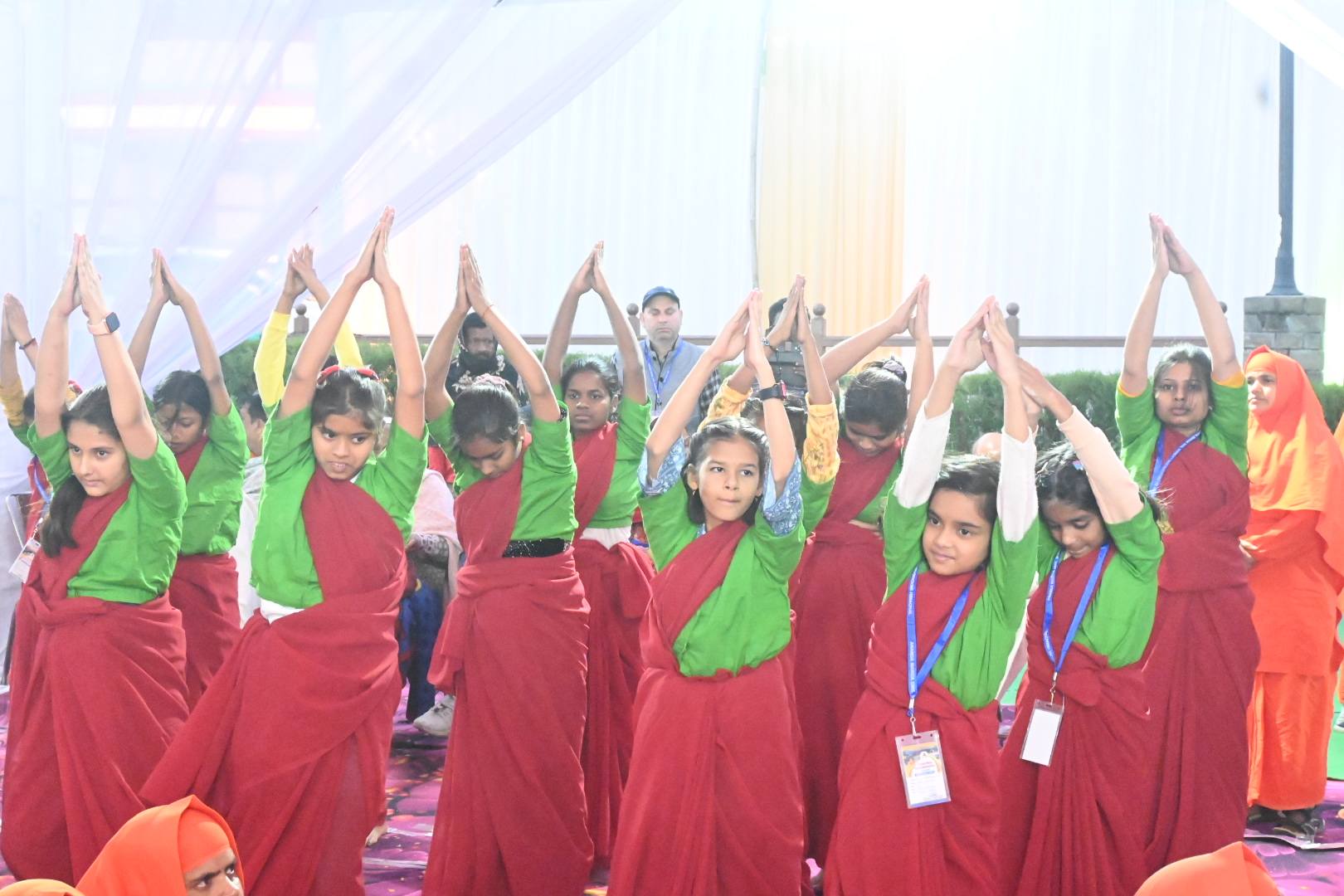
The human eye is naturally attracted to specific colors in the universe. To align with this psychological science, green and chocolate brown were explicitly selected as the designated clothing colors for those dancing Kaośikii, as they are highly pleasing to the human eye. Dancers are also fully permitted to wear beautiful flower ornaments

Kaośikii and the Use of Mantra: 

The rhythmic steps of Kaośikii are accompanied by the verbal incantation of the BÁBÁ NAM KEVALAM mantra. The below sketch correlates the dance step with the mantra: 
 

Meaning of the Mudrá in Kaośikii: 

Each movement of the arms in Kaośikii conveys a specific meaning, that is why it is considered a Mudráic dance. 
1. The two hands when upraised and folded together represent: “Now I am trying to establish a link with the Supreme” 
2. Both hands bending to the right indicate: “I know the right way to request you”. 
3. The leftward movement represents:” I know how to fulfil your demands”. 
4. The movement of bending in front suggests complete surrender. 
5. The backward bending represents:” I am ready to face all troubles that may come”. 
6. The last two stamping of the feet represents, ” O Supreme, I repeat your rhythm”. 

22 Benefits of Kaośikii if you need please contact near by Local Ácárya’s or Unit Secretaries from your socio economic units: 

Kaośikii when done regularly is an antidote to twenty-two types of diseases. It is especially helpful for small diseases like liver trouble. It is a panacea for almost all female diseases and for many male diseases in young boys. 

How Long Should One Perform Kaośikii? 
Kaośikii should be practised for as long as possible. There is no restriction of time, rather the longer the better. However like all exercise, it is advised to gradually increase the practice so as not to overexert oneself. For example, one may set a target of one minute for the first month. Thereafter according to one’s time availability one may increase the duration of Kaośikii by one minute each month up to say, 15 minutes (by the 15th month). 
Thoughtful perspective on Yoga!

Thoughtful perspective on Yoga!

Based on the Idea of Bábá Shrii Shrii Ánandamúrti, Compiled By Acarya Gatimayananda Avadhuta(CTS Sweden)

The distinction to practice—that yoga is the merging of the unit soul (Jiiva´tma´) with the Supreme Soul (Parama´tmanah), rather than just physical exercise or a state of “thoughtlessness”—is a powerful theme for International Yoga Day 2026.

The fundamental ideology of Ánanda Márga yoga, distinguishing it from common physical exercises and traditional Raja Yoga definitions.

It affirms that true yoga is not merely the suspension of mental propensities or the absence of worry, but rather the spiritual unification of the individual soul with supreme consciousness.

The subject of discourse is for the necessity of cosmic ideation during practice to transform simple movement into a spiritual pursuit. Furthermore, its a vision for a righteous society where destructive animal instincts are replaced by refined intellect and spiritual purpose. It frames the cycle of life and death as a divine process of renewal, comparing the discarding of an old body to replacing tattered clothing. Ultimately, the writing about Yoga serves as a call to practical action, urging individuals to attain spiritual heights through persistent effort and devotion.

In Yoga practise, breathing without ideation it is only exercise and breathing with proper Ideation is part of Yoga.

In Ánanda Márga Yoga it explains that in the crude part of mind, that is in citta what the vrttis exist, all those propensities of human mind cannot be suspended and if there is suspension of all those propensities in the mind, it is termed as Yoga as per Patanjali, but citta vrtti cannot be suspended why because if anyone is in senseless condition or state,even in that state the citta vrttis gets suspended, there is no anger, no greed, then when one is senseless – is it possible in that state Yoga happens, no Yoga doesn’t happen, it is not so effortless or easy.

If in case of Raja Yoga’s definition, when the minds are free from all the worries that is how then worries must be annihilated and to remain without thinking, for becoming free from thought, During painful condition, if one sleeps and if one has slept for an hour, during that state of sleep there was no thinking, he was under peace for an hour, then it is termed as Yoga in the Philosophy of Raja Yoga, how to accept it and follow such practice.

So what is the Proper definition as per Ánanda Márga’s tantra definition, Sam´yoga yoga ityukto jiiva´tma´ Parama´tmanah – when jiiva´tma´ merges with Parama´tmanah – that itself is Yoga, the other yoga is not proper Yoga.

When a shirt is torn and you change it for a new one, it is not an act of cruelty. When the clothes become old and tattered, they are replaced with newer ones. This is the law.

Nobody wants to wear old, tattered and dirty clothes. When the body becomes senile and worthless, it is changed with newer ones.

So, to introduce Ánanda Márga Yoga lifestyle it is a prime time and we must materialise all the key knowledge practically to one and all. Every body and mind is structured according to its dominant desire.

Movement in the physical realm means construction of a Sadvipra society.

One who annihilates the physical unrighteousness is a Sadvipra.

In the psychic realm, you have to establish righteousness by removing the germs of crude mentality. Today everywhere in the world, there is the dominance of crude intellect.

Crude animal intellect is reigning supreme throughout the world today. You have to remove it.

In the spiritual realm, your task is to establish Cosmic Ideation.

The destructive aspects of Godhood are also due to His extreme kindness towards His creation.

God creates this universe, maintains it and goes on changing and destroying its useless parts with new ones.

When He finds a particular structure incapable of performing its part well, He discards it for another. It is like the organizer of a puppet show changing one of His puppets.

By effort what is not attained, it means by effort everything is attained-this must be kept in mind.

Lastly the profound spiritual philosophy of Ananda Marga, distinguishing true yoga from mere physical exercise or the simple suppression of thought. Discourse argues that authentic yoga is not found in a senseless state or a quiet mind, but rather in the intentional union of the individual soul with Supreme Consciousness.

By integrating proper ideation into every action, practitioners are encouraged to transcend animal intellect and establish a sadvipra society defined by righteousness and spiritual purpose.

In the end, the practitioners serves as a call to action to replace crude mentalities with cosmic ideation, viewing even the destructive cycles of life as acts of divine kindness that allow for renewal and progress.

Celebrating 47th Kaośikii Nrtya Divas event

Dear Brothers/Sisters/Dadas/Didis, Namaskar!

The upcoming 47th Kaośikii Nrtya Divas event, which mark the introduction of the Kaośikii Nrtya(dance) by Beloved Baba SHRII SHRII ÁNANDAMÚRTI on September 6, 1978. This dance is considered a spectacular gift to humanity, offering subtle and unbelievable psychological features of this psycho-spiritual Nrtya who practises it daily as per the system introduced by Beloved Baba. 

Our Beloved Baba invented to give alternative or substitute for Táńd́ava Dance which was explicitly for brothers as was taught and reviewed by Beloved Baba in 1971 and when Baba was arrested from Ananda Marga Central office, Patna without proper notice by then CBI chief, India on 29th December, 1971.

When Beloved Baba, just after acquitted from all charges and released on August 2, 1978, during which 6 years & 8 months—Approx 2400 days, Baba and all other sadvipra devotees who were forcibly detained and put in prison, by then evil forces who wanted to eradicate Ananda Marga Pracaraka Samgha.

But under the Supreme Guidance and Mahasadvipra leadership of Beloved Baba, who had to fight out Adharmika antisocial beings in the prison. During that span, when Beloved was poisoned on 12th February, 1973 Baba was compelled and demanded Judicial proof to claim why was He poisoned, so for that reason, when Baba didn’t get any justice then Baba undertook to remain without solid food in the prison for 5 years, 4 months and 2 days and then finally came out victorious.

It is from 29th DECEMBER 1971 until August 2nd,1978 battled with firm determination facing all odds which is recorded in the timeline history.

After release, in less than one month and 5 days, Baba invented this incomparable dance for women and also for men which is expressed in clear language in His own words how the name and form of Kaośikii was invented by Beloved Baba with reference from various discourses has complied.

SHRII SHRII ÁNANDAMÚRTI on 27 February 1979, Jammu, deliberated this below discourse in the audio which is transliterated here below.

.…for these, something have to be done. Táńd́ava dance is forbidden for ladies, strictly forbidden, so what is to be done?

So, let ME think from the past, then on the last year on 6th September, again they talked about this dance. Then in MY mind it came that I have to do something today itself.

So, at night 11 pm, MYSELF decided that, these must a dance, and a medicine for many diseases and exercise as well as a dance and in every aspect it must be proper.

So I called four boys and told them to dance in this way, then they danced, seeing how the glands, subglands and tissues (kis peschi) are undergoing reaction I saw, then I could even see from this that mind had a palpitation(quivering), for this palpitation(quivering), it is known as Kaośikii, so I named it Kaośikii. These is a curative for 22 diseases has one medicine. This is actually an exercise, heavy exercise.

Then I saw that starting from the brain till foot, it’s an exercise, yes, even girls could do it, there is no objection. Then it became popular among boys, popular among girls and within 3 days all over the world, I could propagate everywhere.

After practising these, within 1 and 1 & ½ month, health will be improved.

On 18 May 1979 evening, Eckenroth, GERMANY, Beloved Baba spoke this phrase –

Kaos´ikii has become popular within a very short span of time. It was invented on the sixth of September 1978, not even one year ago. It should be done by boys as well as girls”.

On 12th February 1979, Patna, INDIA—very Good exercise, because of its name – Bábá sayeth—heart, lungs, liver spleen, kidney – absolutely, it is a direct medicine, a curable medicine for 22 diseases, it is also a brain exercise, this exercises the brain more greater in case of Táńd́ava, rather than this kaośikii, this is also a brain exercise, there is increase in memory.

On 5th March 1984, Jammu “The practice of Ta’n’d’ava that is prescribed for you [men] is conducive for physical and spiritual progress. In My opinion, as many people as possible should practise Ta’n’d’ava.

Those who are a bit old should practise it twice a day at the time of their spiritual practices. As far as young people are concerned, they may practice it as much as they can. There should be healthy competitions for them.

The practice of Ta’n’d’ava is not suitable for women because of certain physiological constraints. But they need something too.”

“When in Patna, I invented a new type of dance-exercise, which I have called Kaośikii Nrtya.

As for the benefits, kaośikii is as important as Ta’n’d’ava.

Kaośikii is beneficial for both men and women.

Competition in Ta’n’d’ava and Kaośikii is very good and encouraging. I strongly support it.

There should be competitions wherever there are Ananda Margis. There should be competitions even where there are no Ananda Margis. There is no harm in it; rather it is beneficial in all respects.” — AV-22, 5 March 1984, Jammu

On 18th October 1979, Sambalpur, Orissa. Baba’s discourse in audio form is narrated below.

You know, as per Indo-aryan music, or may also be more commonly known as oriental dance, there are several gestures and postures of the body along the systematic way; this portion of the leg, it represents “tá”, and this portion represents “dhin”, and this portion represents “dhae”.

In ours, Kaośikii dance all these three portions are used to some extent, and in Táńd́ava, Táńd́ava, the, this tá portion is used more than the use of this dhae portion, dhin portion.

This dance Táńd́ava was introduced by Sadáshiva about more than 7000 years ago, and this Kaośikii was introduced by me, as you know last year on 6th September, 1978.

Táńd́ava, Kaośikii is more a medicine than a dance, it is a medicine for 22 diseases, almost a panacea.

Táńd́ava is also an all-body exercise, including that of brain that is nerve cells, it is called Táńd́ava because in Saḿskrta, tańd́u means “jumping”, “jumping”. You know rice is also called, is called tańd́ula in Saḿskrta because when it comes out of paddy; it jumps, likes this, tańd́ula.

Lord Sadáshiva introduced Táńd́ava but Táńd́ava was not for all, so, and while preaching dharma, Párvatii helped Lord Shiva very much, while Lord Shiva introduced Táńd́ava, Párvatii also introduced “lalita”. You use that Lalita dance, while singing kiirtan, you are dancing Lalita, that Lalita was propounded by Párvatii.

Now in order to maintain a link between, Shiva’s Táńd́ava & Párvatii’s lalita, certain rhythms were introduced, and the names of, and the common name for those rhythms, is Tala. Ta has been taken from Táńd́ava of Shiva, and ‘la’ has been taken from Lalita of Párvatii.

Lord Shiva and Párvatii, they helped much, in elevating the standard for the human beings, in those dark ages, in those dark pre-historic ages, he invented so many things, he invented the medical science, the music, and so many other branches of arts & science.

Now, Párvatii asked some questions, rather used to place certain questions, before Shiva just for educating, the public in the line of dharma and yoga and Shiva used to give the replies.

This question portion of Párvatii, is known as Nigama, and the answer portion of Shiva, Ágama. This Ágama and this Nigama, they jointly form the Shastra of Tantra, Tantra Shastra… the audio continues.

 On 10th November 1978, Calcutta – Baba spoke this lines “Everything in this universe is characterized by certain colours. Knowingly or unknowingly human beings are attracted by these colours. Some such as green and chocolate brown are very pleasing to the human eye. Perhaps you know that these two colours have been selected for those dancing the kaośikii dance. Colour has a tremendous influence on everything. When the human mind becomes strong enough not to be affected by any colour, it is called vaerágya [renunciation]”.

On 04th December 1978, Madras, INDIA—I invented KAOŚIKII on 6th September and this dance it is a dance exercise, and it is a medicine for twenty-two Diseases, a sort of panacea and almost all sorts of female diseases, and many male diseases of younger boys, it is medicine for most of the liver diseases. It assures safe delivery for ladies, and also it checks the advent of old age. It is, Yeah…, It is a Medicine.

On 11th May 1979 Evening, Fiesch, SWITZERLAND, Baba discourse is below for your reference.

Yogamáyá is from Eternal. Yogamáyá whose very Existence, “Yogamáyá” means Yoga personified. Whose very Existence is Yoga.

They are very much rhythmic You See. You see, Perhaps you do not know that, while dancing Kaośikii one may, both males and females may use ornaments of flower, in Lalita Mármika also one may use, only no ornament is permitted in Táńd́ava.

You know Lalita Mármika Dance used during Kiirtan is purely Spiritual dance, and Kaośikii is a Psycho-spiritual dance – it starts in Psychic level and culminates in Spiritual level and Táńd́ava is Physico-Psycho-Spiritual.

On 20th November, 1978, Delhi, INDIA—Beloved Bábá spoke this below lines in English.

You know this Kaośikii may be treated as a panacea for many a disease. It is the medicine for 22 diseases.

The History of Kaośikii (which was invented on 6th September, 1978)
The following is an edited version on the history of Kaośikii Dance, as narrated hereby, who was the chosen one by Baba selected on that day when this Acarya was only a margii brother and later became known as Acarya Cittabodhananda Avadhuta:

On September 6, 1978, at 11:00 pm, Baba called four of us security guards, including one Filipino, Suresh. Baba explained that what Baba wanted to teach us a new dance called Kaośikii.

Baba showed us how to do it with His hand movement and asked us to do it in front of Him.

Then Baba said, “Go out with Shankarananda and Ramananda and practice.”

So, we went out to the verandah and practised for 10 or 15 minutes until Baba called us back. Together, we started dancing in front of Him.

Baba instructed that we should bend our bodies 45 degrees to each side and a maximum of 15 degrees to the back.

The fingers should touch the ground when bending forward.

When doing the last two steps, “ta, ta”, the feet should come a little high off the ground and then hit the ground flat. Baba taught Shankarananda how to give the commands correctly, which should be “Baba-Nam-Baba-Kev-alam.”

Amongst the four of us, Baba selected me as having the best performer.

Baba told the other boys to leave the room.

Then Baba said, “Now I want you to make a practical demonstration of this dance for sisters.

Ramananda, bring a sari. No, wait; he is a man, he cannot wear a sari, so bring a dhoti instead.

“So Dada did, and then Baba said, “You are from Bihar, so put the cloth on like a sari in the Bihari style.”

I don’t have the slightest idea how to wear a sari, but as Baba insisted, I vainly tried wrapping the cloth around me.

Baba stopped me and called me beside Him. Then Baba perfectly tied the cloth around me in the Bihari style. “Now dance Kaośikii,” He said. But every time I bent forward, the end fell off my shoulder.

After dancing, Baba asked, “How did you feel?” I said, “It’s always falling off, Baba.”

“Okay, come here,” Then Baba dressed me in the Maharashtra style. In that style, one end goes back through the legs and is tucked in the waist at the back. After dancing, I said, “Baba, I’m not feeling comfortable when I bend to the left and right.” Then Baba tied the cloth like a South Indian sari, and finally in the Bengali style.

At the end, “The Bengali style seems the best for this dance.” I agreed, “Yes, Baba, it is the most comfortable for Kaośikii.” (A few days later, Baba announced that the official Kaośikii uniform for women should be a maroon sari tied in the Bengali style with a green shirt.)

“Ramananda, I’m very happy. I want to give something to this boy!

Do you have something for him?”

So Dada brought some sweets from the kitchen.

Then Baba asked me to sit on His lap and with His own hand, Baba fed me the sweets and also gave sweets to Dada Shankarananda for giving the commands correctly.

I cannot describe the happiness and bliss I felt sitting in His lap, laughing with Him, and eating the sweets.

The next morning, Baba again called me to His room and said, “Yesterday I fed you sweets, but I was not satisfied. You are a historical man. So I was giving you something more. Here is one of my dhotis.” I was very happy and inspired.

“Okay, from now on, you are the trainer, and you will teach everybody. I am giving you permission for just one day to teach some sisters and to choose the best one as a trainer who, from then on, will teach the other sisters.”

I taught a few Margii sisters who were there.

One young sister from Patna, the sister of the wife of advocate Sood in South India, was the best, so I appointed her to be the trainer of the sisters.

From that day, Baba demanded that everyone who went to His room must demonstrate Kaośikii dance.

If they couldn’t do it correctly, Baba scolded them and ordered them to learn from me. So every day, from morning till night, I had to teach different dadas and brothers. That was my regular duty.

One day Baba asked a boy from Assam to demonstrate Kaośikii. After finishing, Baba asked Dada Dasarath to see the boy’s past life. Dada closed his eyes, and Baba touched him, then Dada touched the boy. He said, “Baba, in his last life he was a snake. Somebody killed him while repeating the name of Krishna. So after that, he got a human body.” The boy was very inspired.

The Kaośikii Nrtya Divas is the dance which is a psycho-spiritual practice that has been made available to humanity. It is recommended to practice and showcase this dance every year on September 6 for new generation both sisters, brothers all over the world irrespective of any age barriers keeping social disparity very far off distance, which is rendered as Renaissance speech on 2nd January 1986 at Calcutta, Baba deliberated, The subject of today’s discourse is, “Renaissance in all the strata of life.”

The real meaning of the word “renaissance” is reawakening. That is, humanity was sleeping, and now it must wake up from that Cimmerian slumber and do something in all the spheres of life, in all the strata of existence.

There are three important strata in life: the physical stratum, the psychic stratum and the spiritual stratum. In the physical stratum, there are many strata: say, scientific achievement, social progress, political life, economic life, culture life.

People often say that this 20th century is the century of science. No, it is not the truth. Human life has been associated with science from the prehistoric era, from the very birth of humanity on this earth about one million years ago, and not only in this twentieth century. And as long as there will be a single human being, there will be an age of science.

Nowadays science means creating new weapons – strengthening the hands of warmongers; but the spirit of science should not be like this, and at the start, in the primordial phase of human life, it was not so. Yes, there is necessity of weapons – weapons not for strengthening the hands of warmongers, but for providing security for good ideas, good thoughts and good persons.

Science should be just like art: science for service and beatitude. Art for service and beatitude, I said; and now I say, science is also for service and beatitude. Science should always be utilized for the proper progress of human society.


To propagate, Renaissance Universal, it is an enthusiastic and celebratory creation for coming generation, to remove many dogmas to build a new world order which is rendered in various Baba’s discourses.

Complied all this ideas regarding Kaośikii Nrtya by Acarya Gatimayananda Avadhuta, CTS Sweden